Personalization strategies can boost revenue by between 10% and 30%, according to McKinsey, a figure that helps explain why more and more companies are betting on technologies like chatbots in their digital environments. However, the consultancy eComm360 warns that an uncontrolled deployment can put sales at risk rather than boost them.
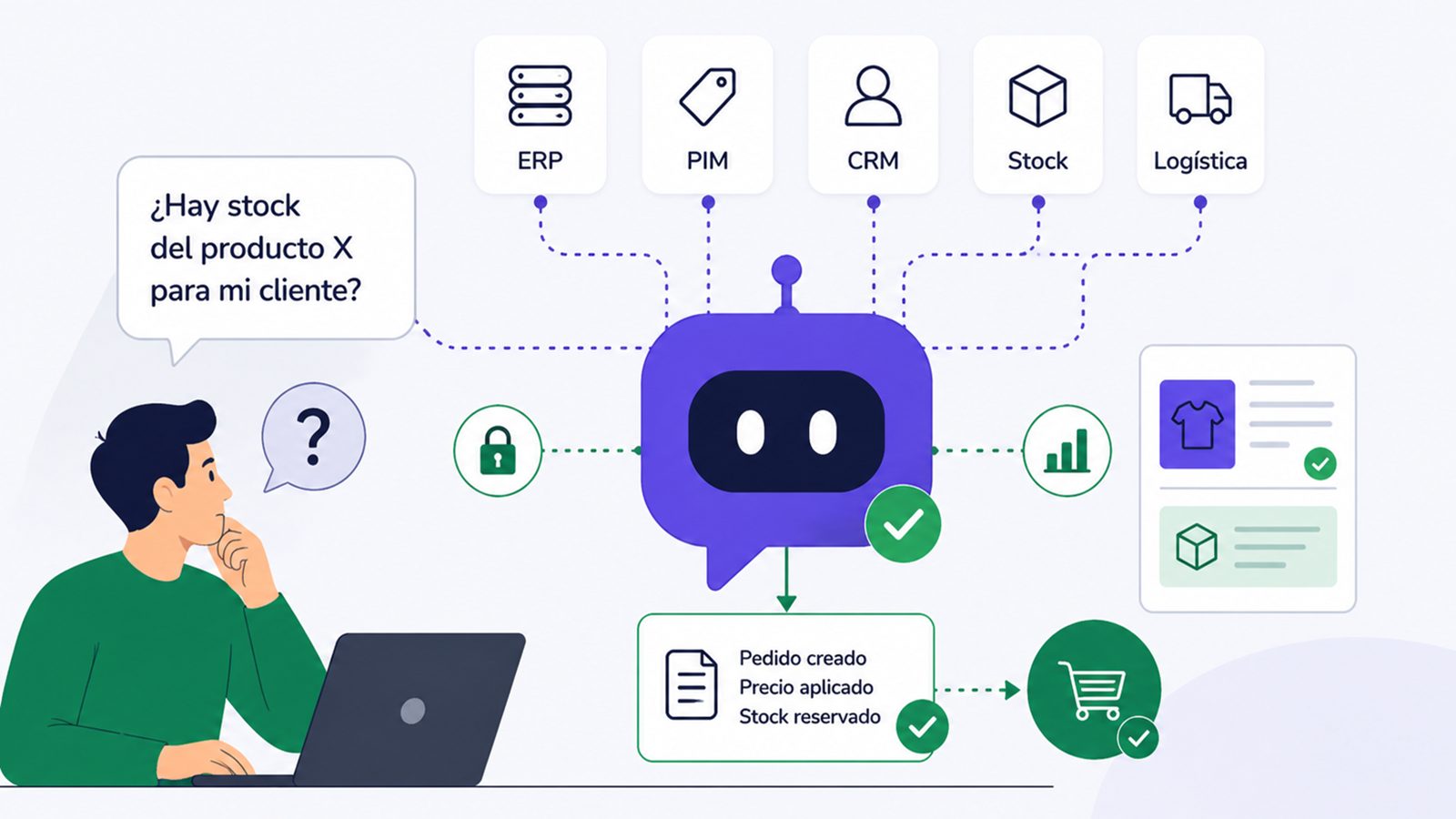
According to the company, many organizations are incorporating conversational solutions as a quick UX upgrade or as an automation lever, but without guaranteeing their integration with key elements such as ERP, real prices, inventory levels, customers, or business rules.
Isaac Bosch, CEO of eComm360, notes: “A chatbot can respond well, but if it’s not connected to the business, it’s not selling. It’s creating risk.”
In this context, other studies point to the pivotal role of personalization and customer experience. Salesforce notes that 73% of customers expect experiences tailored to their needs, while Gartner warns that the real impact of conversational automation depends directly on its integration with business systems.
A trend driven by rapid deployment solutions and lax technical criteria
eComm360 points out that this situation is being driven by the proliferation of rapid-deployment solutions, as well as narratives that oversimplify applying artificial intelligence in the enterprise.
In many cases, these tools are limited to linking conversational interfaces with language models, without a solid integration layer or data controls.
“The idea that automating means connecting a chatbot to a language model is being sold. But that’s not automating a business. It’s, in many cases, outsourcing decisions without control,” explains Bosch.
Risks to marketing, IT, and leadership
From eComm360 they emphasize that the impact of these bad practices is not purely technical; it directly affects several areas of the organization:
- Marketing: campaigns based on incorrect data or inconsistent messaging
- IT: proliferation of unmanaged solutions and increased complexity
- Executive leadership: loss of control over key processes and decision-making based on unreliable information
Additionally, there is the risk in data protection and regulatory compliance, especially when these solutions operate without clear management of the information they process. “It’s not just an efficiency issue. It’s a matter of control, accountability, and the business model,” adds Bosch.
The structural problem: systems not prepared for AI
Beyond the tool, eComm360 emphasizes that the root of the problem lies in the architecture of the systems. Many companies already have APIs, integrations, and multiple data sources, but they still operate as isolated pieces, without a common model that would allow coherent use by intelligent systems.
“AI doesn’t need more data; it needs organized data accessible under a clear model. Without that, there is no control,” says Bosch.
As an alternative, the company proposes moving toward models where the business capabilities are structured, connected, and governed. This approach implies:
- Transform APIs into services that represent real business actions (checking inventory, calculating prices, generating orders)
- Standardize access using models such as MCP (Model Context Protocol)
- Consolidate information in unified environments (data lakes or data platforms)
- Define clear data models and business rules
“This is not about connecting a chatbot to a database. It’s about building a system where AI understands the business and can operate on it with defined rules,” explains Bosch. eComm360 insists that this shift requires a cross-cutting approach that combines technology, data modeling, and strategic definition.
As highlighted by the consultancy, before deploying conversational solutions, it’s necessary to define:
- What decisions AI can make
- What processes it can automate
- What limits and controls must exist
- How systems align with the business model