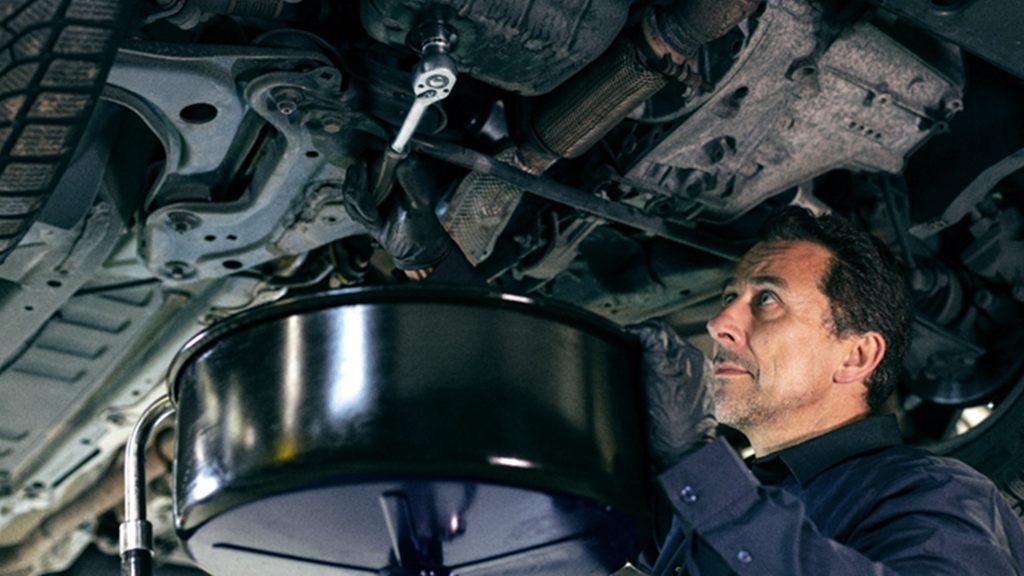
In the midst of the rapid expansion of artificial intelligence in the workforce (according to United Nations data, up to 40% of jobs worldwide could be affected by AI in the next decade), many experts are wondering about their professional future. Yet there are trades—such as automotive mechanics—that maintain a competitive edge that is difficult for algorithms and advanced automation to replicate.
Far from disappearing, the profile of the automotive technician has grown increasingly strategic in a vehicle lineup that combines internal combustion, hybrid and electric vehicles, along with ever more complex technological systems. “In a transformation-driven context like the one we’re seeing today, there are professions that not only resist the impact of artificial intelligence, but gain in relevance. The profile of the mechanic is a clear example, as it blends technical knowledge, adaptability and human intervention that remains indispensable,” emphasizes Gemma Jiménez, HR leader at Midas Spain.
In light of this scenario of change and uncertainty, the chain highlights the reasons why this trade maintains a clear barrier to automation and becomes a future-ready option:
- Requires physical intervention in non-automated environments. Although AI is transforming diagnosis processes, workshop management and predictive maintenance, the mechanic’s job involves direct manipulation of parts, tools and vehicles in variable, non-standardized environments. Each intervention demands manual dexterity, coordination and adaptation to the specific conditions of each shop and each vehicle. While AI can process information, it cannot replicate the physical execution of complex tasks nor respond with the same precision to the particulars of a real environment.
- Each fault is unique and not standardized. Unlike automatable processes, mechanical faults do not follow a fixed or fully standardizable pattern. A single symptom can have multiple causes and each vehicle has a different history, usage and wear. Although digital tools and diagnostic systems are a key support, not all faults are captured by them. In many cases, it’s necessary to interpret signals, noises or specific behaviors that require experience, context and applied technical knowledge. Therefore, the mechanic not only identifies the problem but also evaluates the best solution based on the real state of the vehicle, where the human factor continues to make the difference against technology.
- Involves real-time decision-making. During a repair, unforeseen issues may arise that force the process to be reconsidered on the fly, from parts that don’t fit as expected to additional failures that weren’t detected in an initial diagnosis. The ability to quickly analyze these situations, prioritize solutions and tailor the intervention to the context is one of the main strengths of mechanical work. This process is not linear or predictable; it requires judgment, experience and the ability to react immediately. This flexibility, especially in physical and changing environments, is hard to replicate by AI systems, which rely on predefined scenarios and lack the improvisation required for workshop work.
A High-Demand Profile That Automation Cannot Fill
The automotive sector is facing growing difficulty in finding qualified professionals, especially in workshop technical roles. This talent shortage is not only due to the generational shift, but also to the increasing specialization demanded by the technological evolution of the vehicle. Added to this is the reality of an aging and technologically diverse fleet, which raises the need for maintenance, diagnostics and repair by qualified professionals.
In light of this, the mechanic is establishing itself as an essential and hardly substitutable profile, as demand for these professionals continues to grow while automation fails to cover these functions.
“We are facing a structural shift in which technology does not replace talent, but drives it forward. The big challenge is to train and accompany professionals so that they evolve at the same pace as the sector,” says Jiménez.