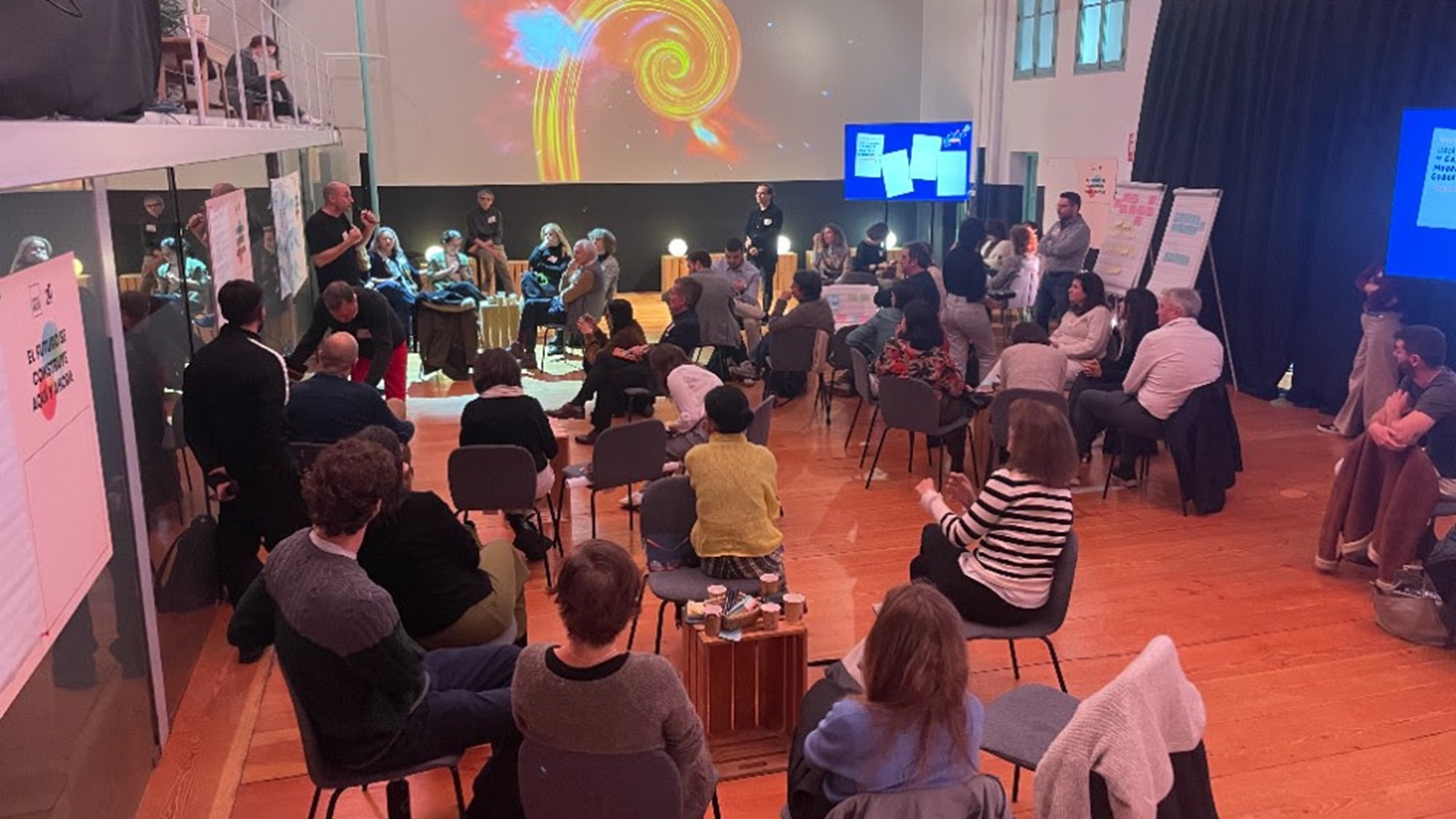
Building more resilient, fairer, and regenerative societies requires going beyond isolated solutions or well-intentioned rhetoric. From this premise, Impact Hub has identified three actions that act as levers of systemic transformation and that lay out a roadmap for companies, organizations, territories, and ecosystems seeking to generate impact by 2026, according to the document ‘Global Futures, Local Impacts: Tools for Systemic Change’.
The proposal arose from a collective conversation with players in the impact ecosystem, focused on identifying what conditions enable change to move from being episodic to structural, at economic, social, and environmental levels. From that dialogue comes a shared conviction: without a systemic view, many well‑intentioned initiatives risk remaining as partial responses.
“Today the challenge isn’t adding more projects, but to ensure that the ones that exist connect, scale, and transform the system from within. Real change isn’t about patches; it’s about creating the conditions for new ways of organizing, producing, and living to emerge,” says Antonio González, CEO of Impact Hub.
Three Invitations to Action
From this framework, Impact Hub has structured three invitations to action that collect the learnings, experiences, and services developed by the organization in recent years, with the aim of giving businesses and public administrations a practical framework to trigger transformation processes with lasting impact, and to connect purpose, leadership, place, and measurement.
- Platforms for systemic change in territories. This involves activating architectures and processes of collaborative innovation and multi‑actor networks (public‑private and social) under participatory governance models, supported by local leadership and featuring innovative financing.
- Transformational innovation at scale. The proposal calls for deploying customizable 360‑degree service platforms that coordinate support for local initiatives, integrating spaces for experimentation and blended-financing mechanisms to achieve scalable impact.
- Developing entrepreneurial and innovative cultures. According to Impact Hub, it is necessary to promote an entrepreneurial and systemic mindset within teams through training, experimentation, and the creation of service ecosystems that facilitate the transition to regenerative business models.
These three invitations to action are embedded in Impact Hub’s strategic document Global Futures, Local Impacts: Tools for Systemic Change, which features ten levers to drive systemic change within organizations. In this way, these three actions function as an operational synthesis that makes their application easier without sacrificing depth. “Thinking about the future is a way to take a stand. In the face of inertia, fragmentation and short-termism, we choose reflection, conscious action, and collaboration as engines of change,” concludes the Impact Hub CEO.