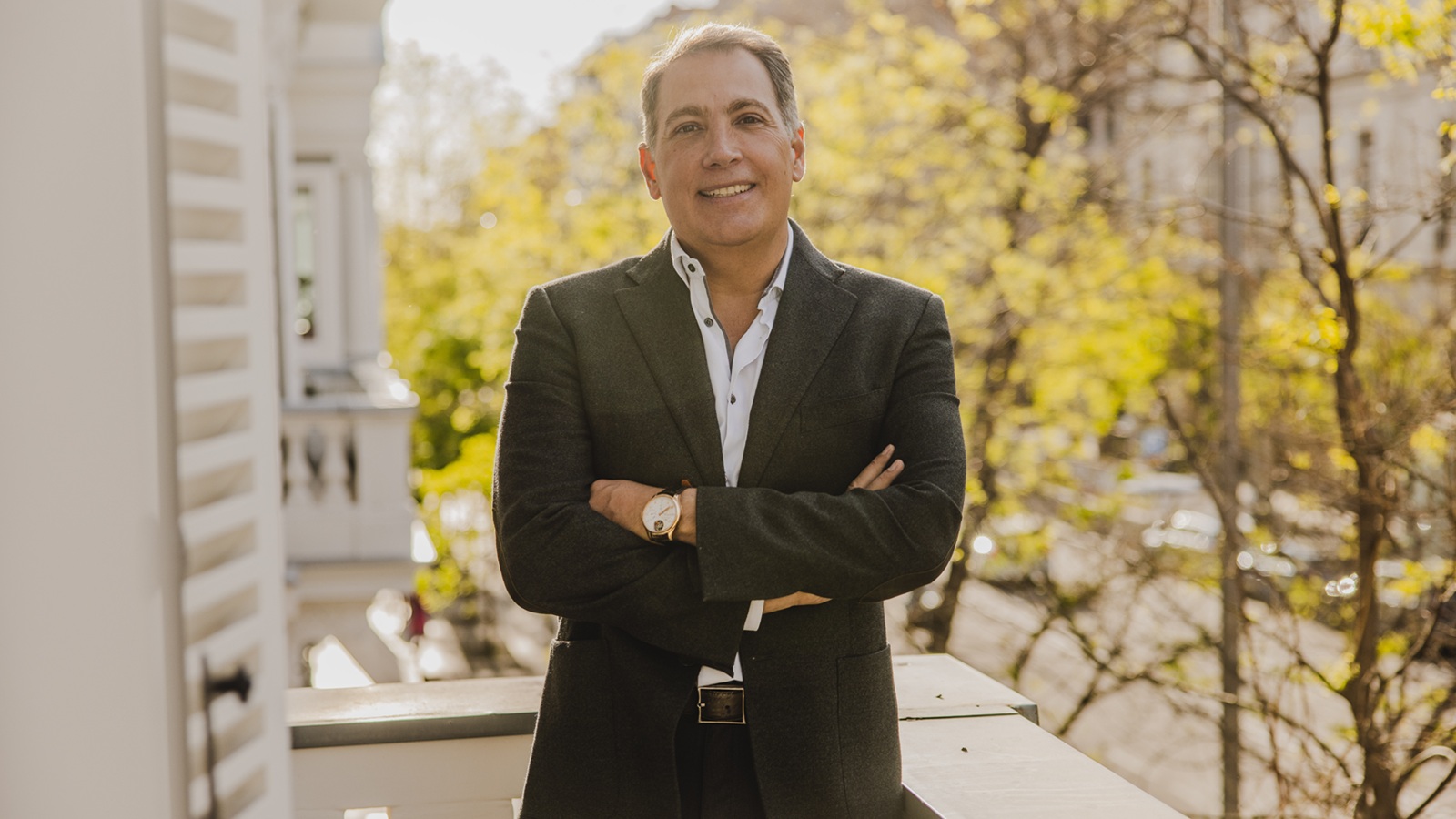
Originating from the Mexican state of Guanajuato, MuyPymes had the opportunity to interview Manuel González, the entrepreneur and owner of ABYA, the restaurant in Madrid. The business sits in the Salamanca district, in the city’s so-called “Golden Mile.” The building is a neobaroque palace from the 20th century that this Mexican owner acquired; the current name ABYA comes from an ancient Indigenous word meaning “living land, in full maturity.”
Manuel says he grew up “between the land and the countryside” in his homeland, a detail that has significantly shaped who he is—both in how he works and how he understands life. ABYA is more than a restaurant; it’s a museum-like space, rich with art. And the art isn’t limited to the paintings that hang on the walls. Every tiny detail of the décor is deliberately chosen, crafted with care. Some elements, such as the lamps, Manuel made by hand; others, like the wood and metal that adorn the walls, came from the very Aztec heartland of Mexico.
MuyPymes: How did the idea of buying a palatial house in Madrid come about?
Manuel González: I am, and always was, a lover of the Salamanca neighborhood. I always dreamed of opening a restaurant. The opportunity to acquire this palatial house came almost in a quintessentially Madrid way: a friend introduced me to another friend; in the end, Madrid always connects people and places, and that is how this opportunity arose.
MuyPymes: We’ve heard that you did much of the restaurant’s décor yourself, including the lamps.
Manuel González: I’m a real art enthusiast, and I didn’t want to miss the chance to do something different. I wanted to decorate this space, fill it, embrace it, and convey in it hours of thinking, imagining, and observing. I believe one of my passions is precisely that: to imagine, to seek references, and to turn them into reality.
Many of the artists who contributed to this project (Vladimir Cora, Miguel Milló, César López Negrete, Paola Martínez, and Antonio Mújica) had never worked with mirrors or with some of the forms or techniques we proposed here. One of the loveliest parts of the process was precisely challenging them to do so. And yes, many of the lamps—for sure, nearly all—were handmade with a clear concept and a handful of predominant materials: brass, wood, and onyx, the insignia of ABYA.
MuyPymes: You have a private collection of paintings that you’ve hung in your restaurant. What value does that bring to the space?
Manuel González: The goal was to offer something distinctive, or at least something with a certain value. To create something unique, with its own style. The palace itself, with its high ceilings and its character, cried out for that prominence—the large artworks hanging on its walls. What sets ABYA apart is that art is present not only as canvases on the walls but also as lamps and bar fronts. Wherever you look, there’s a touch of imagination.
MuyPymes: What guides your choice of paintings?
Manuel González: What’s special is that we invited the artists to express what ABYA means to them—the land in full maturity, the vital blood—that’s exactly what we were seeking: a diverse collection with a common thread, where each work offers a unique perspective on what we wanted to convey. And “perspective” is fitting, because there’s a recurring motif throughout the collection: faces. Portraits painted on canvas, or rendered in metal, iron, or brass. The constant presence of the gaze gives ABYA an identity grounded in something very human and emotional.
MuyPymes: Of all the “jewels” inside ABYA, which is the most valuable to you?
Manuel González: To me, all of them hold special value. Some artists are more famous than others, or some pieces took more hours of thought and execution, which can lend them additional significance. But overall, they are all special, and as I’ve mentioned, they were created specifically for this space. To give you an example, every doorway step was hand-patinated by us to achieve that aged look; that single process demanded many hours and a strong team effort. The gallery lamps were also hand-carved in my home garage. All of that embodies what it means to build a restaurant with your own hands.