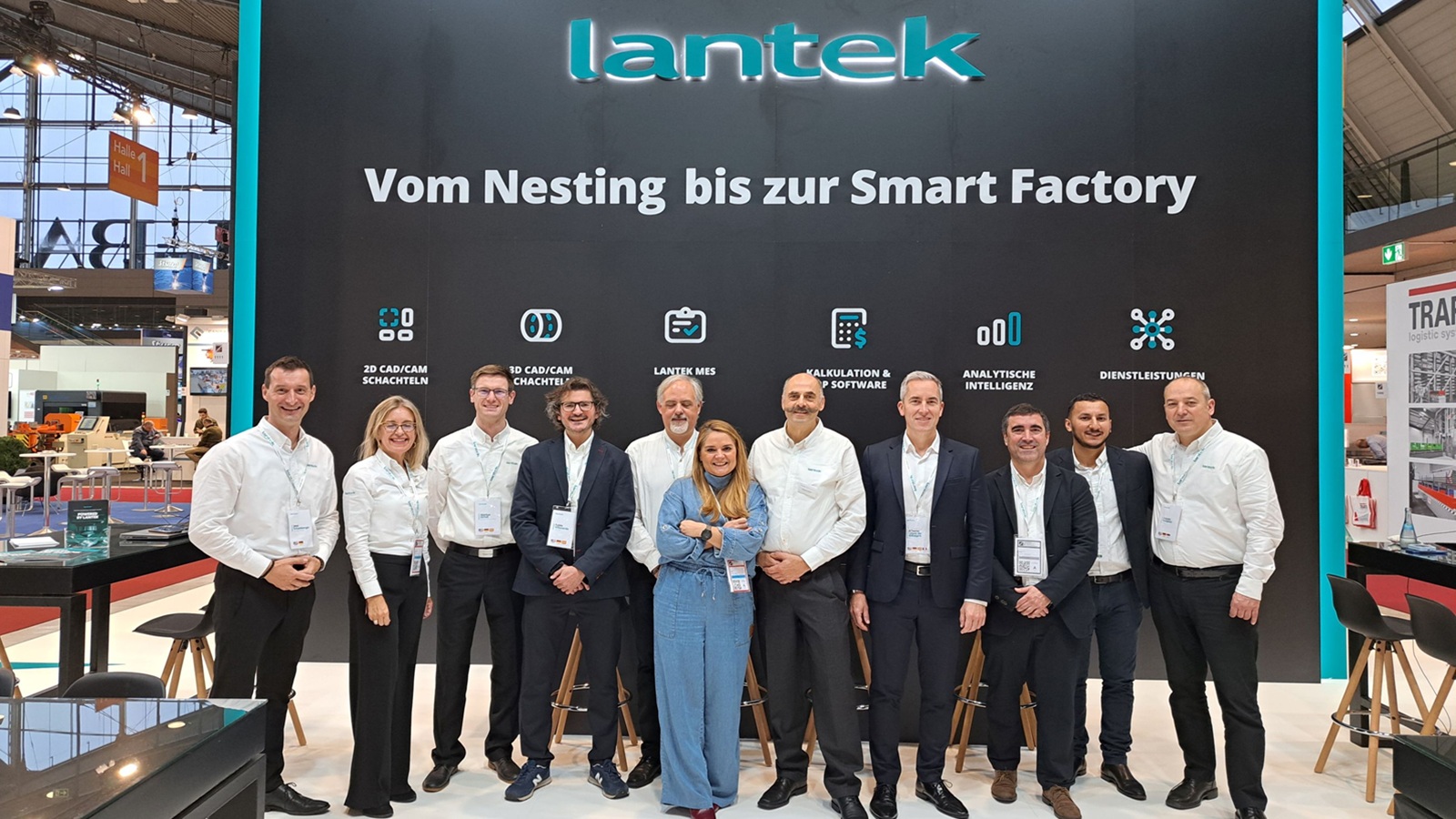
Lantek has unveiled Lantek v46: Further at EuroBLECH 2026. This solution brings major advances in the areas of budgeting, engineering, programming, and manufacturing execution. The new release broadens automation to a wider range of technologies, connects more shop-floor processes, and improves information flow between the various solutions that make up the Lantek ecosystem.
All told, these innovations enable manufacturers to tackle increasingly complex production environments with higher levels of efficiency, flexibility, and consistency.
A New Generation of Intelligent Budgeting
The company is rolling out a substantial evolution of its iQuoting solution, incorporating meaningful advances across every stage of the budgeting process.
The new parts import assistant allows users to work with both individual 3D parts and complete assemblies, introducing tools to detect and manage geometries, manipulate layers, and prepare the imported information for budget generation. From there, the new viability rules evaluate whether the geometries can be manufactured with the available technologies and production capabilities.
Alongside deeper and configurable calculation methods and the inclusion of predefined work plans, these capabilities bring manufacturing know-how into the early stages of budgeting. In this way, manufacturers can more accurately represent their own production logic, manufacturing routes, resources, and cost criteria when calculating increasingly complex projects.
Many of these capabilities are backed by KAI, the brand’s artificial intelligence technology, which assists users by analyzing manufacturing information, interpreting design data, and automating complex decisions throughout the budgeting process. Far from replacing the engineer’s expertise, KAI helps generate budgets more accurately in less time, reducing manual work and improving result consistency.
Advanced Programming for Punching and Optimization with NOS
Lantek Expert v46 elevates the programming of punching machines and combined punching and cutting technologies to a new level.
The new functionalities simplify and automate programming for both individual parts and full nests, while enabling the application of advanced machining strategies and complex operation combinations.
One of the key innovations is the expansion of NOS (Nesting Optimization Service) to punching machines. Until now available only for cutting technologies, Lantek’s most advanced nesting engine now extends material-optimization capabilities to punching environments, broadening advanced optimization to a wider range of sheet metal fabrication technologies.
Responding to Project Complexity
As automatic loading, unloading, and storage systems assume an ever more central role in sheet metal production, Lantek continues to develop new technologies to address the growing number and complexity of these projects.
The revamped Stackmaster application delivers a much more visual and intuitive stacking programming experience, fully integrated into Lantek Expert. At the same time, Lantek expands its capabilities for automatic storage systems with technologies able to connect and coordinate cutting machines and warehouses, managing MES flows, production processes, and material inventory within a complete automation workflow.
Lantek Flex3D v46 includes a new module to design tube-to-tube joints directly within 3D assemblies.
Users can create and adapt these joints from a broad library of parametric connections commonly used in the industry. By incorporating these capabilities into Lantek Flex3D, repetitive design tasks oriented toward manufacturing can be performed without returning to an external CAD application.
The solution also introduces automatic unfolding of curved tubes during 3D file import, automatically generating the required developed geometry for cutting and fabrication preparation.
For metal structures and profiles manufacturers, v46 adds a new integration with Tekla PowerFab, connecting its MES-MRP environment with Lantek’s programming solutions. Along with the already established connector for StruMIS, this integration broadens Lantek’s connectivity ecosystem and gives manufacturers more freedom to work with specialized production-management platforms that best suit their operations.
Greater Flexibility in Bending Decisions
Lantek v46 introduces a more advanced integration between Lantek Bend and the MES-managed manufacturing flow.
The system can calculate and preserve different bending alternatives for the same part on multiple press brakes. For each option, manufacturers can preliminarily validate the technical feasibility of the operation, along with the tooling, configuration, and process information needed for execution.
This enables selecting the final press brake much closer to production, taking into account real machine availability, workload, or tool status. As a result, production teams gain greater flexibility to respond to shop-floor changes without losing the previously validated technical information.
Greater Machine Connectivity Across the Shop Floor
Lantek continues expanding Machine Connectivity capabilities beyond cutting machines, adding support for press brakes and other CNC machines.
Additionally, Control Panel debuts a completely redesigned interface that improves the organization, clarity, and readability of machine information, complemented by a smoother and more responsive real-time event visualization.
By enabling a larger portion of the production equipment to feed reliable data into Lantek MES, Control Panel, and Lantek Analytics, this expansion reinforces Lantek’s multi-vendor approach, improves real-time visibility across the shop floor, and enables more precise calculations of OEE and other key production metrics.
Taking Connected Manufacturing a Step Further
The innovations in v46 share one overarching goal: expand automation, strengthen integration, and connect a broader range of technologies throughout the entire manufacturing process.
From budgeting through the final plant decisions, including engineering and programming, v46 delivers greater manufacturing intelligence and continuity at every stage. Complex parts and assemblies can be prepared more efficiently, advanced machining and nesting strategies are extended to more technologies, and production teams enjoy more flexibility to adapt to changes in machine availability, tooling, or operational priorities.
By making all of this information available within a more connected workflow, these updates also enhance production planning capabilities. Teams gain a fuller view of manufacturing needs, available resources, and the actual shop-floor status, enabling planning adjustments to be made more effectively, making better use of resources and maintaining stricter control over increasingly complex production environments.
“Connected manufacturing isn’t just about linking machines or applications; it’s about having the right information at the moment decisions need to be made,” says Raúl Chopitea, Head of Product at Lantek. “With v46 we are building a more continuous manufacturing environment, where automation, planning, and execution work together in a much more coordinated way.”