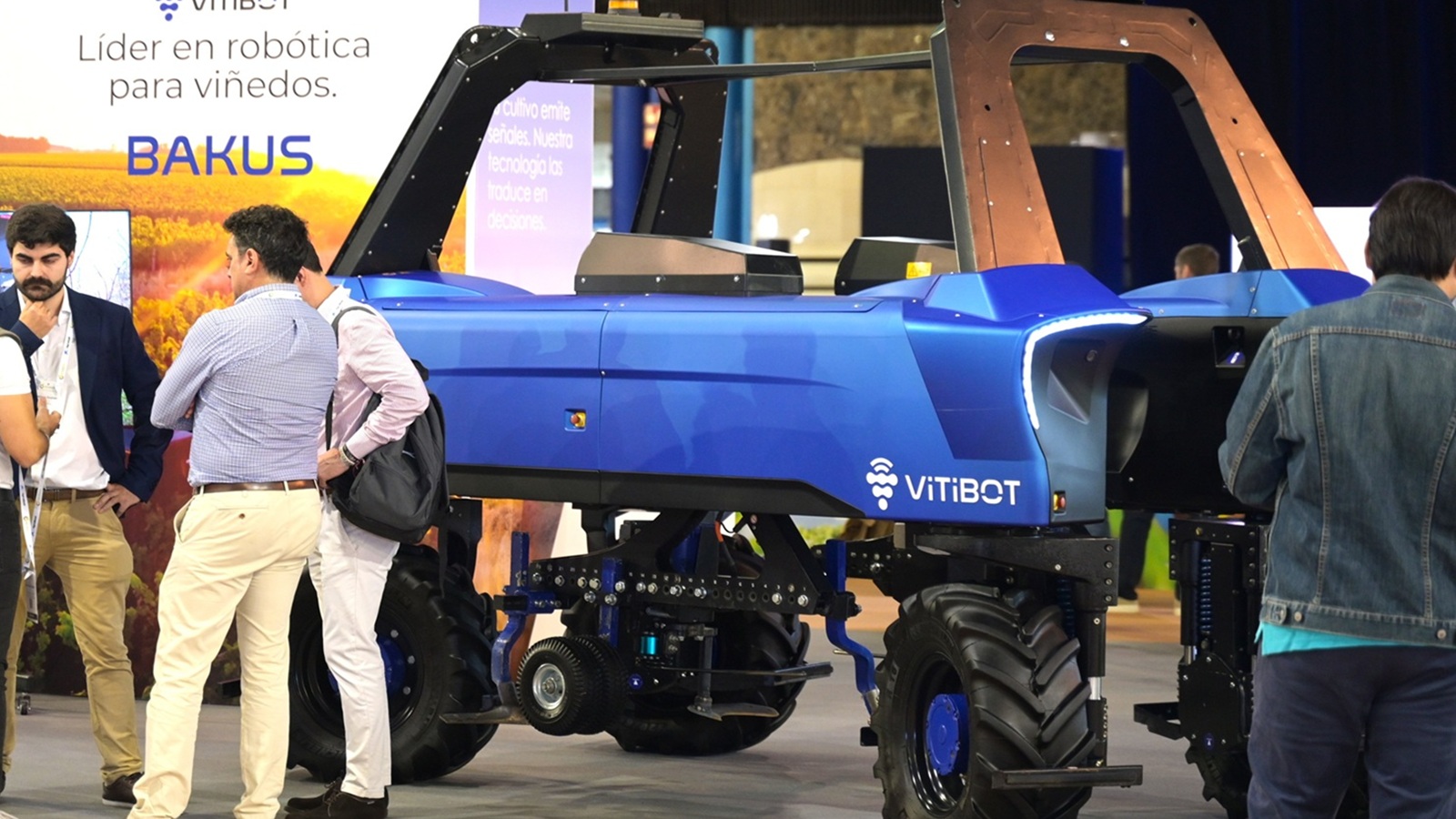
The incorporation of sensors, data analytics systems, and precision agriculture solutions is changing how farm operations are managed, enabling a more detailed understanding of crop status, anticipating potential issues, and adjusting resource use such as water or fertilizers. Spain is advancing in this shift and already leads investment in agricultural technology in Europe, with 32% of farms having adopted digital solutions or advanced machinery, compared with 20% for the EU as a whole, according to a survey by the European Commission and the European Investment Bank. In this context, Expo AgriTech 2026 will once again place Malaga, Spain at the heart of agricultural innovation, on November 4 and 5.
The fair will host several specialized forums that will showcase advances aimed at improving the profitability and productivity of farming operations. One of them will be the AI forum, which will analyze how this technology and the data economy are playing an increasingly relevant role in modernizing the agricultural sector, thanks to the ability to collect, share, and analyze information to optimize farm management.
Sessions and Talks
To address these possibilities, Antonio Alcolea, Deputy Director General for Programs, Governance and Promotion at the Directorate-General for Data, will present the keys of Spain’s data economy strategy and the role of data spaces in boosting agri-food competitiveness. Additionally, the Center for the Reference Economy of Data (CRED) will introduce the National System of Agri-food Data (SNDA) and the conclusions of its study on the data economy in the sector, highlighting the opportunities that data exchange offers for farmers, cooperatives, and companies.
Meanwhile, José Francisco Aldana, director of ÁGORA Datalab at the University of Málaga; Juan Manuel Jurado, researcher and associate professor at the University of Jaén; and Manuel Teva, head of the Agro-food Innovation and Digitalization Service of the Ministry of Agriculture, Fisheries, Food and Rural Development, will share sector initiatives driven under the Ministry’s calls for Digital Transformation, analyzing their practical applications, the results obtained, and the barriers to implementation.
However, the adoption of these technologies also raises challenges related to accountability, transparency, and privacy. Rosa Gallardo, director of the ENIA International Chair of Artificial Intelligence and Agriculture at the University of Córdoba, will examine the ethical and regulatory challenges of intelligent systems, as well as the safeguards needed for farmers to use them with confidence.
As for direct field application, Carlos Barceló, Director of Automation, Processes and Data at Primaflor; Rubén Valero, CEO of Naturinda; and Gonzalo Martín, Chief Product Officer of Hispatec, will present AI projects aimed at optimizing irrigation, improving harvest forecasting, detecting plant health issues, and facilitating planning, quality, and traceability of productions.
These solutions are also reaching food marketing. For example, Remolonas, whose CEO Carlos Pérez will explain how the use of data and AI enables identifying and managing surpluses, connecting supply and demand, and moving usable foods that fall outside traditional channels, helping to reduce waste and create new economic opportunities for producers.
Automation, Robotics, and Agriculture 4.0
Automation is also gaining ground in the field, driven by the need to improve efficiency and address labor shortages. Fernando de la Torre, CEO of Tecnobioplant, and Pedro Navío, Industrial Director of Agroejido, will analyze the maturity level of robots, sensors, and intelligent machinery, as well as their limitations and the requirements to integrate them into farming operations. Paula Ruiz, head of R&D at Trops, will address how robots, drones, and automated systems can facilitate agricultural tasks and transform the organization of work in the field.
Likewise, the conference will also emphasize the importance of collecting data and analyzing it in depth to gain a more detailed understanding of farm conditions. Pedro J. Sánchez, Production Director at Cualin Quality; and Jorge Molina, professor in the Area of Systems and Automation Engineering at the University of Almería, will discuss how to easily collect data on crops and integrate different information sources to diagnose problems, improve agricultural performance, and make better decisions.
The fair will also showcase other achievements of precision agriculture thanks to data sharing, including irrigation, fertilization, and treatments tailored to the specific needs of each farm, to optimize results. To demonstrate practical application, María Llorens, a farmer at Castillo de Ortegícar Farm, will present case studies on the use of these tools in crop management. The conference will also explore the possibilities offered by yield prediction tools to anticipate production and improve planning of farm operations. Alicia Cañadas, R&D and COEXPHAL Projects Coordinator, will explain what data these systems need to generate reliable forecasts and how to leverage their results to make decisions about resources, production, and marketing.