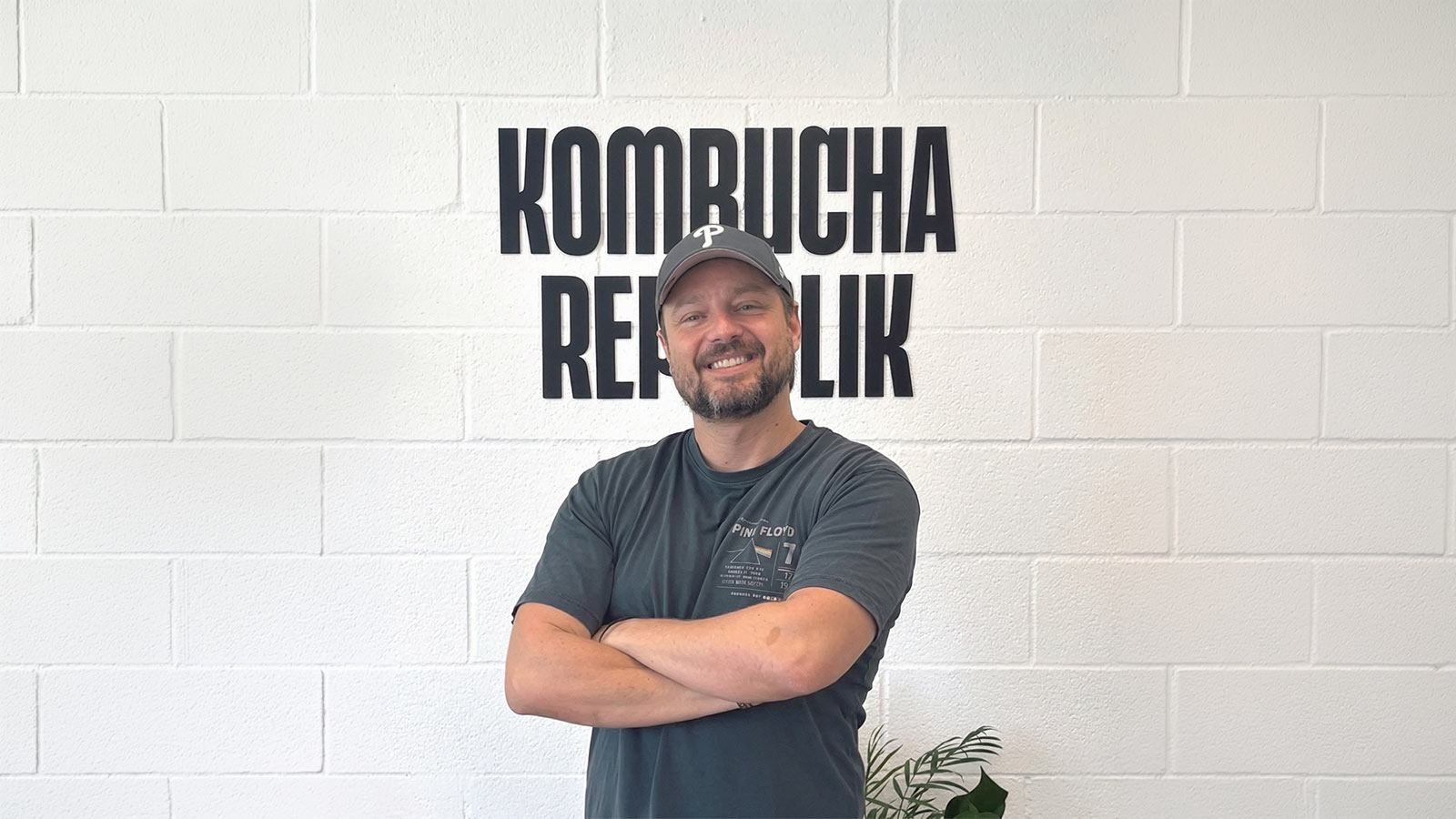
Hailing from Burgos, Spain, with a clear entrepreneurial spirit, Kombucha Republik has become one of the most compelling examples of how a small business can forge a path in the competitive healthy-eating sector. At the helm of this project is Pablo Frías, cofounder of the brand, who, along with his team, has managed to transform a small-scale idea into a proposition with its own identity, sustained growth, and an increasingly loyal community.
In this interview, Frías walks us through the early days of his business and the entrepreneurial spirit that has guided every step of the project. We discuss differentiation in a booming market, the pivotal role of branding and connection with the consumer, as well as the financial and operational challenges of growing without losing the artisanal essence. A conversation especially valuable for entrepreneurs and SMBs seeking real inspiration from the field, showing that ambitious, long‑lasting brands can emerge from cities like Burgos.
MuyPymes: How did the idea for Kombucha Republik come about, and what problem did you aim to solve from the start?
Pablo Frías: Kombucha Republik was born a few years ago when we began making kombucha artisanally at home. We realized our recipe had a more balanced profile than many of the options we found on the market: less sweet, less sour, and with a more natural, approachable flavor.
From there, we identified a clear opportunity: existing kombucha was largely niche and presented significant barriers, especially logistical ones such as the need for refrigeration or a short shelf life. Our objective was to reinterpret this ancient beverage to suit current habits, making it more accessible, practical, and scalable for consumers as well as for channels like retail and HoReCa.
MuyPymes: What strategies did you use to differentiate yourselves within the health beverage sector?
Pablo Frías: From the start we were clear that, in food, flavor is king. That’s why we developed a kombucha with a friendlier, less aggressive profile, made with natural ingredients of organic origin and fermentation with SCOBY.
But differentiation goes beyond the product. We opted for a slim-can format, pasteurized and shelf-stable, which eliminates many distribution and consumption barriers. This allows us to position ourselves not only as a healthy beverage, but as a real alternative within social consumption: a versatile, contemporary choice suited to different moments.
In short, our strategy blends technical innovation, an understanding of the professional channel, and a clear commitment to the product.
MuyPymes: What role has branding and the community played in the growth of the brand?
Pablo Frías: Branding has been key from the outset. We built a fresh, contemporary identity with a certain rebellious edge, that goes beyond a purely healthy narrative. We wanted to create a brand with personality, connected to today’s lifestyle.
This has allowed us to build a highly engaged community, especially in urban environments, that not only consumes the product but also shares the brand values. That community acts as natural ambassadors and has been essential for amplifying our reach and validating our positioning.
MuyPymes: Financially, what was the most critical moment and how did you handle it?
Pablo Frías: One of the most delicate moments was the early phase of industrialization. Moving from artisanal production to a scalable model required a significant investment, especially with the construction of our own plant equipped with advanced technology.
We managed it by prioritizing the long-term vision: we chose to develop a solid and coherent product from the start, even if that meant growing more gradually. That discipline, both financially and strategically, has been fundamental in building a sustainable foundation.
MuyPymes: Which sales channels have been key to your growth: retail, HoReCa, or e-commerce?
Pablo Frías: All channels play an important role in our strategy. The HoReCa channel has been key to introducing the product in its natural context and building the category.
The retail channel concentrates a large part of the volume and brings the brand closer to a broader audience, while e-commerce acts as a complementary channel, facilitating delivery to any location and reinforcing loyalty. The key is understanding the role of each and working in an integrated way.
MuyPymes: How do you manage production and quality as you grow without losing the artisanal essence?
Pablo Frías: We operate with a hybrid model. We maintain the principles of the original craft —SCOBY fermentation, natural ingredients, and respect for processing times— but we incorporate technology that lets us guarantee stability, safety, and consistency.
Pasteurization or the can format are not concessions; they are strategic decisions that help us scale without losing the essence. The challenge isn’t choosing between artisanal or industrial, but integrating both worlds coherently.
MuyPymes: What advice would you give to a SME looking to enter the food or beverage sector?
Pablo Frías: The main advice is to understand that having a good product isn’t enough. It’s essential to identify a real market need and build a proposal that solves a concrete problem.
Additionally, you must work from the start with an integrated view: product, brand, channel, and operations. Thinking about scalability and the logistical and financial viability is key for the project to grow.
And above all, be patient and consistent. Building a brand in this sector is a long-distance race.