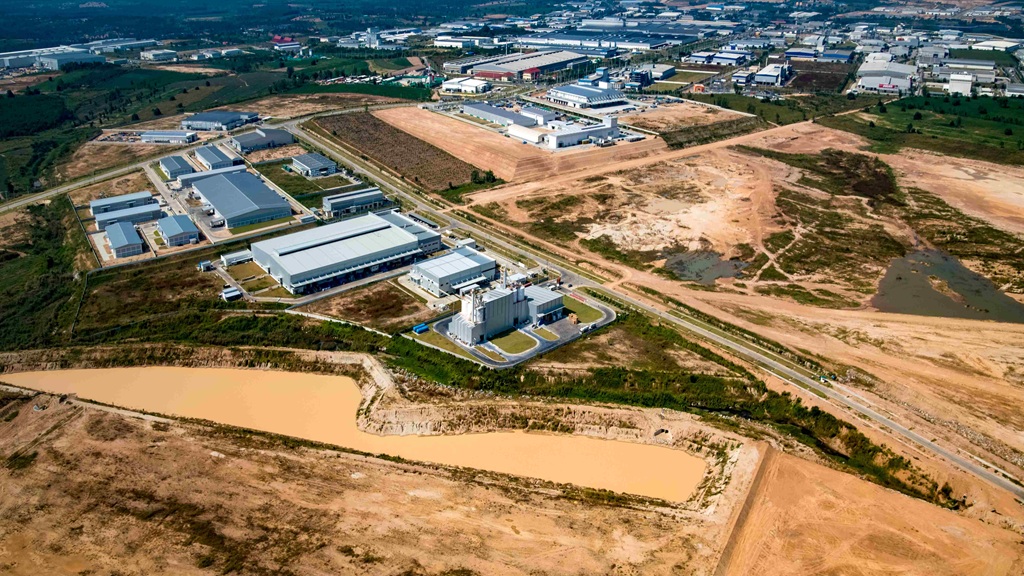
Proequity considers that the new Land Use and Territorial Planning Law of the Community of Madrid opens a historic window to regain competitiveness in the development of logistic and industrial land, an area where administrative timelines and uncertainty have become the main brake to activating new projects.
The Community of Madrid has stated that, under current regulations, the approval of a Comprehensive Plan can take between 10 and 12 years, and that only 21 of the 179 municipalities have updated planning, a situation that limits the region’s ability to generate land and support its economic and demographic growth.
In this context, the regional government has begun the process of processing a new legal framework with the aim of reducing timelines by more than half through a model of Municipal Strategic Plans (with an approval horizon of 4 to 6 years) and by shortening the development planning times (from 7 to 4 years, and even down to 1 year in certain cases).
“Madrid does not have a demand problem; it has an execution problem. Without shovel-ready land and without predictable timelines, projects are delayed, financial costs rise, and investment ends up seeking alternatives,” says Daniel Galache, Director of Land at Proequity.
Logistics: resilient demand, limited supply, and competition for land
The debate on land and timelines is especially critical for logistics, a sector that remains among the most resilient in Europe. However, its growth faces a recurring obstacle: the shortage of shovel-ready land and modern logistics spaces in strategic locations.
On top of this limitation, there is a context of stricter regulatory demands and development costs that continue to squeeze margins, making certainty around timelines and costs a decisive factor in triggering investment and new projects.
“When timelines become uncertain, the risk isn’t in the market; it’s in the calendar. And in logistics, the calendar is everything,” adds David Martínez, CEO of Proequity.
What the reform must resolve to unlock logistics land
Proequity believes that the real impact of the new Law will depend on the final text incorporating operational measures that address the region’s main bottlenecks in productive land:
- Defined timelines and effective coordination of sectoral reports, to avoid duplications and “chain waits” between administrations. The Community itself has identified as a central objective to improve coordination and streamline urban processing.
- Simplification and ordering of the regulatory framework, replacing the current dispersion with a single clearer, more homogeneous, and predictable legal framework.
- Legal certainty and cost predictability, especially relevant for institutional investment: without visibility of timing and costs, returns are difficult to model and entry barriers rise.
- Infrastructure and access to energy/power, a factor increasingly decisive for the viability of logistics real estate projects and the competitiveness of sites, especially in the face of electrification of operations and rising technical requirements.
Moreover, the company emphasizes that the debate about execution tools should focus on how to accelerate land transformation through schemes that provide management capacity to processes, while maintaining public oversight, legal certainty and transparency.
The Community of Madrid has indicated that it expects the new Law to be operational in early 2027, after a process started with public consultation and meetings with municipalities to explain the guiding lines of the new framework. “If the reform can translate into less administrative friction, shorter timelines and a more predictable framework, Madrid can regain capacity to generate land and reinforce its leadership as a logistics and industrial hub,” concludes Daniel Galache, Director of Land at Proequity.