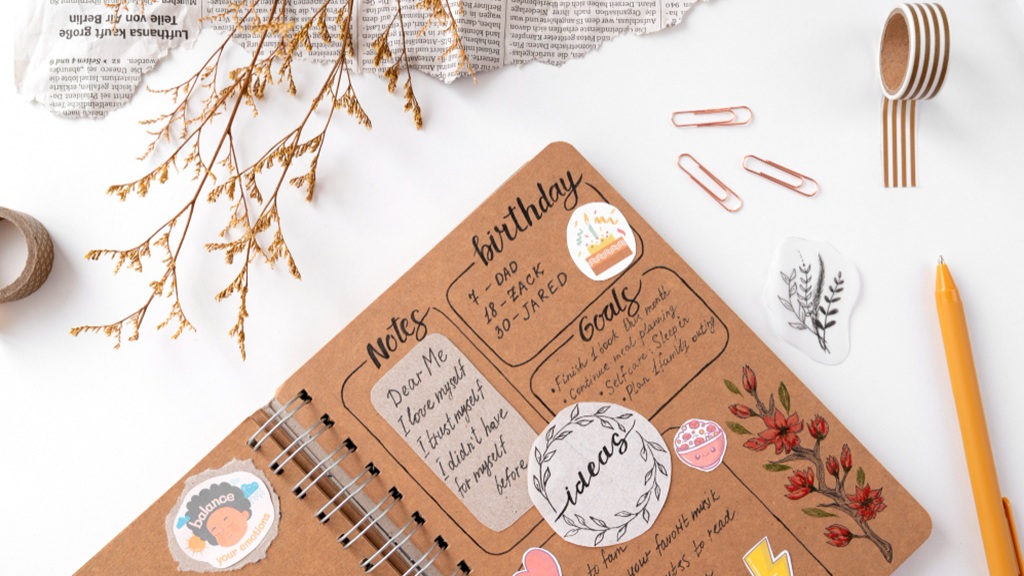
March is the perfect time to pause, reassess our goals, and get our personal organization back on track. After the fast pace of January and February, this month offers the perfect opportunity to consolidate habits without the pressure of a New Year push, and to assess whether all the resolutions that arrive with January are truly viable.
With this goal in mind, 123tinta.es shares a series of tips to help you stay organized by creating a Bullet Journal. This method has become one of the most effective and creative ways to plan goals, tasks, and projects.
What is the Bullet Journal method?
It’s a personal organization system that combines a calendar, a task list, and a daily journal in a single notebook, in a visually integrated format. The aim is to help people organize their ideas, tasks, and goals in a clear and flexible way.
It is based on the use of structured lists, “bullets” symbols, and monthly, weekly, and daily logs that allow you to plan, track habits, and reflect on progress. The main feature is that it is a completely personalized form of organization, tailored to each person’s tastes and practical management.
Tips for starting a Bullet Journal:
- Start with a clear vision for the month. Before creating lists, it’s advisable to dedicate a page to defining the month’s priorities. Identifying the objectives you want to consolidate and the habits you want to reinforce helps establish a solid, realistic foundation. For this, all you need is a notebook and a pen that encourages smooth writing.
- Choose the format that best suits you. The Bullet Journal can adapt to different formats: dot grid, squared, ruled, or blank paper, depending on the style of organization you prefer. Loose sheets also provide an interesting alternative, as they let you organize sections or files by month. If you’re using markers, opt for paper of at least 100 g/m² to prevent show-through.
- Design a simple monthly calendar. Including key dates, important appointments, and deadlines helps structure the month clearly. You don’t need fancy designs—the functionality and clean visuals are key to maintaining consistency.
- Create realistic weekly entries. Break your goals into small weekly actions to make progress easier to track and to avoid overwhelm. Having comfortable writing supplies helps sustain the habit day-to-day.
- Incorporate habit trackers. March is a great time to measure progress. Habit trackers let you visualize, at a glance, your progress toward goals related to exercise, reading, or personal organization.
- Customize the space without sacrificing functionality. Adding colors or visual codes can reinforce your commitment to the system and make it more engaging. However, be aware that some alcohol-based markers can bleed through thin paper, so choosing the right materials is crucial for a good result.
In short, organizing doesn’t have to be complicated or expensive. The Bullet Journal method lets you manage day-to-day life in a practical, personalized way, dedicating only a few minutes to plan and prioritize tasks. This routine boosts productivity and helps reduce stress, especially when you have quality materials on hand.