Spain has 62,234 accounting and tax advisory firms, a highly fragmented sector in which 81.9% of offices have at most two salaried employees and 96.9% employ fewer than ten. Despite their small size, these professionals play a fundamental role in the Spanish business fabric: approximately 83% of SMEs and freelancers rely on an external advisor, according to Wolters Kluwer.
This business model is undergoing a transformation driven by digitalization, regulatory changes related to invoicing, and the growing adoption of artificial intelligence. As technology enables automating part of the administrative and accounting work, advisory firms have an opportunity to evolve from a service focused mainly on tax compliance to one in which they can offer more proactive financial guidance, helping businesses understand their economic situation, anticipate risks, and make decisions.
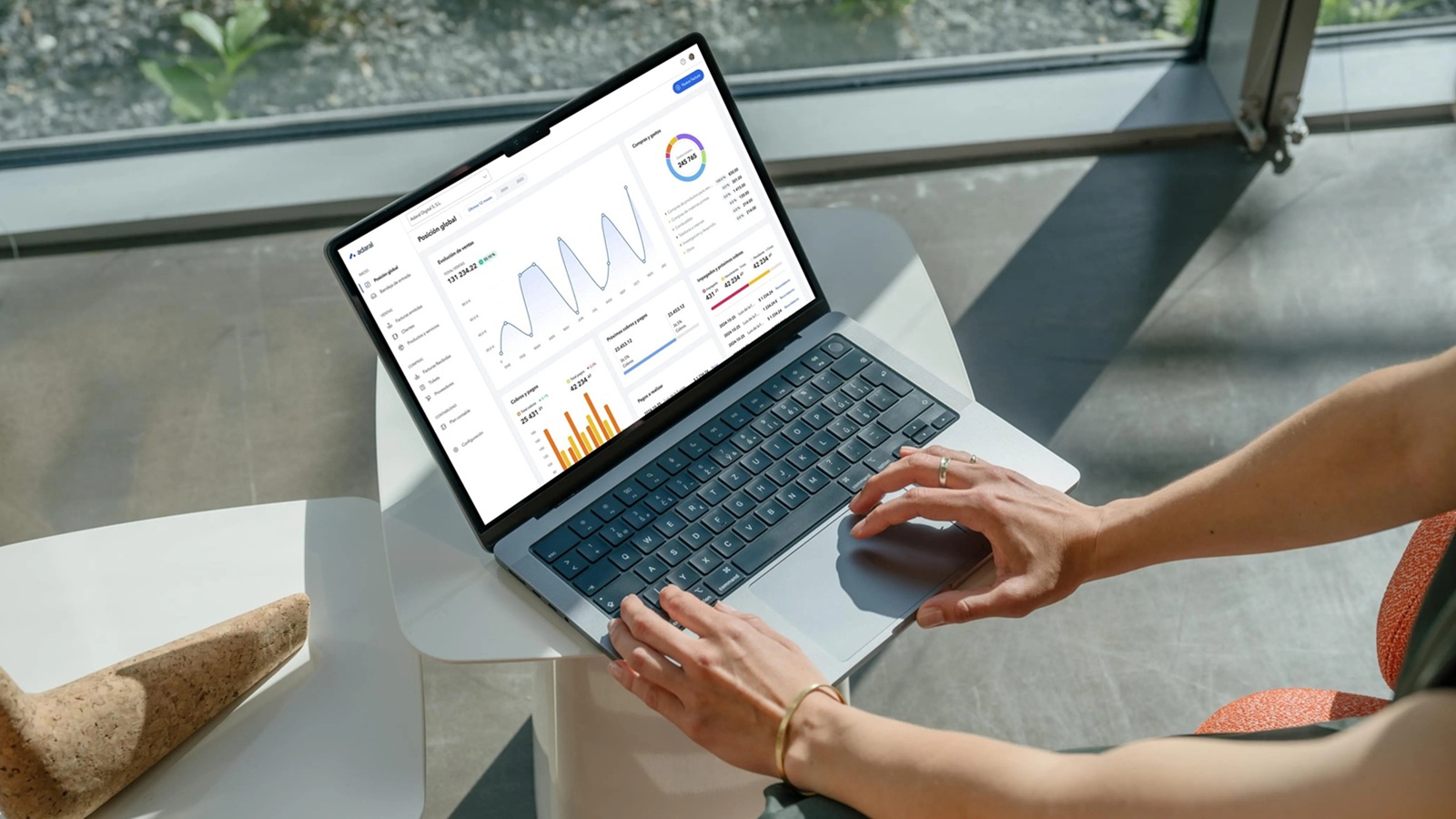
It is in that transition where Adaral stands. The company is developing an AI-powered technology platform that connects accounting and tax advisory firms with their clients and brings together in a single environment the documentation, processes, and financial information needed to work together. Its aim is not to replace the advisor, but to give them the technology they need to increase their capability and strengthen their relationship with the client.
“We believe the role of advisory services will change profoundly in the coming years,” explains Miriam Bailón, Head of Product at Adaral. “The advisor will remain the person who best knows the numbers of many small businesses, but increasingly they will have more opportunities to use that knowledge to help the entrepreneur look forward. Our ambition is to give them the tools to do this systematically and at scale.”
The company has seen significant growth in recent years and now manages close to 30,000 SMEs through its technology, with €2 million in annual recurring revenue (ARR). It has also surpassed €7 billion in value processed through its platform and expects to close 2026 with more than €11 billion.
From Filing Taxes to Anticipating Financial Needs
Traditionally, a large share of advisory firms’ work has focused on collecting invoices, recording transactions, preparing tax returns, and explaining to the business owner the results of their activity after the accounting period has ended. However, the progressive automation of these tasks opens the door to a model in which the advisor can dedicate more time to analyzing each client’s situation and helping them manage their business.
Adaral’s vision rests on four capabilities: automate, inform, predict, and collaborate. Automation removes repetitive work and returns time to people; information converts scattered data into a reliable, up-to-date financial picture; the predictive capabilities of AI can help identify trends, risks, or opportunities before they become a problem; and collaboration enables the advisor and the entrepreneur to use that context to talk and make decisions together.
The company summarizes the benefits of that evolution as time, control, forecasting, and decision. “We don’t want SMEs to need their advisors less, but to rely on them more. Technology can process data, but business knowledge, judgment, and the trusted relationship come from the professional. Our goal is for the advisor to progressively assume a role similar to an external chief financial officer for their clients. We want to automate the impersonal to multiply the personal,” Bailón notes.
Automation as a Starting Point
One of the main sources of friction for a firm is the diversity of ways its clients work. In a single portfolio, you can have SMEs with different invoicing programs, businesses sharing documents by email or cloud folders, and others still relying on manual processes.
Adaral aims to reduce that complexity by integrating with the tools already used by firms and SMEs, including solutions such as A3, Holded, or Dropbox. The platform also applies AI to processing documents and other administrative and accounting tasks. For example, when a client sends a single PDF with multiple invoices, Adaral can separate the documents, identify them, and automatically organize them before review.
Once the information is processed, both the advisor and the client can work off a single base of documentation and financial data. For Adaral, that shared space should not be limited to acting as a portal for file exchanges. The ambition is to progressively turn it into the digital space of the financial relationship between the SME and its advisor: a place from which the entrepreneur can understand how their business is doing and from which both parties can communicate and jointly resolve financial issues.
The conversation can arise reactively, because the entrepreneur needs to make a decision, or proactively, because the advisor has identified something in the numbers that deserves attention. In both cases, the objective is to close the gap between having information and using it to act.
“That’s the evolutionary step we want to take, that advisory firms not only have access to their clients’ data but can turn it into practical recommendations at the right moment. It’s about automating the past, understanding the present, and anticipating the future to help SMEs make better decisions,” concludes Bailón.