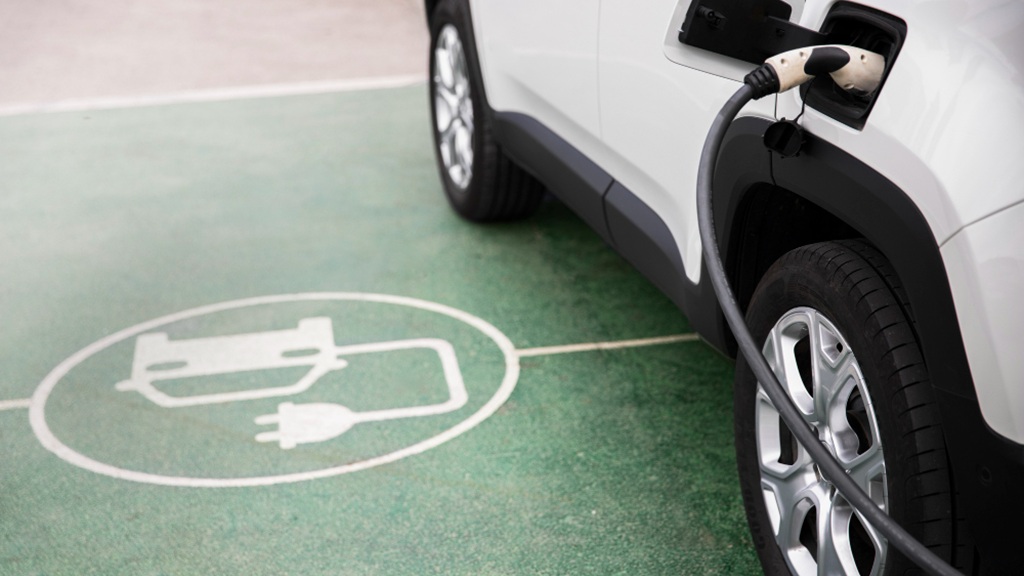
The electrification of commercial fleets is advancing, but the business around those batteries is not just about buying the vehicle. There are at least three distinct business models, and none requires necessarily owning a fleet of your own: installing and financing charging for others, keeping it up and running, or giving batteries that no longer serve to move a vehicle a second life. It’s still a fragmented market, with room for specialized providers alongside the major manufacturers.
Deploying and Financing Fleet Charging
The first is to design, install, and finance the charging points a third-party or shared fleet needs: the role of an installer or a specialized financier, not someone who merely purchases their own chargers. Demand for that service is not lacking: 56% of Spanish companies plan to expand their electric fleets over the next two years, according to a DKV Mobility study with 1,732 fleet managers across eight European countries, although upfront cost remains one of the main barriers.
Two levers work in favor of those offering that service: the price of the battery, which continues to fall (an average of $115 per kWh globally in 2024, according to BloombergNEF), and the precedent of public funding: the MOVES Fleets Plus program mobilized 50 million euros in its first call for proposals, targeted at business projects with 10 to 500 vehicles, closed on February 10, 2026 and resolved by IDAE on June 26. It’s worth watching IDAE for the next call.
Operating and Maintaining
The second is to take charge of others’ infrastructure, or to put it into operation. Spain had 56,682 public charging points in operation by the end of Q2 2026, but another 17,821 were installed but still offline: 24% of the entire installed network, according to ANFAC’s Electromobility Barometer. The challenge is no longer just installing: you also have to connect, register, and maintain, a field that opens space for operators and specialized installers.
Giving Batteries a Second Life
The third, still emerging, is diagnosing, refurbishing, and integrating into another use the batteries that no longer deliver enough to move a vehicle (typically around 80% of their original capacity) but still serve for years as stationary storage. McKinsey estimated that second-life batteries for stationary storage could exceed 200 GWh per year by 2030. It has its own barriers (warranty, traceability, safety, irregular supply of retired batteries) and is a market still in formation.
Behind these three businesses looms a fourth layer, still in its infancy: using the vehicle’s battery, while parked and connected as an energy resource for the building or the grid (V2G). Spain plans to reach 22.5 GW of storage capacity by 2030 under the National Integrated Energy and Climate Plan, and part of that capacity could be supported by electrified fleets. It is prudent to be cautious: the International Energy Agency notes that the availability of vehicles with V2G capability remains very limited and that interoperability and regulatory barriers persist. This is the horizon, not this year’s business.
For a small or medium enterprise, each of these business models translates into a distinct revenue stream: installation and supervision fees for charging, contracts based on availability for maintenance, and certified diagnostics and refurbishing for second-life use. The opportunity isn’t to compete with manufacturers on the volume of cars or batteries, but to specialize in a specific link in the chain, secure the necessary credentials, and build partnerships with installers, energy managers, and fleets.
Marc Bara, Professor at EAE Business School