Companies are redefining their strategies for motivation and internal cohesion in a context defined by rising workplace disengagement, high talent turnover, and declining employee commitment. In this environment, experiential, athletic, and collaborative activities are gaining prominence as tools to strengthen team connection and enhance the employee experience.
The data supporting this trend are compelling: according to Gallup’s State of the Global Workplace 2025 report, 79% of employees do not feel engaged with their company, while 50% say they intend to leave their current job. This lack of emotional connectedness translates into a direct hit on global productivity, with losses estimated at €376 billion annually (roughly $420 billion).
This disconnection reflects a broader transformation in the employee–organization relationship, where the human-factor care has become lacking. In fact, according to Nailted’s Employee Experience Report, only 59% of workers feel that their company provides adequate support for emotional well-being.
Additionally, there is a progressive decline in job satisfaction, which has fallen 8% since 2019 according to WorkTime 2026 data, signaling a structural shift in professionals’ expectations about their work environment.
The Employee Experience as a Strategic Priority
Against this backdrop, companies are realigning their internal policies toward initiatives that foster interaction, cross-functional communication, and the strengthening of bonds between teams. The goal is not merely to improve the workplace climate, but to foster a deeper sense of belonging within organizations.
According to María Luaces, Head of Talent & Development at Synergie Spain, “cohesion dynamics and shared experiences are taking on an increasingly relevant role because they directly impact motivation, collaboration and the sense of belonging to the team. They are no longer one-off actions, but part of the company’s cultural strategy.”
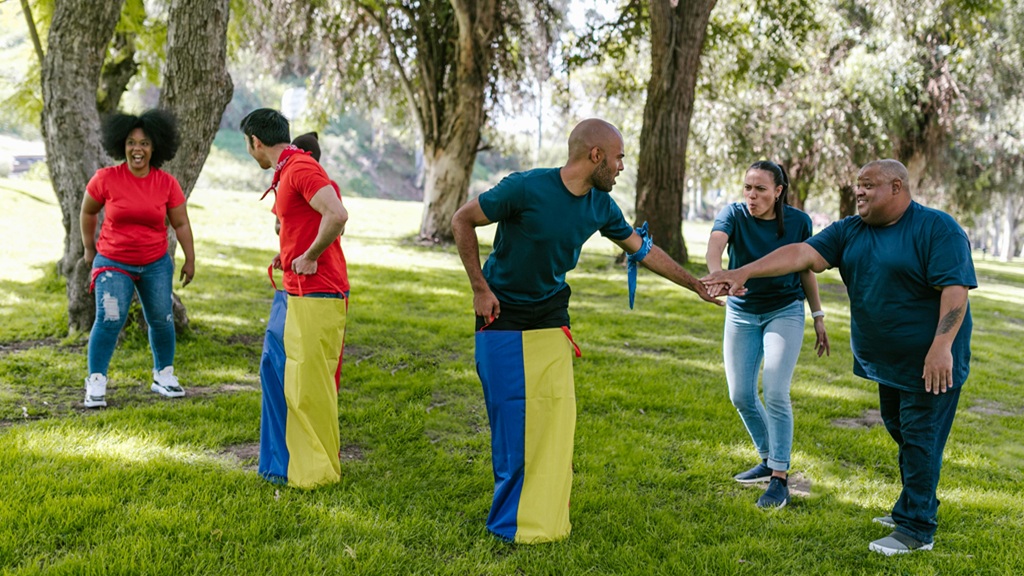
In line with this strategy, the sector in Spain is betting on innovative team-building formats that are in full swing and break with traditional schemes. Today, companies seek disruptive experiences ranging from the adrenaline of Jungle Tag obstacle courses and outdoor sports such as kayaking or hiking to brain-teaser challenges such as gymkhanas, escape rooms, and sensory challenges.
Additionally, gastronomic and leisure offerings such as Crazy Tapas, paella contests, cocktail masterclasses, and musical bingo are thriving, alongside creative workshops in ceramics, painting, or floral art; a broad range of activities that have become key tools by combining cooperation, organization, and decision-making in non-conventional environments, far removed from the daily office routine.
Other companies have chosen to reinforce their wellbeing and team cohesion policies by organizing internal leagues, paddle tennis tournaments and various corporate sports activities. These initiatives integrate sport as a tool for interpersonal connection and as an increasingly present element in building corporate culture.
Direct Impact on Productivity and Absenteeism
Beyond its cultural dimension, team cohesion has a direct impact on business outcomes. According to WorkTime 2026, business units with higher levels of engagement show 78% less absenteeism and a 14% increase in productivity.
Moreover, environments with highly engaged teams exhibit more consistent activity levels and greater efficiency in completing tasks, reinforcing the link between the employee experience and organizational performance.
“From HRED, the Synergie Group’s division specializing in delivering training and experiences to boost teams, we have found that companies are realizing that motivation does not depend solely on financial incentives or flexible working arrangements. Building bonds, shared experiences, and organizational culture have become structural elements in talent management,” adds María Luaces.