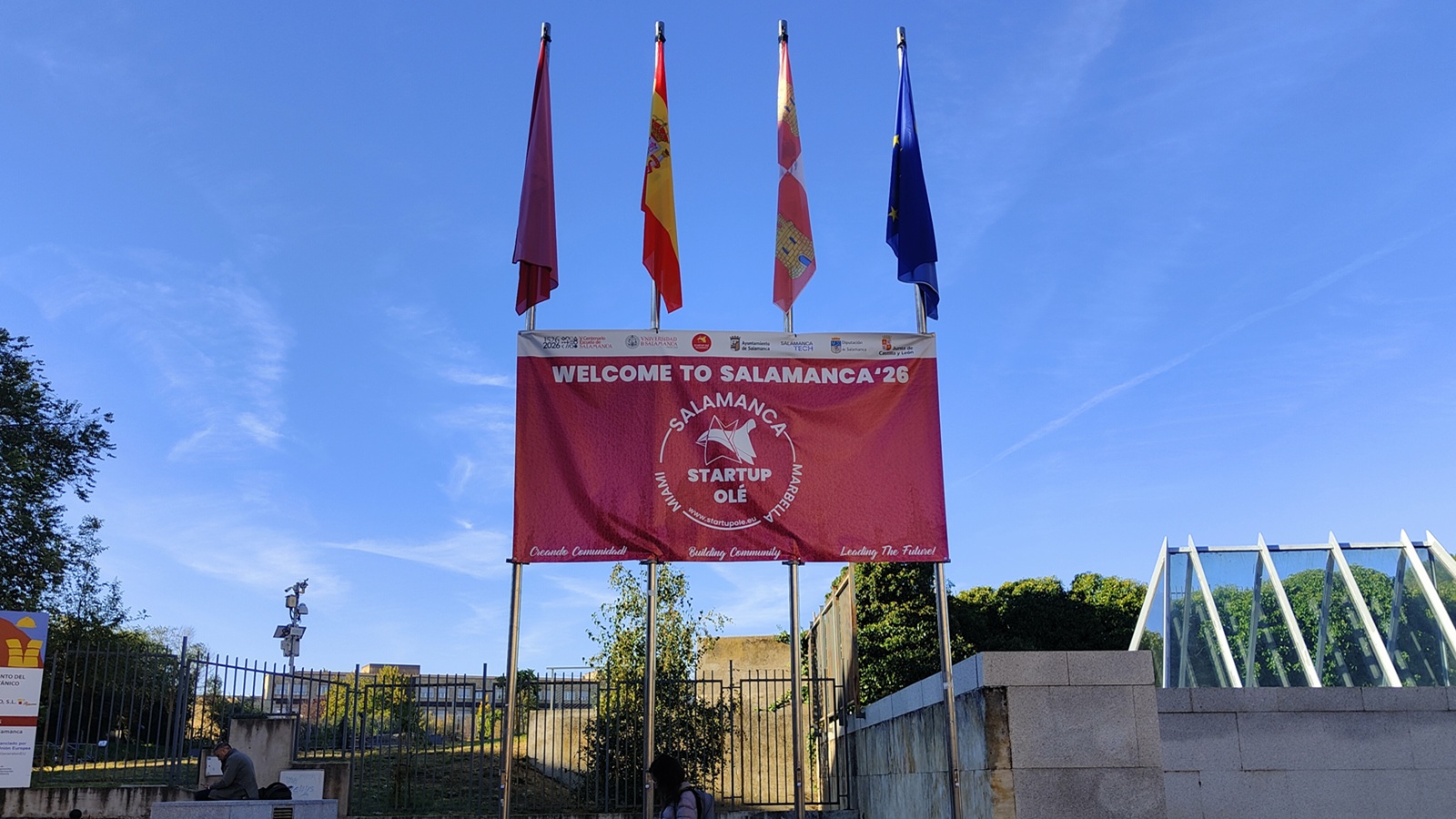
Salamanca has once again become one of the major gathering points for tech entrepreneurship, as the latest edition of Startup OLÉ Salamanca 2026 comes to a close today. After thirteen editions, the event has carved out a significant place in the calendar of startups, investors, and technology companies from both Spain and around the world.
And it’s clear that Startup OLÉ is much more than a string of innovation talks. The event offers a space where entrepreneurs taking their first steps can present their projects, secure funding, forge partnerships, and above all, gain visibility within an ecosystem that isn’t always easy to reach when you’re just starting out.
This edition once again brought to the fore several major trends transforming the business landscape: artificial intelligence, cybersecurity, biotechnology, digital health, sustainability, and dual-use technologies. But it also gave center stage to issues such as rural entrepreneurship, inclusion, female leadership, and the need to extend innovation beyond the big urban hubs.
As in previous years, the program blended roundtables, encounters between companies and investors, project pitches, and startup competitions. A formula designed to turn conversations into real growth and collaboration opportunities.
Emilio Corchado: Salamanca as a hub for innovation
One of the central moments this edition occurred yesterday with the institutional press conference held before the official opening. Attendees included Emilio Corchado, CEO and founder of Startup OLÉ; Carlos García Carbayo, mayor of Salamanca; David Mingo, president of the Provincial Council of Salamanca, and Guillermo Santamaría, counselor of Economy, Employment, and Digital Transformation for the Junta of Extremadura.
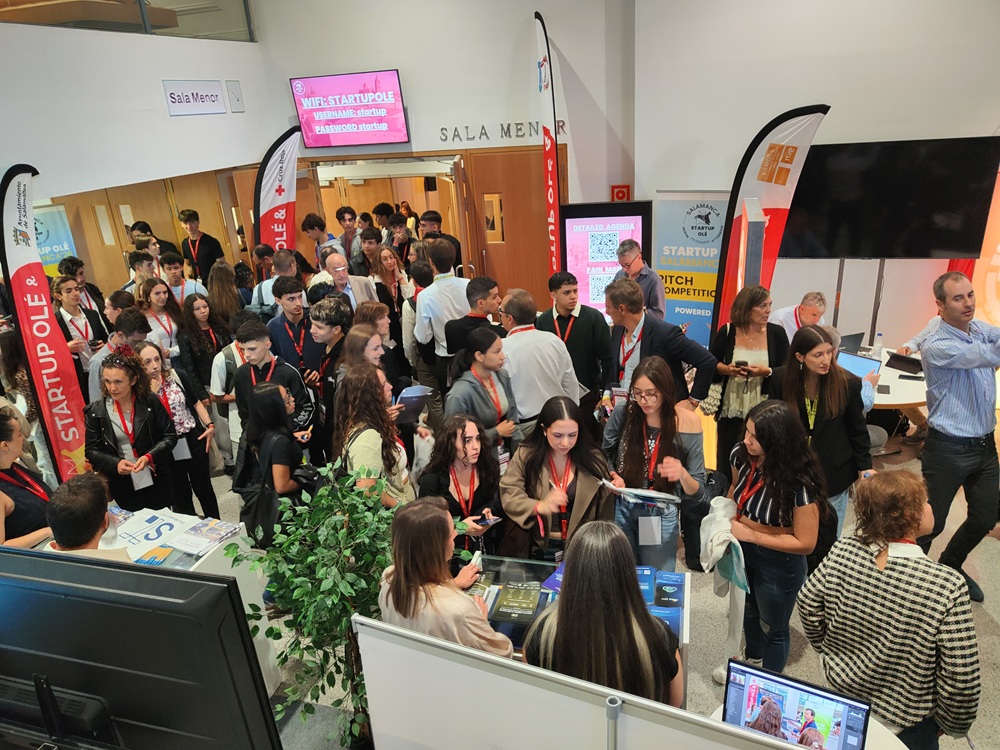
During his remarks, Corchado highlighted the growth of the gathering and celebrated that the figures from prior editions had been surpassed, with more than 4,000 attendees, 550 speakers, more than 520 companies, and around 150 roundtables, according to the data he shared with the media during the presentation.
Corchado stressed the importance of having turned Salamanca into one of the leading international hubs for innovation, technology, and entrepreneurship. A positioning that, in his view, enables connecting local talent with business opportunities that reach far beyond Spanish borders.
He also focused on the international startup competition linked to Pegasus Tech Ventures’ Startup World Cup, whose regional winner can qualify for the San Francisco final, where a $1 million investment prize is at stake.
For his part, Salamanca’s mayor, Carlos García Carbayo, highlighted Startup OLÉ’s role in developing the city as a tech hub. The leader argued for creating professional opportunities that allow young people to build their careers without having to leave their hometown. “Retaining talent isn’t asking our youngsters to give up their aspirations. It’s enabling them to fulfill them here.”
This reflection sums up one of the main challenges facing cities like Salamanca: turning university education, research, and knowledge into business activity, skilled employment, and new economic opportunities.
Echoing this line, David Mingo, president of the Provincial Council, recalled the institutional support for the event from its beginnings and advocated for entrepreneurship as a driver of provincial development. The institution participates with four companies working on applied innovation in the primary sector and with a forum dedicated to the opportunities innovation offers in rural environments and in the border region of La Raya.
Guillermo Santamaría, representing the Junta de Extremadura, used his remarks to highlight the growing presence of Extremaduran companies at Startup OLÉ, with 14 firms having their own exhibitor space, double the previous edition. The counselor emphasized female and rural entrepreneurship as engines of economic development.
Startups take the floor: from emotional health to environmental protection
Beyond institutional addresses and the impressive attendance numbers, one of Startup OLÉ’s main attractions lies in the expo area, where entrepreneurs have the opportunity to explain their ideas, showcase their solutions, and seek support to take their businesses to the next level.
Among the projects showcased this edition are initiatives that demonstrate that innovation isn’t always about building complex technologies, but about finding new ways to address social, business, and environmental needs.
One startup presenting its project in Salamanca is TEMOTIVA, an initiative we at MuyPymes already recognized as a finalist in our AI project contest for SMEs, which blends technology, artificial intelligence, and scientific knowledge to tackle one of the major challenges in the workplace: emotional health.
The startup has leveraged Startup OLÉ to present its proposal to the entrepreneurial ecosystem. In its participation it has counted on Gabriela Musterova and other team members, raising a pressing question: how to turn emotional well-being into a component of corporate strategy.
Another proposal that caught our attention was NeuroClic, a Madrid-based SME with Andalusian roots, which aims to combine neuroscience insights and natural formulations to develop products aimed at physical and emotional well-being. Its project revolves around the use of scents and inhalation products to help improve everyday aspects such as rest, concentration, energy, and stress management.
Sustainability also had representation through e-Coambiental, an Extremaduran initiative working on biodiversity conservation, environmental education, and projects to protect ecosystems.
Among its leaders is biologist Marta Villasán, a biodiversity conservation specialist and project coordinator. At Startup OLÉ, her proposal related to creating refuges for solitary bees gained visibility, drawing attention to pollinator protection.
Although much media attention typically centers on AI or software startups, projects like this remind us that innovation can also be found in solutions connected to nature and in improving urban environments.
The grand challenge: turning ideas into viable companies
The above proposals illustrate the diversity of entrepreneurship that gathers in Salamanca. Three projects from very different sectors share one common need: to find the resources, partnerships, and visibility necessary to grow.
And this is precisely where events like Startup OLÉ deliver their greatest value. For a startup, securing a few minutes of conversation with an investor, establishing contact with a major company, or receiving guidance from other entrepreneurs can make a meaningful difference in its development.
The gathering also offers an opportunity to learn about the main challenges facing new ventures. Financing remains one of the major obstacles, but not the only one. Customer acquisition, market validation, talent recruitment, and the ability to scale solutions are factors that determine the survival of many projects.
For that reason, one of the most interesting elements of the program was the chance to hold one-on-one meetings among entrepreneurs, investors, and companies, as well as to participate in project-pitch competitions. The presence of institutions such as the CDTI (Center for the Development of Industrial Technology) and representatives of investment funds helps bring financing tools closer to emerging companies.
Salamanca asserts its place on the technology map
Startup OLÉ 2026 once again proves that Spanish tech entrepreneurship is not confined to Madrid or Barcelona alone. University towns like Salamanca can play a meaningful role in creating innovative companies, especially when there is collaboration among institutions, universities, investors, and the business community.
The presence of international figures, entrepreneurs from different autonomous communities, and representatives of public bodies helps generate connections that would be hard to come by otherwise.
But beyond attendance figures and the event’s impact on the city, Startup OLÉ’s true success will have to be measured in the coming months: how many startups secure funding, how many partnerships translate into commercial deals, and how many projects mature into sustainable companies.
Because in the end, the greatest value of an event like Startup OLÉ lies not only in the technologies showcased but in the opportunities opened for those trying to turn a good idea into a real business.