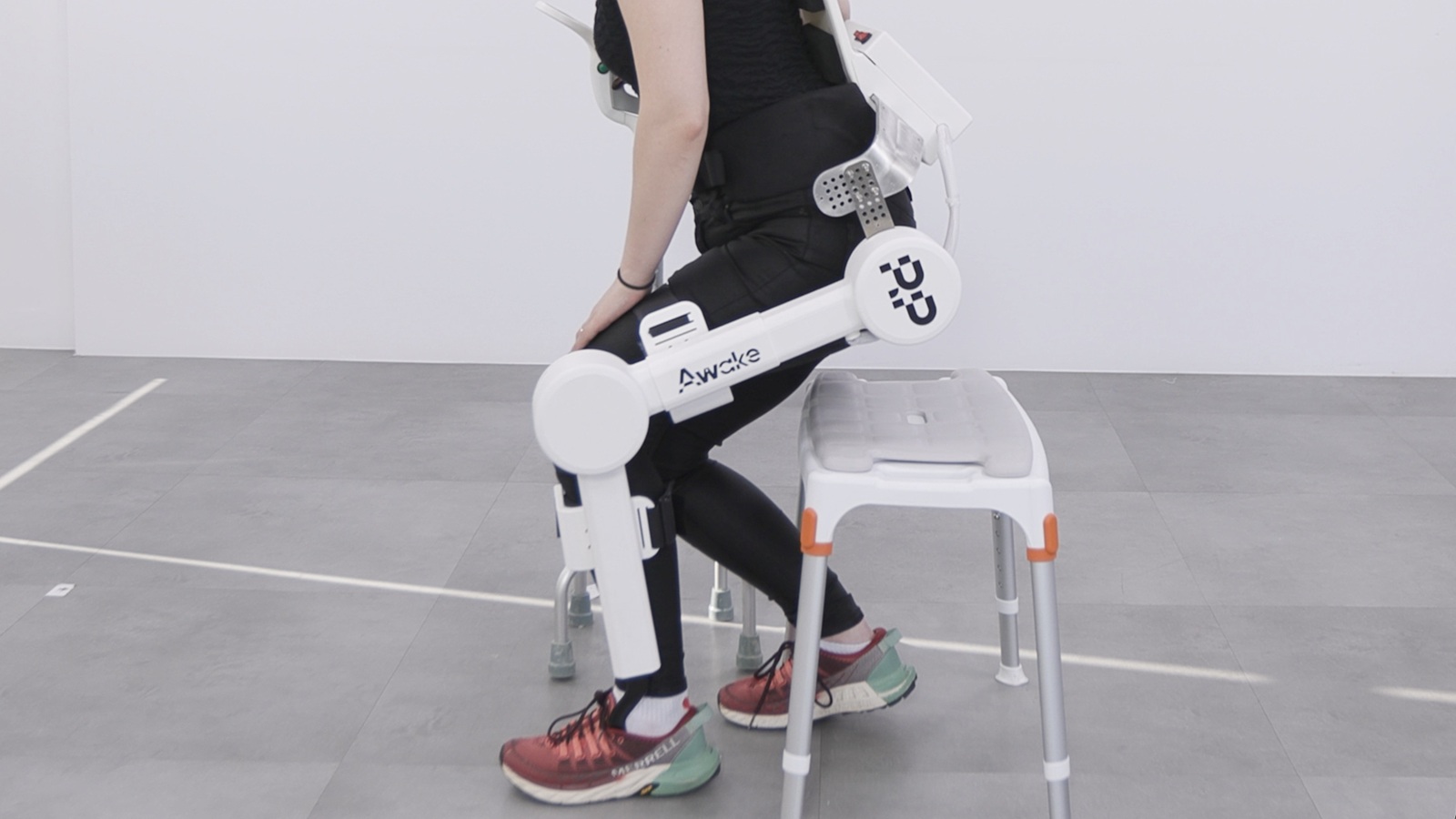
Regaining the ability to walk after a stroke means much more than simply standing up again. It means reclaiming part of the lost independence, being able to perform daily activities, and, above all, taking back control over one’s own life. This is the philosophy behind RoboPedics, a Catalan family-owned company that has transformed a personal experience into a business with a meaningful social component.
Founded in Barcelona in 2021, the company develops robotic solutions aimed at improving mobility for people who have had a stroke and suffer serious motor impairments. Its flagship innovation is Awake, a bionic device designed to help people who have lost mobility on one side of the body and rely on a wheelchair to move.
The challenge RoboPedics seeks to address is enormous. In the United States, stroke affects roughly 795,000 people each year, and about 25% of survivors struggle to walk independently.
From a Family Experience to a Business Idea
The story of RoboPedics begins with a turning point in its founder, Iván Martínez. His father suffered a severe stroke that left him paralyzed on one side and forced to use a wheelchair.
Seeking solutions to improve his father’s quality of life, Martínez discovered robotic exoskeletons used in medical centers. Yet he soon realized these devices had important limitations: they were bulky, heavy, expensive, and designed primarily for use in clinical settings.
That experience led him to wonder whether it would be possible to develop a lighter, more affordable, and better-suited solution to the real needs of a person with hemiplegia.
Thus began the idea of creating technology that would not merely support rehabilitation treatments but could accompany patients in their daily lives.
In 2021, Martínez helped launch RoboPedics together with Dionís Guzmán and Marc Serra, with support from Barcelona Activa. Since then, the project has evolved into a medical robotics company that blends engineering, technology, and a clear social vocation.
Awake: a Technology that Helps Take New Steps
The main innovation of RoboPedics is Awake, a bionic device that differs from traditional exoskeletons because it acts only on the leg affected by paralysis.
While many robotic systems require structures that cover both legs, Awake leverages the mobility preserved on the healthy side of the body and provides mechanical assistance to the affected limb.
The device incorporates electric motors that actuate the hip and knee, along with electronics and algorithms that coordinate movement with the user’s steps.
Its compact design, weighing about six kilograms, aims to facilitate its donning and reduce some of the barriers associated with conventional devices. It also includes gait-phase detection and fall-prevention systems.
But the truly differentiating aspect is the purpose behind its development: to enable a person who relies on a wheelchair to stand up, move around, and regain autonomy in certain daily activities.
It is not about promising complete neurological recovery or replacing medical treatments, but about offering a tool that compensates for some of the physical limitations caused by the stroke.
An Innovation with the Goal of Reaching Homes
One of the major challenges in health robotics is getting innovations developed in laboratories and hospitals to transition into the home environment.
Precisely, that is one of RoboPedics’ goals. The company does not want its devices to be used exclusively during rehabilitation sessions, but to become everyday assistive tools, whenever clinical and safety conditions permit.
To that end, the startup has developed two versions of its technology. Awake is oriented toward personal, home use, while ReWake is designed for hospitals and rehabilitation centers. The latter includes additional features that allow healthcare professionals to accompany and monitor the patient during their first sessions.
The company is currently at a pivotal stage of development. It employs a twelve-person team and is conducting clinical trials with patients at Barcelona-area hospitals, including the Germans Trias i Pujol University Hospital and Isabel Roig Hospital.
According to its projections, it expects to complete the current trials by early December 2026 and begin commercialization by late 2027, after the relevant regulatory processes are completed.