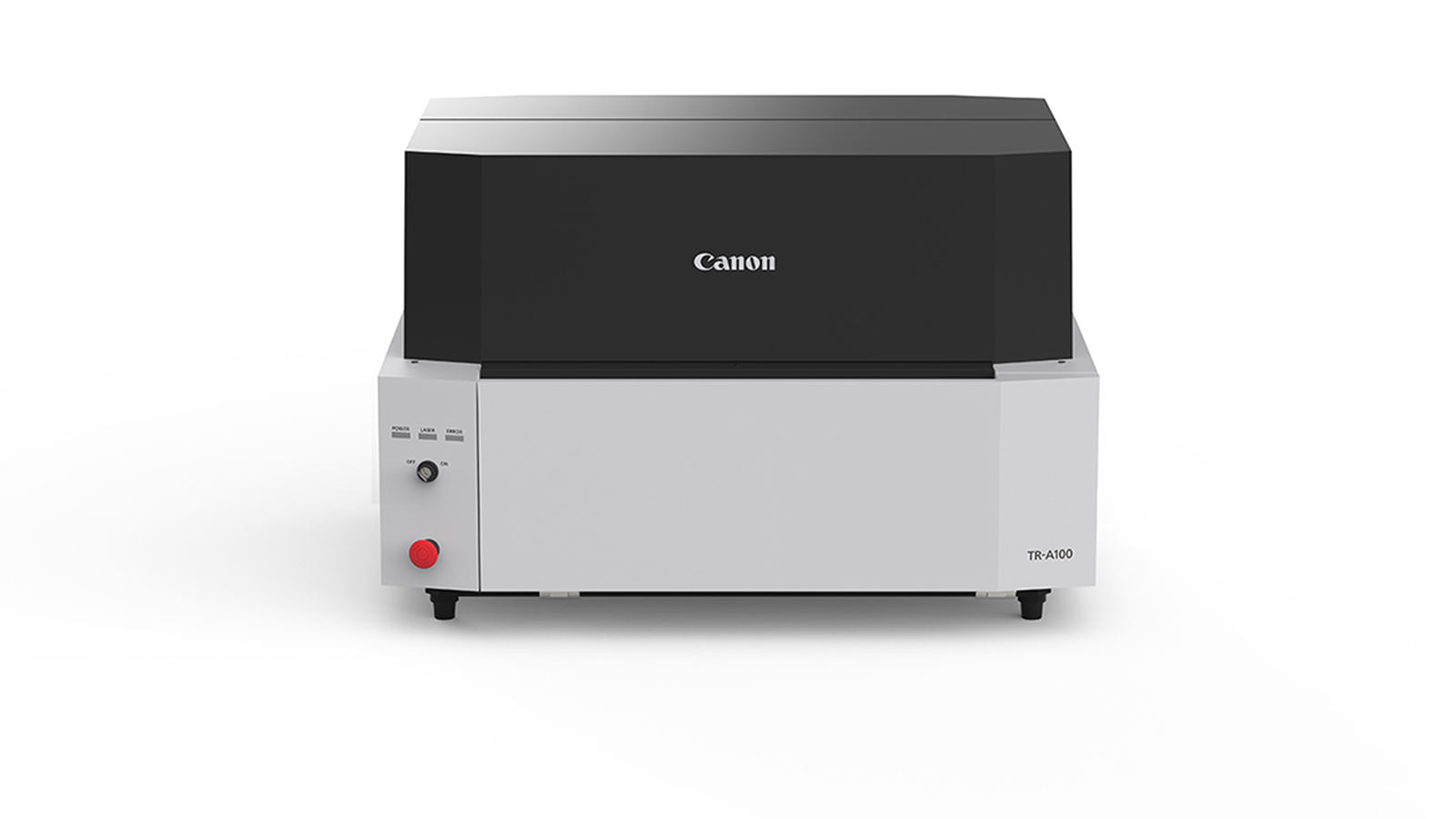
Canon has unveiled the new Raman analyzer for plastics, the TR-A100. This advanced plastic-sorting system is already available in Europe and brings to market a next-generation material-identification technology.
Effective plastic recycling requires a high degree of material purity, which means accurately identifying polymers such as ABS and polypropylene (PP). However, conventional near-infrared spectroscopy faces challenges identifying black plastics—common in electronics and automotive interiors—because of their light-absorption characteristics. This has historically been a bottleneck for recycling efficiency, a critical hurdle addressed by Canon’s new technology.
Maximum precision in black plastics
The TR-A100 plastic analyzer uses an advanced laser-scanning method that helps improve material identification. This technique oscillates the laser irradiation position to reduce energy density, even when analyzing multiple plastics laid out on a tray. This allows plastics to be identified without causing damage from temperature rise. By ensuring sufficient measurement time tailored to each case, the TR-A100 can precisely identify even black plastics, which typically generate weak signals for other technologies.
«The inability to classify black plastics efficiently has been a major barrier to achieving a truly circular economy in the EMEA region», said Peter Bragg, Sustainability & Government Affairs Director of Canon EMEA. «At Canon, we prioritize extending the life cycle of materials, avoiding waste, and championing circularity. Our new Raman plastic analyzer TR-A100 makes a definitive contribution to this goal by delivering unprecedented efficiency and speed, dramatically improving the purity of recycling. This breakthrough enables the recovery of large volumes of materials that could not be recycled until now and significantly accelerates our collective efforts toward a more sustainable future, strengthening our actions to advance circularity across Europe.».
The device enables rapid identification of plastic types and the determination of the target proportion (amount) present in the analyzed sample. The results obtained can be used by recycling plants to refine their collection and sorting processes, optimize operating conditions, and contribute to a substantial increase in the volume of recycled material.