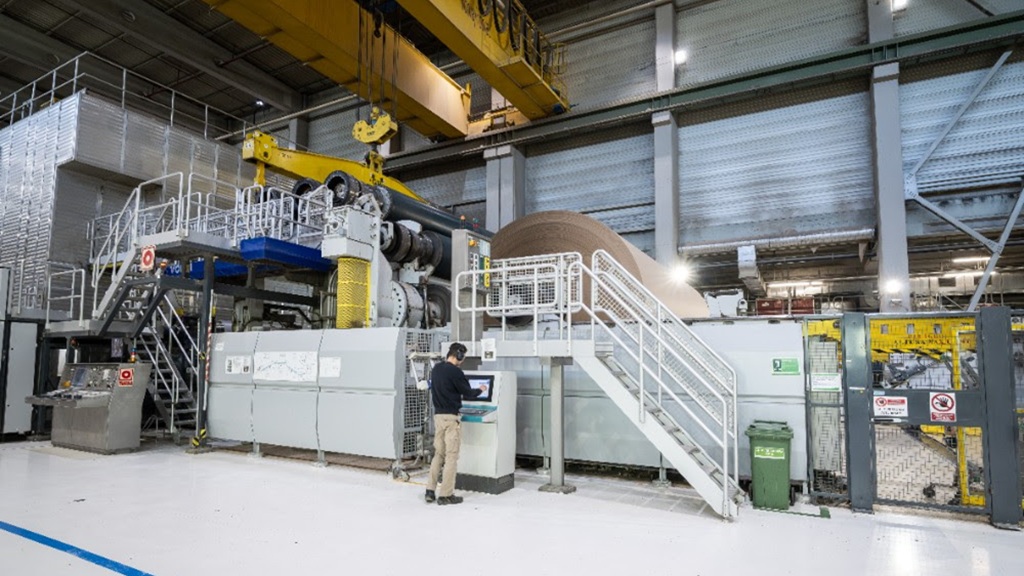
Spain has 70 pulp and paper mills, and it’s likely they won’t resemble the image many people have of them. Anyone visiting today’s production facilities will encounter highly digitized plants where sustainability guides every phase of the production process, and these sites are today generating strong demand for a range of professional profiles.
According to the Spanish Association of Pulp, Paper and Cardboard Manufacturers (ASPAPEL), the organization highlights how the technological and sustainable evolution of the Spanish industry is transforming the sector’s workforce needs. In addition to roles traditionally tied to operations and plant maintenance, there are now specialized profiles in fields such as data analytics, artificial intelligence, energy efficiency, or the development of new materials.
Pulp and paper companies are seeking a wide variety of professionals capable of combining technical knowledge (hard skills) with personal competencies (soft skills) that allow them to adapt to the demands of an industry in constant evolution. A combination that is increasingly relevant in a dynamic industrial environment with long-term professional development opportunities.
The profiles the sector demands and their technical skills
As industrial transformation progresses, new career opportunities emerge that augment the roles traditionally tied to factories:
- Automation, big data, and AI: profiles capable of working with automation systems, robotics, data analytics, predictive maintenance, and artificial intelligence applied to production processes.
- Sustainability: reductions in emissions, efficient water management, and waste recycling are driving demand for engineers and specialists in environmental fields, decarbonization, and energy efficiency.
- Biomaterials innovation: improving the properties of paper and developing new materials designed to replace fossil-based feedstocks open opportunities for researchers, R&D&I technicians, and chemical engineers with specialization.
- Qualified technical talent: engineers, especially those specializing in automation and industrial control, are among the most sought-after profiles. Alongside them, machine foremen and machine operators who play a vital role in the different stages of the production process, including the control and maintenance of the paper machine and other equipment. Maintenance technicians, electromechanics, and instrumentation technicians also remain highly important, essential to ensuring the facilities run smoothly. These roles require the technical ability to monitor processes, analyze indicators, and apply measures aimed at improving efficiency, productivity, and quality.
- Forest management: demand for professionals extends to plantation management, the source of the raw material. Needs range from foresters responsible for planning management and regeneration to specialists in forest genetics and qualified operators, such as chainsaw operators and machine operators.
The personal skills that make a difference and complete the professional profile
Technical knowledge remains essential, but the competencies that enable applying it, adapting to changes, and working in multidisciplinary teams are becoming increasingly important. These are the main ones:
- Adaptability and continuous learning: the ability to absorb new knowledge, technologies, and ways of working as processes and company needs evolve.
- Analysis and problem solving: interpreting information, identifying issues, and making quick and effective decisions.
- Teamwork: collaborating with professionals from different areas and coordinating with them to achieve common goals.
- Safety culture: commitment to safety, adherence to procedures, and the ability to identify and prevent risks in the work environment.
- Initiative and innovation: willingness to propose improvements, suggest new solutions, and actively contribute to the evolution of processes and products.
Inés Chacón, ASPAPEL’s Director of Human Capital, explains it this way: “The evolution in demand for profiles is also accompanied by a new way of working in the factories. Pulp and paper plants increasingly require professionals with a global view of the entire plant, capable of understanding how the different processes connect—from raw material management to the final product—and making decisions from an integrated perspective. Roles with repetitive tasks lose weight compared to supervisory, analytical, and decision-making functions. Alongside technical knowledge, adaptability and the desire to learn and grow in a constantly evolving industrial environment become especially important.”
Sustainability and innovation transform the industry and employment
Sustainability has become one of the central axes driving transformation in the paper sector. Companies are implementing on-site projects to improve environmental indicators, adopting technologies that cut energy use, optimize and recycle water, and find new uses for process waste, among other efforts.
Innovation advances in seeking applications for byproducts such as nanocellulose or lignin, in making better use of wood fibers that have been underutilized to date, and in new uses for paper and cardboard—such as packaging capable of containing liquids. This evolution is generating new knowledge and specialization needs and broadening the range of professional opportunities within the sector.
With 17,581 direct jobs and 88,000 indirect jobs, pulp and paper production is one of the main engines of industrial employment in Spain, with a strong presence in rural and semi-urban regions. But the sector currently faces a challenge shared with the broader Spanish industry: succession and the low representation of women in factories. 37% of workers are over 50, while only 10% are under 30, and women account for only 16% of the workforce, compared with 84% men.
The need to bring in new generations and close the gender gap is accompanied, however, by working conditions characterized by stability: 94% of contracts are permanent and 44% of workers have been with the same company for more than 15 years. This stability, together with the new opportunities tied to the sector’s transformation, could become one of its strongest arguments for attracting young talent.