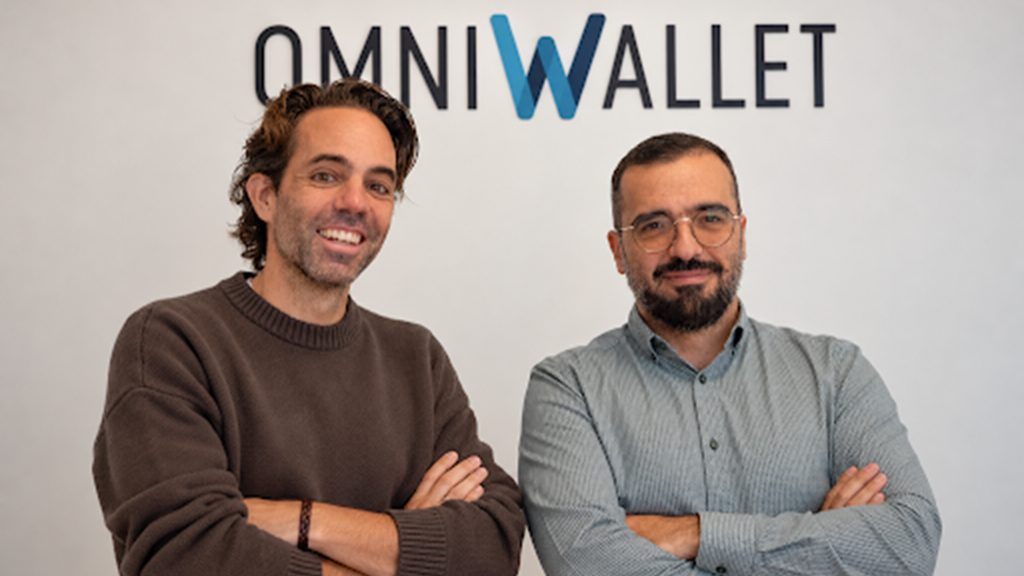
The Barcelona-born SaaS solution OmniWallet has closed a capital increase of €220,000 to fuel its growth by bringing in new strategic partners. The move comes after five years in which the company has developed and validated its technology with its own resources, reinvesting the income generated by its activity and consolidating a recurring-subscription business model.
The company chose to first build a stable platform, test it on real projects, and establish a customer base before opening its equity to external investors. Now, the funding will allow it to lean on the business acumen, sector knowledge, and commercial networks of the new partners to identify opportunities, forge alliances, and accelerate its expansion. “The most important thing about this capital raise isn’t the €220,000, but the people joining OmniWallet. We sought partners who understand strategic sectors for us, who can open doors, bring experience, and actively participate in the company’s development. We didn’t want investors alone; we wanted travel companions,” explains Nicola Picasso, cofounder and CEO of OmniWallet.
Five years of development with bootstrapped resources before opening capital
OmniWallet has been built over five years through bootstrapping, a model that relies on driving the company with its own resources and reinvesting the revenues generated by the activity, not relying on large funding rounds to build and validate the product. The project began from a need identified across various companies: although brands allocate substantial resources to acquiring new customers, they did not always have tools sufficiently integrated to know them, retain them, and coax them to buy again, especially when operating in both physical and digital channels.
What started as a service to solve concrete needs evolved into a packaged solution and, subsequently, into a software platform with its own architecture, integrations, and a recurring-subscription business model.
During this process, the company has worked on what it internally calls the “Product Eureka”: the point at which technology, the value proposition, and market needs converge to yield a solid, useful solution with growth potential. “I think the startup ecosystem has grown obsessed with funding rounds, valuations, and growth speed, while what really matters should be building businesses and products that work. We chose the reverse path: first develop, learn, err, improve, and find our Eureka product. And only then open the capital to accelerate growth,” Picasso notes.
A platform that connects physical and digital loyalty
OmniWallet is an omnichannel loyalty platform and customer-data management solution that enables companies to identify their customers, understand their shopping habits, and develop strategies to encourage repeat purchases. Its technology combines data management, loyalty, advanced automation, and applied intelligence to help brands make decisions and deliver more relevant experiences. Among its features are points programs, loyalty tiers, rewards, coupons, digital cards compatible with mobile wallets, advanced segmentation, marketing automations, and behavior analytics tools.
One of its main differentiators is the ability to connect physical and digital channels, so a brand can recognize and reward customers no matter where they shop.
New phase: technological development, commercial growth, and internationalization
The capital raise marks the start of a phase focused on accelerating growth based on the technological and commercial foundation built over the last five years. The company plans to expand the platform’s capabilities, especially in automation, artificial intelligence, advanced analytics, and personalization, in addition to broadening its integrations with tools for e-commerce, CRM, management systems, and sector-specific solutions.
Among its priorities are strengthening customer acquisition, developing strategic partnerships, and pursuing international expansion. In this new stage, OmniWallet prioritizes entry into Italy and Portugal, as well as Latin America, with particular emphasis on Colombia, Chile, Panama, and Ecuador.