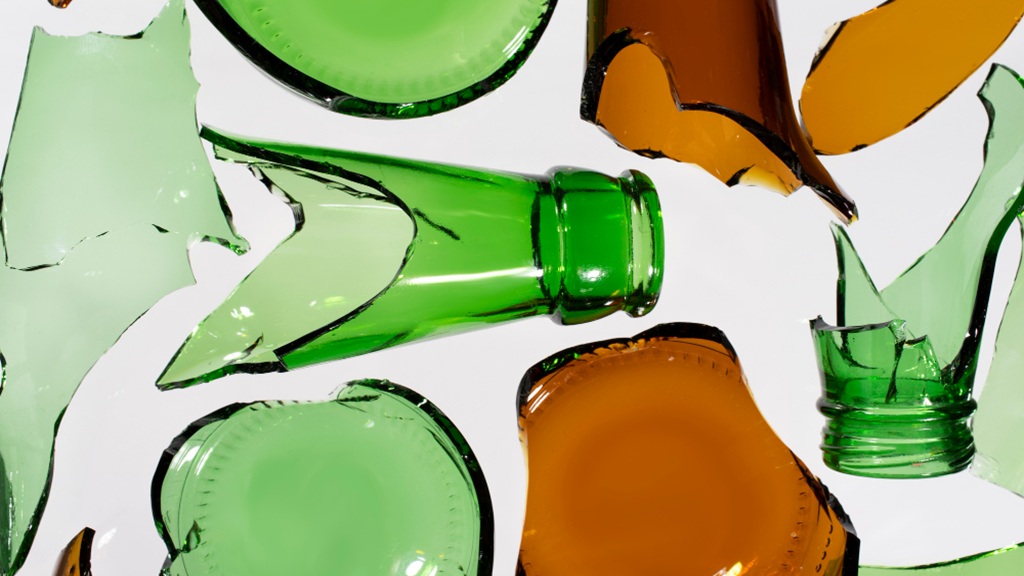
In 2025, the glass sector manufactured more than 2.3 million tonnes of packaging, equating to around 21.8 million bottles and jars per day. The milestone of 55% cullet incorporation implies, in absolute terms, the use of more than 1.26 million tonnes of recycled glass to manufacture new bottles and jars in Spain. Its inclusion helps substitute virgin raw materials and reduce the energy required during the melting process.
The data form part of the latest ANFEVI Circular Economy Report presented at its annual meeting, held under the motto “Everything starts with sand” at the NOMAD Immersive Museum in Madrid, where a SandArt experience showcased the transformation of glass from its origin to today.
The event was inaugurated by Miguel Gómez-Pavón López, Director General of Industrial Strategy and of Small and Medium Enterprises at the Ministry of Industry and Tourism, and included a roundtable in which Ecovidrio and ANAREVI traced the glass journey from the container to the furnace.
Miguel Gómez-Pavón López highlighted the importance of supporting industry in its transformation by providing a framework that offers investment certainty: “Companies need timeframes and certainty to evaluate and make investment decisions. Our objective is to continue working with the sector to identify obstacles and advance solutions that allow us to maintain and strengthen productive activity in our country.”
Two different percentages, but connected
Glass containers can be reused and are 100% recyclable, again and again, without quality loss. In closed-loop recycling, the recovered glass returns to become new bottles and jars for foods and beverages.
Glass-making plants can incorporate all the high-quality cullet available, collected through the green recycling bin. In addition, Spain-made containers produced and exported full can be recycled in the country where they are consumed, remaining within the loop.
Thus, the 55% incorporation of recycled glass indicates the share of recycled glass used in Spanish furnaces to manufacture all packaging, including those exported full; while the recycling rate measures how much of the packaging waste generated from consumption in Spain is recycled.
According to Ecovidrio’s latest estimate, Spain reached a recycling rate of 72.3% in 2025, above the 70% target set for that year and which our country had already met in 2023.
Lower emissions and more renewable electricity
In 2025, total greenhouse gas emissions fell by 9.9%, while carbon intensity reached its lowest level in the period analyzed: 0.33 tonnes of CO₂ per tonne of melted glass. Moreover, 56% of the electricity consumed came from renewable sources and total water use declined by 8%.
These advances occurred in an industry that surpassed €1.235 billion in turnover, maintained more than 3,100 direct jobs — 96% of which were permanent — and invested €78.5 million, up 13.4% from the previous year, in modernization, efficiency and energy and environmental transformation.
“These results are not only a snapshot of our activity: they allow us to measure rigorously where we stand, hold ourselves accountable, and guide our evolution. The results show that the environmental transition can translate into more circularity, fewer emissions, investment and stable employment,” says Paulo Pinto, President of ANFEVI.
A container that also takes care of what it contains
Glass stands out not only for its circularity. Being chemically inert, it remains stable in contact with foods and helps preserve their quality, flavors, and aromas. This quality was part of the scientific program of the 32nd National Congress of the Spanish Society of General Practitioners and Family Physicians (SEMG), which in June 2026 gathered specialists to analyze how the choice of packaging materials can contribute to reducing avoidable chemical exposures.
This ability to care for what it contains inspires Glass is Love, the European platform promoted by FEVE and developed in Spain by ANFEVI, taking the baton from Friends of Glass. Its campaign compares the qualities of a healthy relationship with those of glass: it does not interfere, it respects the essence, and it preserves the best of what it protects. Because, when something matters to us, it also matters how we take care of it.