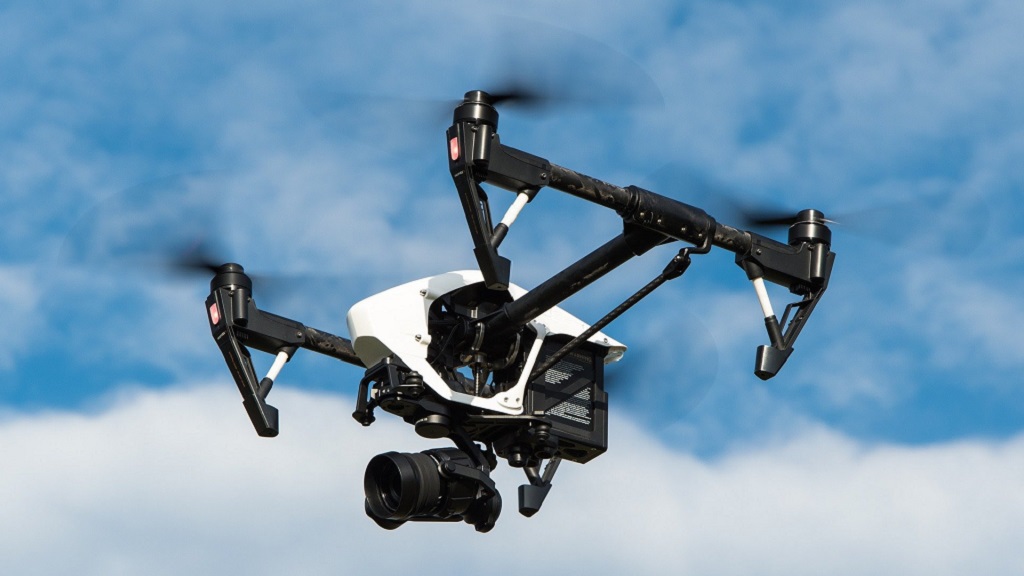
A new generation of drone swarms, whose decentralized intelligence enables them to self-organize and operate without a central leader, is poised to transform modern defense operations. This technology, developed by Zelenza, represents a paradigm shift that goes beyond mere attack to focus on critical C4ISR missions (Command and Control, Communications and Computing, Intelligence, Surveillance and Reconnaissance) as well as Security and Protection, Medical Logistics, Materials Logistics, “reducing risk to personnel and optimizing the use of the electromagnetic spectrum, two decisive factors in today’s battlefield,” according to Colonel Félix Hernanz.
A swarm that “lives without its queen”
Unlike most systems, which operate as centralized herds, the real innovation lies in its ability to operate autonomously and cohesively.
“90% of drone swarms you see out there are packs, where each drone follows a centralized instruction,” stated Colonel Hernanz. “The true differentiating factor of the swarming technology developed by Zelenza, unlike other swarms, is its ability to ‘live without the queen’. Its little bees self-organize, reorganize if members are missing, and if central control fails, they can continue to operate coherently. That self-managed resilience thanks to onboard AI is the cornerstone of its transformative power.”
This paradigm directly impacts the two most critical resources of any operation. First, the human, by automating repetitive or dangerous tasks, freeing the soldier for more decisive roles. Second, the electromagnetic spectrum, since these swarms are designed to operate effectively even in environments where communications and GPS signals are denied or degraded by the enemy.
The applications of a multi-domain swarm are immense and go far beyond the public imagination, which tends to focus on swarms of drones being launched at a target, though it is clear that deploying a swarm in the Fires Support role adds enormous value. Beyond mere attack, notable applications include:
- Reconnaissance and intelligence: Broad-spectrum surveillance to provide real-time situational awareness.
- Extension of communications: Establishing dynamic, resilient communications networks where infrastructure has been destroyed, as currently being developed in projects such as the ET’s FANETC 5G, in which the Zelenza group participates.
- Logistical support: Sustaining operations by automating and improving supply chains and evacuation—from deep inside the Operational Zone and beyond, all the way to the front-line fighter—adapting to changing positions with minimal human intervention.
“Logistical support is less flashy than an attack, but essential,” noted Hernanz. The conflict in Ukraine has accelerated the adoption of these technologies, advancing the scenarios foreseen in planning and transformation processes in a substantial way. However, challenges persist such as GPS-denied navigation and the need to maintain cost-effectiveness margins that allow sustained operations over time and in proper form. In the face of the growing threat, the conclusion is clear: “the best anti-drone will be another drone—or, more precisely, another swarm of drones,” concluded the Colonel, highlighting the limited effectiveness of expensive traditional missile shields against a saturation attack with low-cost drones.