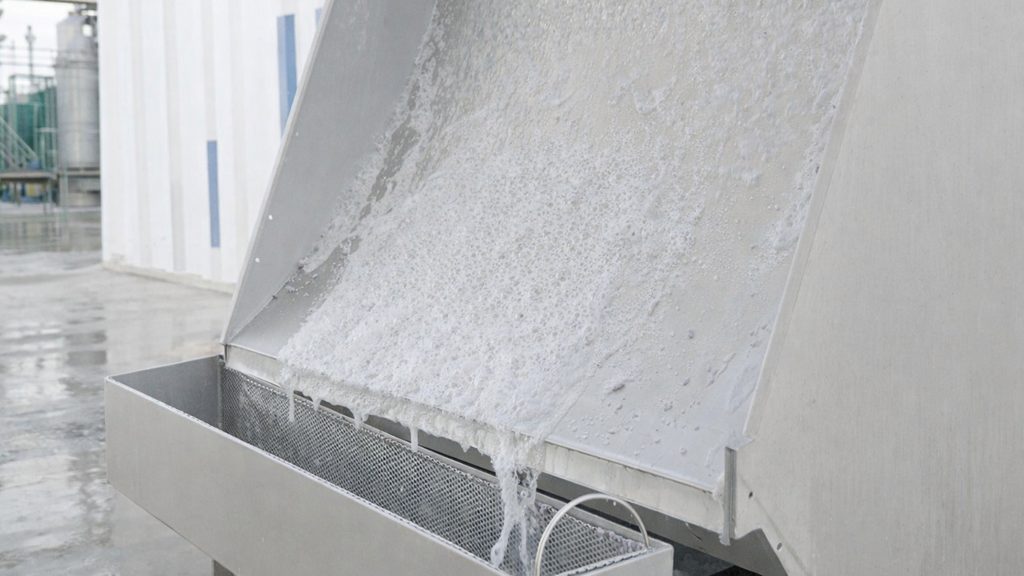
In a context of mounting water stress in Spain, particularly in the southern portion of the peninsula, ILUNION TextilCare, a leader in comprehensive textile management, has launched at its Seville South facility its first water treatment and reuse system, a pioneering infrastructure that already enables recovering up to 80% of the water used at the site.
Seville South, starting point for a scalable model
Located in Las Cabezas de San Juan, the Seville plant integrates a system that combines biological treatment by activated sludge, ultrafiltration, and reverse osmosis—technologies that enable purifying the water used and reusing it in washing processes.
Thanks to this model, water used in industrial processes is recovered and reintegrated into the production cycle, significantly reducing the need to draw new resources. The company plans to progressively extend this model to other facilities, beginning with Guadalajara, Spain, later this year.
A comprehensive water management strategy
Aware of the dependence on water for its operations and the risks associated with scarcity, ILUNION TextilCare has defined a Sustainable Water Management Plan that serves as a roadmap to advance toward more efficient, responsible, and resilient use of the resource. This approach relies on measurement and verification of the water footprint in line with the Water Footprint Network methodology, which has helped identify and prioritize the most critical areas for action.
In the realm of the blue water footprint, the company drives water efficiency from the source by incorporating technological solutions into its processes. Among these, the installation of 19 recovery tanks in washing machines across several plants stands out, capable of recovering up to 20% of the water used, as well as systems that allow reusing the water drawn from garments after spinning.
Additionally, ILUNION TextilCare continues to strengthen its purification systems at plants such as Santiago, Tortosa or Sant Boi, improving the quality of discharged water and reducing its grey water footprint.
A strategy that is supported by its ATENEA project, a digital platform that monitors water consumption in real time, facilitating the detection of inefficiencies and the ongoing optimization of the resource.