Productivity is often associated with time management, task organization, or digital tools. However, there is another factor that accompanies the worker throughout the day and does not always take the same space in the conversation: the physical environment in which they work.
The shift toward hybrid models has made this issue even more important. The office must respond to new forms of collaboration and concentration, while the home has had to incorporate spaces capable of hosting professional activity without losing its domestic character.
From architecture to interior design, the question begins to be another: how should a space be so that people can work comfortably, concentrate, and at the same time feel good in it?
An office shouldn’t force us to always work in the same way
One of the main transformations of workspaces has to do with the need to offer different environments within the same day.
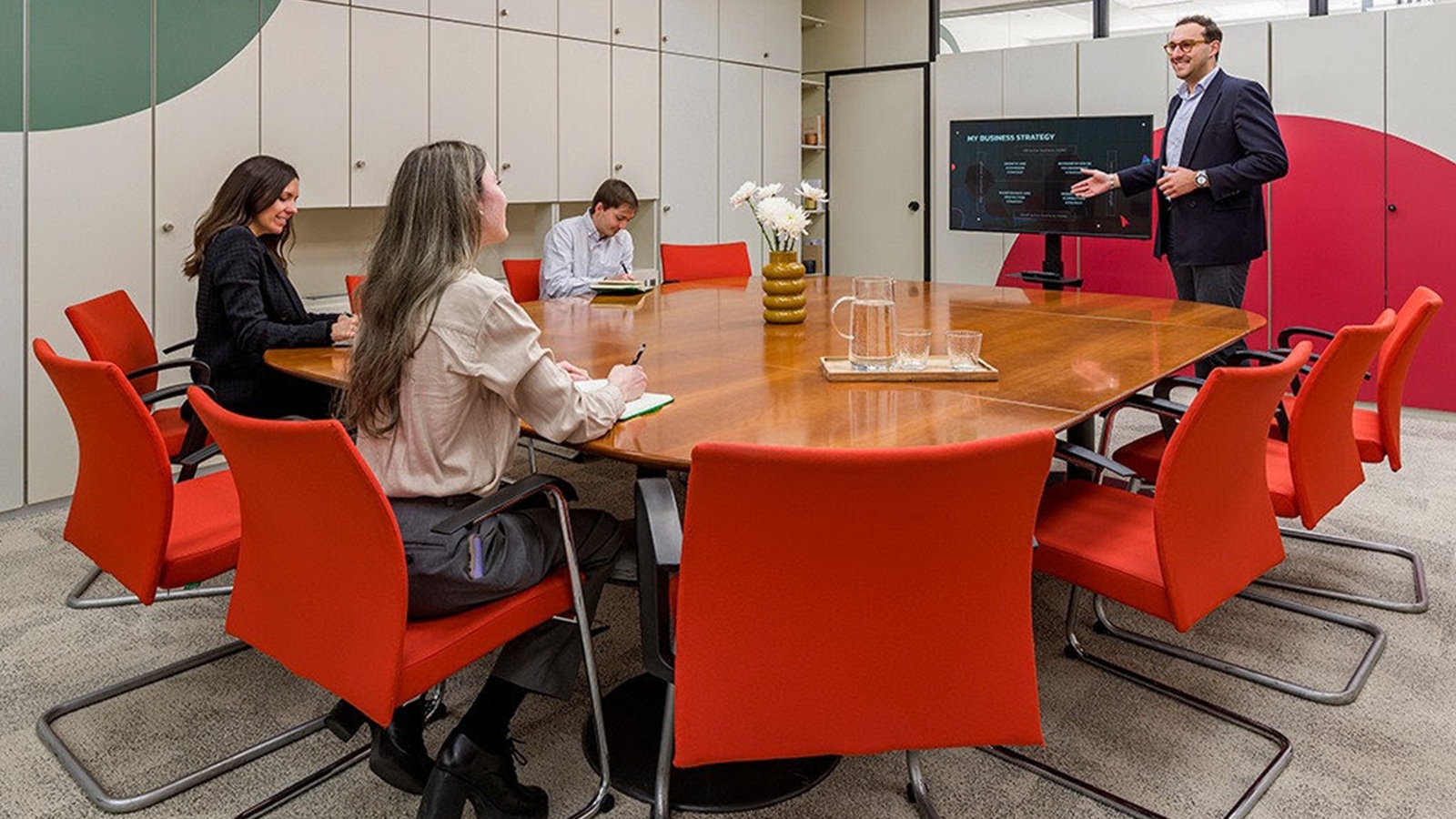
“A person does not need the same conditions to make a video call as to concentrate for two hours or to hold a creative meeting. That’s why the most interesting workspaces are those that offer alternatives: quieter zones, places to collaborate, meeting spaces, and also areas where you can take a break,” explains Nieves Ramos, HR expert and director of Optimismus Coworking.
Architecture thus stops being considered solely in terms of the number of desks available and starts to consider what activities must be able to take place in them.
In a space like Optimismus, this philosophy translates into the coexistence of workstations, offices, meeting rooms and common areas. The objective is that the user can switch environments according to what they need at each moment, but also that the space itself creates an experience and accompanies each moment of the day differently.
“A workspace should not be limited to being functional. It also has to generate an experience: that when you enter it feels pleasant, that it invites you to stay, to concentrate or to relate to others. We spend many hours in these places and that is why aspects such as light, materials, shapes or even how the zones are distributed also influence how we feel. The key is to create an environment where work is not simply occupying a seat, but feeling comfortable and being part of a space,” explains Nieves Ramos.
The architecture also influences how we work
Beyond layout, other elements can contribute to generating a more pleasant environment. Curved shapes, for example, are gaining prominence over spaces that are too rigid.
“Curved lines can help break the sense of rigidity and generate kinder environments. They don’t make a person more productive on their own, but they can contribute to creating spaces that feel more pleasant, especially in areas intended for collaboration,” explain from Optimismus.
Natural materials, plants or different textures can also help create spaces that feel more organic and less impersonal.
“A workplace does not have to look like a laboratory. Incorporating wood, textiles, plants or personal elements can make the space feel warmer, while always maintaining a balance with order and functionality,” add the team from the coworking space in Madrid’s Conde de Orgaz – Arturo Soria area.
Light and order: two essential elements
Lighting is another aspect that should be considered from the outset. “In the case of teleworking, whenever possible, the ideal is to position yourself near a natural light source, avoiding direct reflections on the screen. Auxiliary lighting also allows the space to adapt to different times of day,” explain the decorating experts from Schmidt, the French maker of tailored furniture.
The blinds or curtains can help regulate the amount of natural light entering the space without darkening the room entirely, while an adjustable lamp lets you direct light toward the workspace.
Storage serves a dual purpose:保持 organization and allow the workspace to disappear visually when the workday ends. Schmidt’s multifunctional solutions, such as desks that combine a work surface and storage, address this need precisely.
Working better also means being able to disconnect
A productive space doesn’t have to be designed exclusively for work. “If the entire environment is designed to produce, it becomes harder to generate a real pause. Rest areas allow you to change context and are part of a sustainable workday,” notes the director of Optimismus.
This idea can also be translated to the home with solutions that allow a single room to serve different uses. A library with a seating area, for example, can function as storage during the day and become a reading nook later.