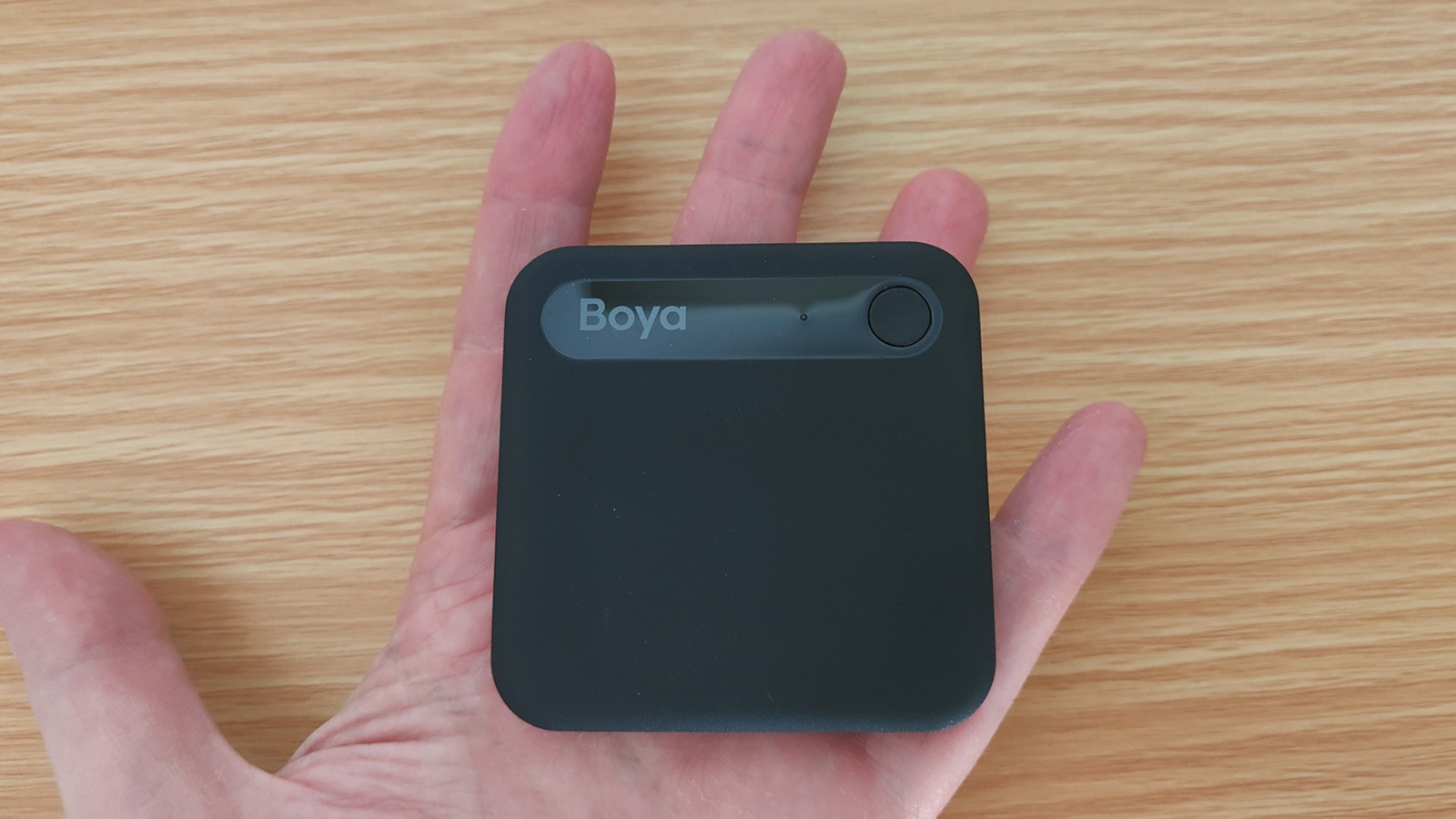
Recording an interview is easy. The hard part comes after, when you have to re-listen, locate a specific statement, or turn a one-hour conversation into actionable information. BOYA wants to solve exactly that second part of the job with Notra Neo, a small recorder that blends audio capture, transcription, and artificial intelligence tools. We’ve tested it, and its greatest strength isn’t so much recording as what it enables you to do with those recordings afterward.
At first glance, the BOYA Notra Neo could easily pass for a tiny mobile accessory. It measures just 63 x 63 mm, 8 mm thick and weighs 34.5 grams. It’s small enough to drop into a pocket and forget about until you need to record a meeting or an interview.
It can also be magnetically attached to the back of a MagSafe-compatible smartphone, and BOYA includes a magnetic ring for use with other devices. It’s precisely when placed behind the phone that one of its most interesting features makes sense: call recording.
The operating philosophy is simple, and that works in its favor. This isn’t a professional recorder packed with controls and settings. BOYA aims for the opposite: press, record, and let the software do much of the post-recording work.
Much more than a recorder
During use, one of the most welcome aspects is not having to constantly take notes. In an interview, for example, you can focus on maintaining the conversation and following up instead of worrying about the computer or notepad.
Notra Neo offers three recording scenarios: ambient sound, phone calls, and Bluetooth audio, and can automatically recognize the appropriate mode. To capture conversations it uses two MEMS microphones along with a vibration sensor, delivering 360-degree sound capture. BOYA specifies a maximum range of five meters and adds AI-based noise cancellation of up to -30 dB.
In our experience, this approach makes particular sense for meetings around a table and face-to-face interviews, where we can place the device near the participants and basically forget about it.
As with any recorder, placement matters. BOYA’s five-meter range doesn’t guarantee identical results placing Notra Neo next to the interviewee and across a noisy room. The company itself acknowledges that acoustics, ambient noise, and device placement influence the outcome.
An interesting detail during recording is the ability to mark important moments with a single press. It may seem minor until you’re faced with a long conversation: flagging on the fly a statement, a figure, or an idea you know you’ll need later can save a lot of time.
AI takes center stage
However, recording well is only half of BOYA Notra Neo’s proposition. The other half appears when we enter Boya OS, available both from the app and the web.
Recordings can be automatically turned into transcripts, and the platform supports more than 140 languages, in addition to identifying different speakers. From the content you can also generate summaries, key points, tasks, and mind maps. BOYA offers more than 60 templates for different scenarios, from meetings to interviews or classes.
This is where the device clearly differentiates itself from simply using the smartphone’s recorder.
For a journalist, for example, the usefulness isn’t only in having an interview transcribed. It’s in being able to quickly locate where a topic was discussed, obtain a summary of a long conversation, or have an initial organization of the content to start working on.
Notra Neo also includes Ask AI, a feature that lets you ask questions about stored recordings. Instead of manually scrolling through a transcript, you can search for specific information within the generated content. The platform uses models such as ChatGPT, Gemini, Claude, and Grok for its summarization functions.
That said, these tools should be understood as an assistant and not as a replacement for review. In our journalistic use case, automatic transcription is tremendously useful for working faster, but quotes we publish should always be cross-checked with the original audio. Proper names, acronyms, brands, or people speaking simultaneously remain situations especially prone to errors in any speech-recognition system.
Recording calls proves especially practical
Another feature we found particularly interesting is the ability to record phone calls.
When Notra Neo is magnetically attached to the back of the smartphone, the device uses its vibration sensor to capture the conversation. This avoids having to rely on dedicated call-recording apps and allows that audio to be integrated afterward into the same transcription and summary flow as an in-person interview.
There is also a third scenario via Bluetooth. You can connect headphones and record, for example, a virtual meeting or an online class. BOYA cautions, however, that results may vary depending on the computer or phone and headset combination used.
This mix of ambient recording, calls, and Bluetooth makes Notra Neo far more versatile than its size would suggest.
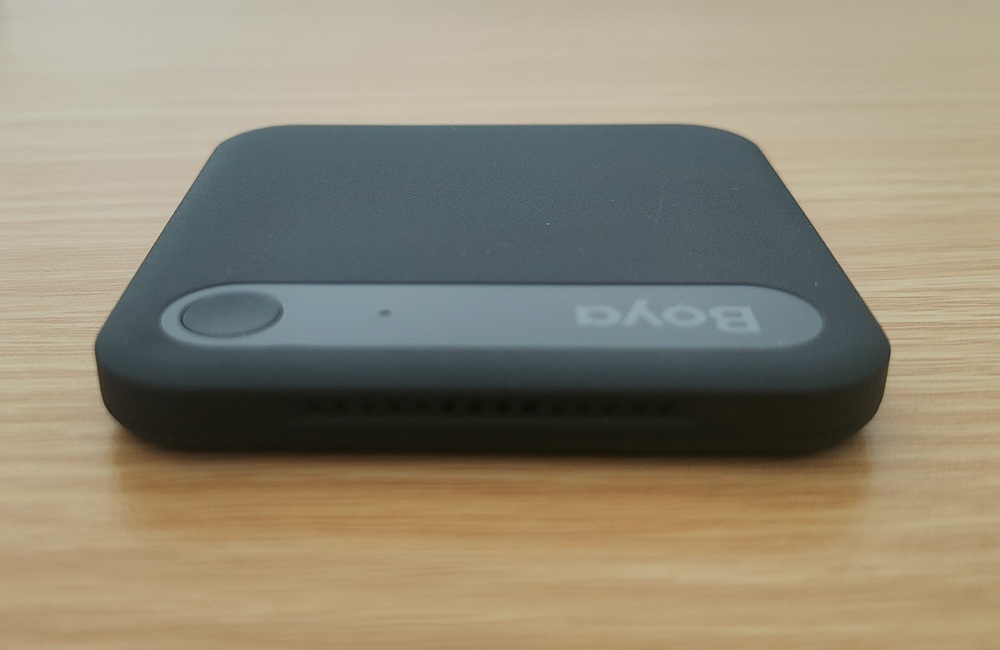
8 GB and up to 20 hours of recording
Regarding storage, it has 8 GB of internal memory, which BOYA says can hold about 1,000 hours of recordings, in addition to unlimited cloud storage. Files transfer via Wi-Fi or Bluetooth.
The battery life shouldn’t be a problem for a normal workday. The 610 mAh battery offers, according to official specifications, up to 20 hours of continuous recording, while a full USB-C charge takes roughly an hour and a half.
These figures fit the device’s purpose well. More important than achieving extreme endurance is that you can drop it in your backpack in the morning, conduct several interviews or meetings, and not worry about finding a power outlet.
In day-to-day use, what has most convinced us about Notra Neo is that it doesn’t force you to change your way of working. During testing we used it for both interviews and meetings, and after a few minutes you practically forget it’s there. Just place it on the table and start recording, without having to monitor audio levels or adjust settings. In multi-person conversations it’s been especially convenient because it lets you give your full attention to the speaker rather than splitting attention between listening and note-taking.
We’ve also been impressed by its ability to capture voices when participants aren’t exactly next to the device: the closer they are, the better the result, but we’ve still obtained perfectly usable recordings on a typical conference table. The real payoff comes afterward. Being able to finish an interview and have the transcription without re-listening to a 40– or 50-minute file saves a substantial amount of time. The experience isn’t flawless — we did encounter some mistakes with proper names and specific words — but having the text as a starting point and only consulting the audio to verify quotes or resolve questions greatly speeds up journalistic work.
Subscription to consider
There’s, however, another aspect we should evaluate before buying. A key part of Notra Neo’s appeal lies in its AI services, and these operate on different plans.
The Starter tier is free and currently includes 320 monthly transcription minutes, unlimited cloud storage, speaker identification, mind maps, transcription translation, and ten templates. BOYA also notes that users who pair a new device before December 31, 2026 receive 600 monthly minutes for twelve months. Above that are the Pro and Ultimate plans, aimed at those who need many more transcription hours and additional features.
That doesn’t necessarily pose a problem for casual users, but it’s something to factor in if you plan to use Notra Neo intensively for work.
Is the BOYA Notra Neo worth it?
After using it, the sense is that Notra Neo makes more sense the more conversations are part of our daily work.
A journalist who conducts interviews, a salesperson who stacks meetings with clients, a consultant, a student, or any professional who needs to capture and later retrieve information can get a good deal out of it.
Its main advantage isn’t replacing the smartphone as a recorder. A phone can already capture audio with more than enough quality for many situations. The interesting part is reducing everything that happens after you press stop: transferring the content, transcribing it, identifying speakers, summarizing, locating information, and turning a conversation into notes you can actually use.
We also appreciate its size. At 34.5 grams, you can carry it with you all the time with almost no added weight and use it only when you need it.
On the downside, those who only want to record occasional conversations probably don’t need a dedicated device. And users who plan to transcribe many hours per month should also consider the cost of the AI plans.
It’s also worth noting that BOYA currently runs promotions related to both the product and its subscription plans, so it’s wise to check the current terms before purchasing.
Ultimately, Notra Neo isn’t trying to reinvent the voice recorder, but to turn it into a tool that’s far more useful in the AI era. And after using it, its biggest draw becomes clear: recording is only the beginning; the real payoff is how much work it can save you once the conversation ends.