Inflation is the main factor shaping profitability in the Spanish hospitality industry and is already guiding its decisions. 40.5% of sector professionals identify rising operating costs as the element that has most affected their business development, which means hoteliers will need to cut costs, go digital, and raise prices in the coming months. However, the industry remains resilient and growing, with about a third of hoteliers planning to open new locations in 2026. At the same time, the shortage of qualified talent stands as the biggest challenge for this year.
These results are part of the Barometer on the Competitiveness of Spanish Hospitality 2026, produced by HIP – Horeca Profesional Expo, the largest European trade show for sector solutions, based on attendees’ opinions from the latest edition. It provides a snapshot of hospitality today, detailing priorities and strategic challenges while highlighting the trends that will unfold this year.
Inflation as the primary impact on profitability
Inflation is determining the direction of hospitality businesses. Four in ten hoteliers identify it as the factor that has most conditioned their profitability in the last year, far ahead of changes in consumer behavior (18.7%), the difficulty in retaining staff (16.5%) and taxation and regulations (14.6%).
To meet this pressure, 44.8% will cut operating costs, 36.2% will push for digitalization, and 34% will raise prices for customers. Accordingly, efficient management becomes the main lever for adaptation in a demanding environment where business continuity hinges on strategic governance.
The sector trusts in growth
Even within the current backdrop, the sector maintains a positive dynamic. 55.2% of businesses describe themselves as growing, 27.2% as stable, and only 6.3% as in decline. Additionally, 86.2% consider their company currently profitable.
In this optimistic reality, opening new locations in 2026 is among the plans for nearly a third of hoteliers, specifically 33.2%. Of this total, 54% expect to launch establishments in the same city or area, 25% in other cities or regions of Spain, and 21% internationally.
But to sustain competitive growth, professionals are focusing on improving profitability, identified as the top priority by 35.8%, followed by product or service innovation (19.4%) and enhancing the customer experience (17.2%). Therefore, evolving today does not necessarily mean more physical spaces, but rather solid and differentiating concepts that anchor in the market.
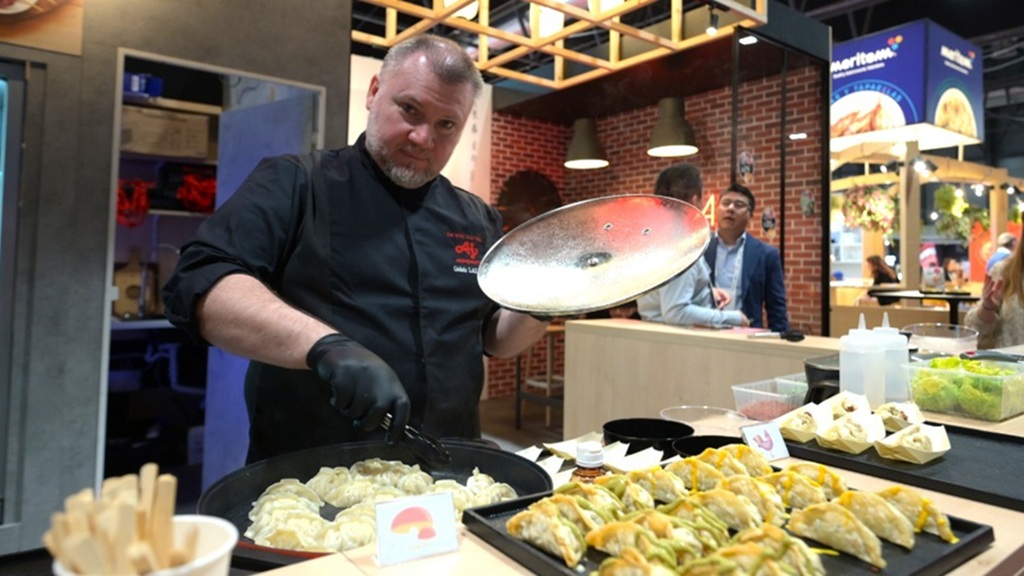
The concepts performing best, according to HIP 2026 experts, are those that pursue extreme specialization. A mono-product approach is enabling faster processes and better cost control, driving internal management optimization. Erika Silva, director of the Hospitality 4.0 Congress, the world’s largest forum for HORECA trends hosted by HIP, notes: “Cheesecakes, Spanish omelets (tortilla de patatas), or dumplings are examples of how operational simplification, combined with brand storytelling, allows scaling with less friction and greater business control.”
Talent, the major challenge for 2026
Although not topping the list of factors determining financial viability, talent remains the sticking point. In this sense, 34% of hoteliers identify the lack of qualified teams as the major challenge for the sector this year, ahead of profitability and costs (23.1%). Thus, labor shortages are the issue most difficult to resolve, as echoed by HIP 2026 luminaries such as Joan Roca and Ferran Adrià, or executives from Restaurant Brands Europe, Hesperia, or Hilton. All agree that to guarantee sustainability and service excellence, it is essential to have better-trained, more engaged, and higher-wellbeing staff.
Another challenge to consider, cited by 7.1% of hoteliers, is dealing with new players, such as retail, which in recent years has entered the restaurant space, gaining convenience, price, and predictability.
82.9% of hoteliers report detecting a shift in consumer habits. In this new scenario, the primary customer demand is better value for money (63.8%), with the close second being the search for distinct experiences (48.1%).
Therefore, HORECA businesses are opting to create memorable experiences – emphasizing the dining room, the team, the culinary offering, design, social media, and even packaging – in order to differentiate themselves and connect with their target audience. There is a polarization in experiences depending on the target. On one hand, younger audiences—the Gen Z—connect better with maximalist, visual, and stimulating propositions, while Millennials are drawn to minimalism and quiet luxury.
At the same time, to meet consumer expectations there is a rise in the “premiumization” of everyday offerings, reinterpretating and elevating familiar categories through product, technique, storytelling, or purpose. “From traditional Chinese restaurants to Asian buffets, from the standard burger to the smash craze, from the generic salad to the functional bowl, or from classic pasta to the Parmesan wheel experience. The consumer understands the product, but is willing to pay more when they perceive real added value,” explains Silva.
Alongside this, there is growing interest in speed and convenience—with to-go formats, delivery, and seamless booking and payment (31%)—and in healthy and functional options (27.6%), with a consumer who chooses what to eat based on purpose beyond pleasure.
Brand and digitalization as competitiveness levers
Brand construction is taking a central role in a crowded, competitive landscape as it currently stands. 47% of hoteliers see branding as essential to differentiation, while 34% regard it as important to the business’s success. Therefore the trend is to design experiences under authentic brands.
Meanwhile, technology integration is advancing gradually. 61.6% rate their business at a middle level of digitalization, and only 20.2% consider themselves very advanced. Among those planning to invest in technology, AI for data analysis is the leading bet (44.8%), followed by automated stock or procurement management tools (29.5%), and CRM/fidelity programs (28.7%).
Thus, the industry is seeking a digitization that supports decision-making, process optimization, and the elevation and personalization of experiences. On the consumer side, HIP 2026 experts point to a frictionless technology trend that helps remove barriers with easy reservations, quick payments, and a smoother experience.