For those who are always complaining that LinkedIn is “the new Facebook,” or that “I don’t use it because I’m not looking for a job,” this weekend we discovered the value of this social network not only professionally but also on a human level.
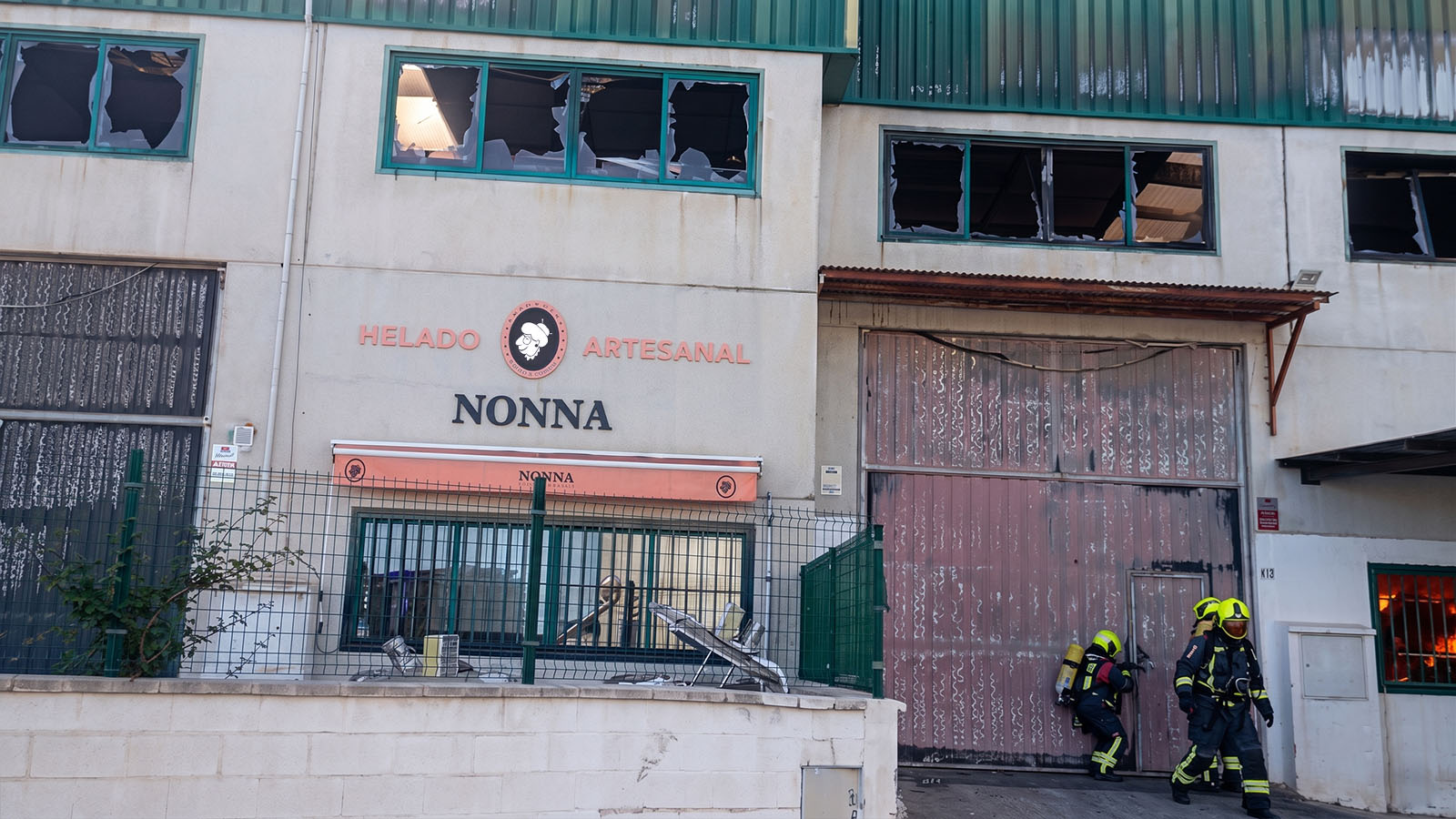
The fire at a small Málaga-based artisanal ice cream factory has sparked a solidarity tsunami on the platform. Reading it moved us deeply, not only because of the story, which is sadly all too common, but because of how it was told and conveyed by its owner and, above all, the tremendous wave of solidarity that has followed.
Enrique Rodríguez Bravo, director of NONNA, shared the following on his profile:
«My name is Enrique, I’m 62 years old and I have many scars along my professional life. Today could be one of the worst days of my life. In the industrial park where we built our artisanal ice cream factory over the last four years and the livelihood for my family and five other people I consider family, there was a disastrous fire that spread to our facility. It destroyed everything, we are left in total ruins. Four years ago we sold the house where we lived to invest in this factory; now we are renting at age 62 with 41 years of contributions. We aren’t asking for help to live, we’re asking for help to start working again. This afternoon I wanted to die but it’s 5 a.m. and I have decided to fight. Please share with anyone who can help us get back on our feet as soon as possible; we need people of goodwill to help us reassemble a plant, electrical installations, plumbing, machinery for ice cream, professionals to manage any grant for a plant or help buying machinery, we have nothing left to negotiate with banks—we’ve lost everything».
How LinkedIn users have reacted
This post from Enrique has generated hundreds of comments, and although it’s impossible to include them all here, MuyPymes has tried to compile the most relevant. There was every kind of response: professionals and companies offering their services or facilities pro bono, people sending their best wishes, others sharing similar experiences and how they resolved them, more offering alternative ideas to get started, even those willing to donate money.
1 . From media visibility to the network effect
One of the first pivotal moves has been amplifying the case. Ángel Recio, fellow journalist and the Málaga correspondent for El Español, confirms that the case has been disseminated in his outlet. This step, seemingly simple, is critical: it moves the problem from a personal sphere to the public arena, increasing the chances of access to institutional aid, subsidies or business support.
The visibility thus becomes the first asset in a moment when, as Enrique himself notes, “there’s nothing left to negotiate.”
2. Expert guidance: ordering the chaos after the disaster
One of the most relevant contributions comes from profiles specializing in risk management and insurance. Fernando Dusmet Tamayo provides a clear, structured roadmap for acting after the fire:
- Obtain the police report and the expert fire report to identify the origin of the fire.
- Formally notify the insurer and document every loss.
- Evaluate possible third‑party claims if the fire originated outside the facility.
These kinds of contributions are especially valuable in a shock context, where the ability to respond is often limited. In parallel, insurance professionals such as Rubén Palá or Montse Motos offered to review policies, analyze coverages and accompany the negotiation with insurers—a critical point given that Enrique has already said the insurance would cover not even a quarter of the losses.
3. Subsidies and financing: a race against time
Another major help block centers on financing and public aid. Profiles like Pedro Robles Rico focus on the need to seek bridging finance (banks, lines of credit) due to the slow pace of public aid, while Antonio Chaparro identifies concrete lines of support for SMEs in Andalusia.
Into this ecosystem also comes Elena Maneiro Franco, who offers pro bono support in preparing applications, ensuring that the documentation is properly structured to maximize success.
Many users have referred to Manuel Muñoz De Arcos, who, from a business perspective, has offered to guide directly on the steps to follow, triggering a chain of collaboration among experts.
4. From theory to action: tangible on-the-ground help
One of the most distinctive aspects of this conversation is how quickly help moves from theory to practice. Companies like Pescados y Congelados Guerrero have offered Enrique space in their cold storage rooms, an immediate solution to preserve products or resume activity under minimal conditions.
Meanwhile, SISTEIN has offered electrical materials, while Mecanitzats Gurri S.L. provides support in industrial maintenance and machinery specific to the food sector. In addition, ALUMINIOS FRAMAGAR, a metal carpentry company, assures it will help repair/replace windows, doors or glass. On an individual level, and from all corners of Spain, the response is equally forceful:
- Lorenzo Díaz Laverdeza offers electrical installations
- Jorge López Sánchez proposes to take charge of plumbing
- José Antonio P. offers free labor
- David Miracle Rodríguez provides his tools
- Manolo Figueras, a real estate professional, gives his direct contact to explore collaboration
Even in the logistics realm, Pablo Nieves opens the door to collaboration based on needs. These kinds of responses turn LinkedIn into more than a professional network: a network for execution.
5. Community and alternative financing: creativity in moments of crisis
Financially, the community proposes agile and realistic solutions. Toño Elías Santamaría proposes a micro‑donation strategy, based on small contributions from many individuals, while Mª Gloria Gutiérrez Toledo suggests a product pre‑sale as a mechanism for immediate funding and connection with loyal customers.
The crowdfunding option is reinforced with real experiences such as Carlos Mayorga Aguirre, who recounts how he recovered after losing his home in a fire thanks to campaigns on social networks. Additionally, more structured strategies are suggested, such as the recommendation from Real Estate Technicians to prepare a solid, well-documented dossier to build donors’ trust.
The network also activates relevant sector contacts. Miguel Benítez points to the National Association of Artisan Ice Cream Makers (based in Valencia) as a potential strategic ally, especially regarding machinery or industrial support.
6. Knowledge, experience and support
Beyond the material, several comments offer moral support and introduce a key reflection: not everything is lost. Profiles like Alejandro Acosta Hernández highlight the value of intangible assets — clients, brand, know‑how, licenses — as the foundation for rebuilding the business.
In the same vein, Juan Álvarez Sempere offers support to relaunch digital visibility once activity resumes, aiming for an even stronger recovery. Along with guidance and practical help, the emotional component is constant.
T testimonies like those of Domingo Ochoa Fanega, Fran Cárcel or Carlos Mayorga Aguirre, who have suffered similar losses, provide valuable perspective: reconstruction is possible. Messages from Michaela Varga or Antonio Vera Botrán reinforce this idea from a more personal angle, focusing on resilience, dignity and the ability to move forward.
In short, perhaps one of the reflections that best captures all this improvised action is from Toño Elías Santamaría, who argues that these kinds of mobilizations should be the true purpose of a professional network. And this case proves something that’s quite uncommon: professional networks can be much more than visibility or personal branding. They can become an ecosystem of real help, where media, experts, companies and individuals converge with a common goal. In this case, helping a business rise again.