The jewelry and accessible-luxury market is facing a landscape marked by volatility in commodity prices, especially precious metals, and by a consumer who is increasingly demanding when it comes to the shopping experience, personalization, and immediate availability.
Moreover, the consolidation of unified commerce has redefined shopping dynamics, integrating brick-and-mortar stores and online shopping as parts of a single ecosystem. In this environment, the ability to manage inventory in real time, tailor the offer to the customer, and build trust in the digital channel becomes a differentiating factor for brands in the sector.
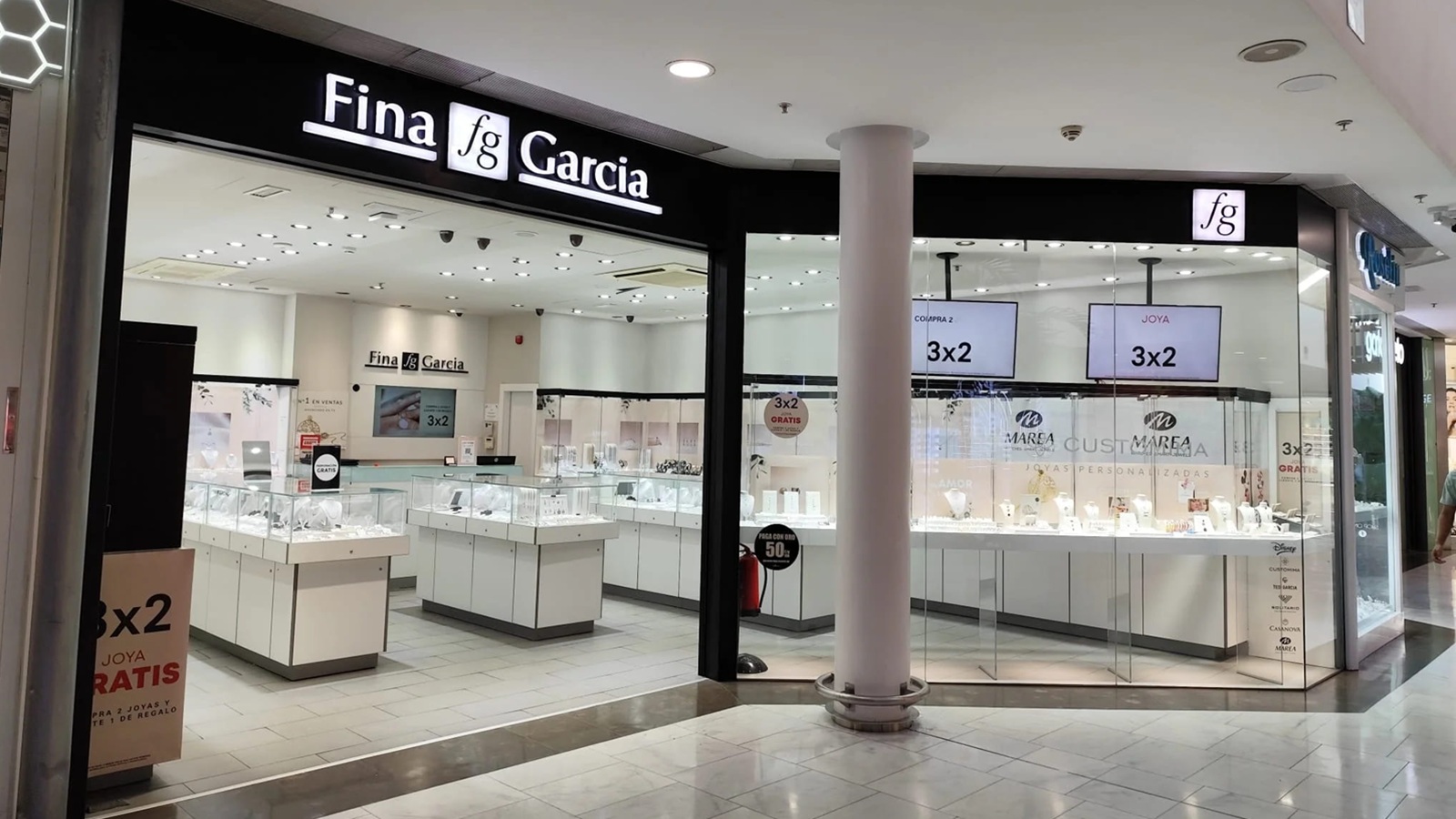
With close to four decades in operation, the Catalan jewelry brand Fina García has understood this context of digital transformation. So much so that it began betting on e-commerce more than fifteen years ago. The company was also a pioneer in introducing mobile devices in-store. For example, in 2011 it introduced iPads as a tool to support assisted selling, enabling jewelers to access an expanded digital catalog. “If people didn’t want to buy from home, we brought the online channel into the store with guidance,” explained Francesc Casanovas, the company’s CEO.
Connected inventory and assisted shopping experience, keys to success
Centralized inventory management has become one of the chain’s main competitive advantages. Fina García operates a system that connects stock across its 25 stores, allowing customers to locate sizes and models anywhere in the network. This practice translates into the ability to move pieces between stores to close sales, especially during peak campaigns like Christmas, when immediate availability is critical.
This approach is supported by tools such as RFID technology, which they implemented nearly a decade ago, enabling full inventories in a maximum of three hours without closing the store. It is complemented by a commission-based incentive model that prioritizes actual sales, along with solutions such as consumer financing in minutes or gold-based payment options. On the other hand, personalization plays a central role in the product strategy. Through Customima, the brand’s own line of engravable jewelry with 48-hour delivery, customers can add elements such as names, dates, or special messages. In this way, an emotional bond between brand and customer is built.
Artificial intelligence to predict and unified commerce as the key to expansion
Artificial intelligence has been integrated into the company’s operations primarily to optimize stock predictively. Using these systems, Fina García assigns units to the stores with the highest probability of sale in scarcity scenarios. “If there are only 20 pieces, we decide which five stores will not have them based on the probability of sale,” Casanovas noted. This logic also extends to order management, collection analysis, automatic report generation, and supplier communication, where AI helps convey design concepts.
In parallel, omnichannelization is consolidating as a driver of territorial growth. The recently opened Zaragoza store demonstrated the in-store “tractor” effect on the online channel. After its opening, digital sales in the area rose. The reason is that in the luxury sector, where prices are high, the physical store helps generate a circle of trust and brand recognition—crucial factors for customers to buy on the ecommerce site. This behavior reinforces Fina García’s expansion strategy into new cities, where physical presence acts as a catalyst for online commerce.
The development of these operating and commercial models is supported by unified commerce platforms that integrate store management, inventory, and digital channels. In this regard, solutions like Openbravo POS, from Orisha Commerce, enable brands like Fina García to coordinate their operations and move toward more connected and coherent shopping experiences across channels.