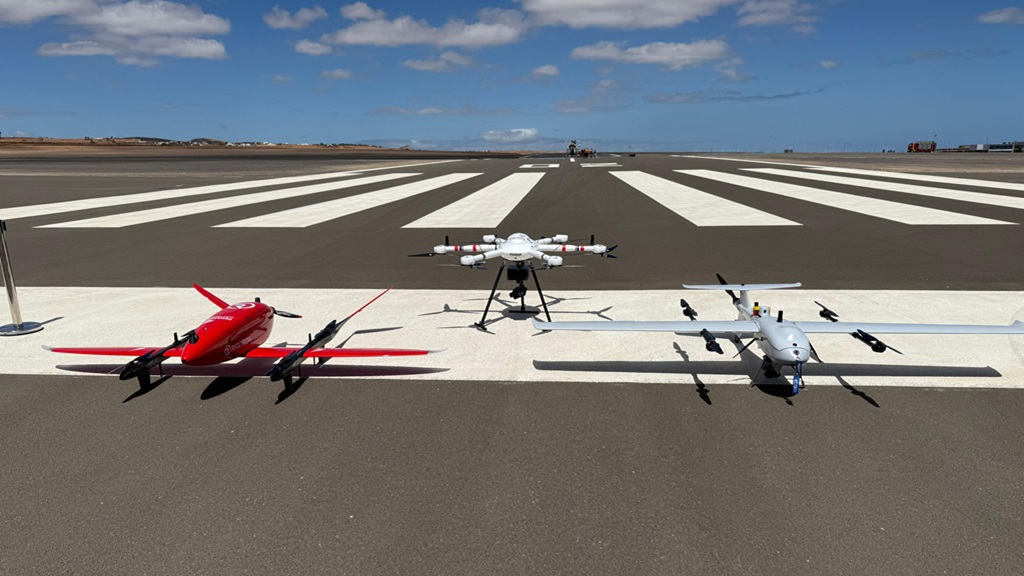
The European UAS industry has set itself the target of reaching by 2030 five million routine daily commercial flights beyond the pilot’s visual line of sight, the so-called BVLOS (Beyond Visual Line of Sight) operations. ECUAS Drones, the sector association in Spain, backs this proposal.
Reaching that scale requires, according to the industry, that the review of the Drone Strategy 2.0 (developed in 2022) not translate into more regulation but into more operations, faster approvals, and fewer barriers to operate across different European countries.
BVLOS operations allow a drone to fly without the pilot maintaining direct visual contact with the aircraft, a key enabler for activities such as infrastructure inspection, logistics, surveillance of large areas, or emergencies. Its broad adoption would turn many point-to-point operations into recurring industrial services that are economically viable.
The proposal is part of a joint initiative by JEDA, Alliance for New Mobility Europe, Drone Alliance Europe, and Global UTM Association. The organizations argue that sector development should be measured with concrete indicators, such as the number of flights, the time required to deploy new services, or the ability to operate in multiple member states.
Fewer Barriers to Growth in Europe
One of the main barriers is the differences between countries in applying a common regulatory framework. This sometimes requires repeating assessments or accepting additional requirements. The industry therefore calls for greater recognition of equivalent authorizations and better coordination between authorities to streamline the path from authorization to operation.
It also sees as essential to advance electronic conspicuity, which enables identification of aircraft and awareness of their position in airspace, and the rollout of U-space, the European digital drone traffic management system. In Spain there is already a dedicated working group on electronic visibility to develop a national and European roadmap.
The sector also argues that the new measures should include clear accountability, timelines, verifiable objectives, and sufficient resources to support market growth.
For Marta García, president of ECUAS Drones, “Europe has made a tremendous effort to build a common regulatory framework. Now we need that framework to allow more flights, to deploy new services, and to grow the companies. Five million daily flights by 2030 may sound ambitious, but it reflects the scale this industry needs to become a real, competitive economic activity.”