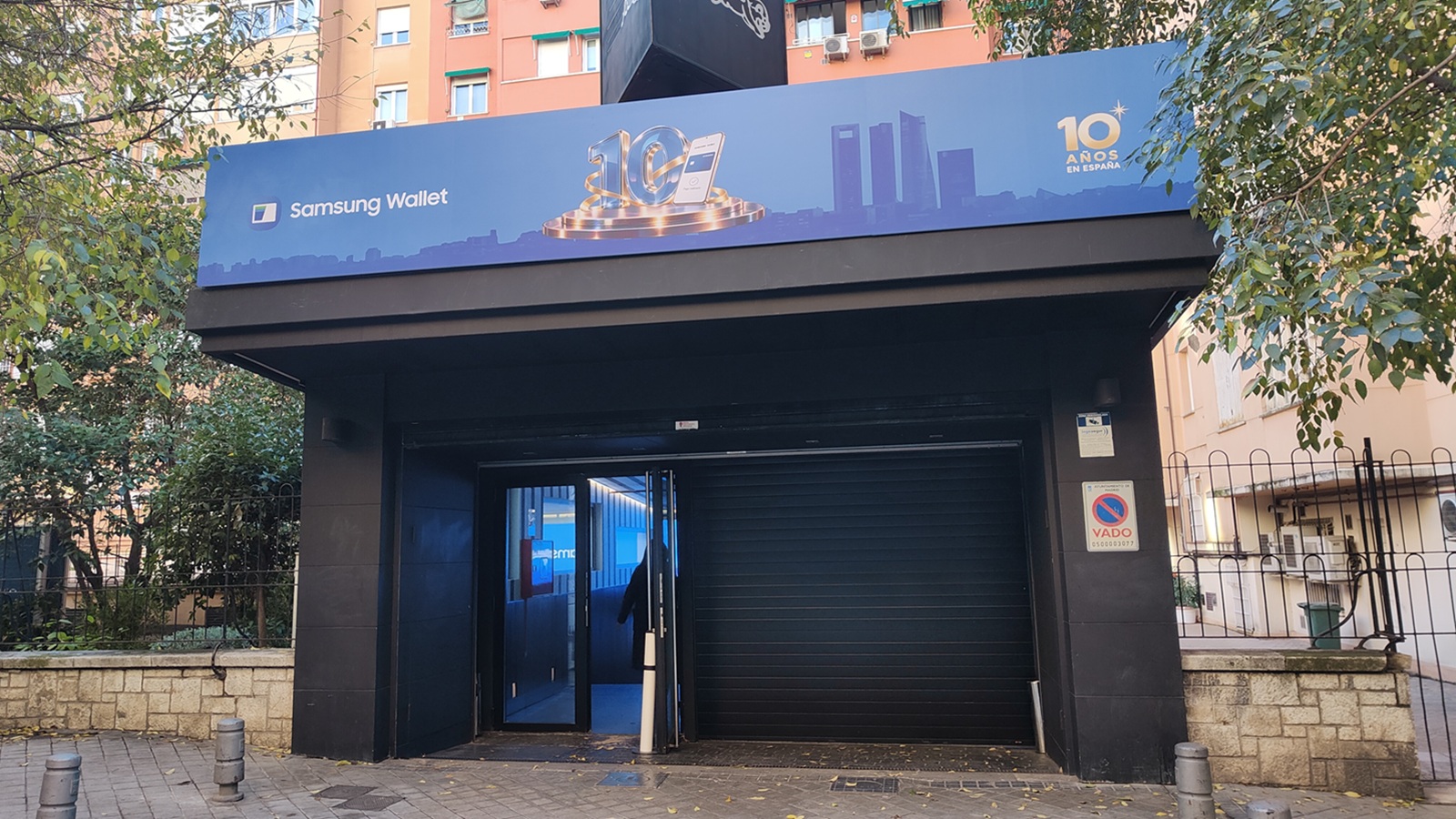
Ten years ago, paying with a mobile phone was still a novelty for a large portion of Spanish consumers. Today, pulling out a smartphone to pay for a purchase, access an event, or identify oneself digitally has become an increasingly common gesture. This transformation was the centerpiece of an event Samsung organized in Madrid, under the slogan “Beyond the digital wallet”, to mark the tenth anniversary of its payments platform in Spain, which we attended.
The company seized the occasion to take stock of a decade of technological evolution and to present the possibilities of an ecosystem aiming to turn the smartphone into a tool for managing much of our daily activities.
The figures reflect the journey so far: Samsung Wallet has surpassed 500 million transactions in our country since January 2023, features 29 integrated banking institutions, and, according to the data provided by the company, more than 90% of its users prefer it over other alternatives.
Spain, a European pioneer in mobile payments
During the event, David Alonso Nieto, vice president and head of Mobile Experience at Samsung Electronics Iberia, highlighted the leading role Spain has played in this transformation. Our country was the first in Europe to adopt Samsung Pay, on June 2, 2016, initially with CaixaBank. Later, institutions such as Santander, BBVA, Bankinter, and Banco Sabadell joined in.
The major leap occurred in 2022, when Samsung Pay and Samsung Pass were integrated into Samsung Wallet, giving rise to a platform capable of storing not only bank cards but also passwords, tickets, boarding passes, credentials, and digital keys.
As Nieto emphasized during the celebration, Samsung Wallet has ceased to be merely a payment tool and has become a platform that brings together services used daily by consumers.
New opportunities for retailers and small businesses
One of the most interesting aspects of the event, especially from a business perspective, was seeing how this evolution is creating opportunities for retailers, technology providers, and service companies.
Eduardo Prieto, CEO of Visa in Spain and Andorra, underscored the collaboration between companies to extend the acceptance of digital wallets to e-commerce and simplify online shopping.
In the same vein, Rubén Justel, CEO of Getnet Europe, a company specialized in payment acceptance solutions for both physical and digital establishments, participated.
For small businesses, these technologies can help reduce friction during the purchase process and enable smoother, faster payment experiences, whether in a traditional store or an online shop.
But the business potential goes beyond transactions. The involvement of Nicola Picasso, CEO and cofounder of Omniwallet, helped focus attention on loyalty programs, an area particularly relevant for small businesses seeking to strengthen their relationship with customers.
Digital keys, transportation, and smart access
The event also offered a glimpse of applications that, just a few years ago, seemed futuristic. Representatives from BMW and Nuki discussed the possibilities of using the smartphone as a digital key to access vehicles and compatible smart locks. Meanwhile, Intemo highlighted opportunities to digitize access to corporate buildings and events.
Public transportation also took center stage, with the participation of the Madrid Regional Transport Consortium, which addressed advances and possibilities in the digitalization of mobility.
During the event, Samsung offered demonstrations of various functionalities, from payments and loyalty programs to smart access systems.
Security: essential for continued growth
The increasing amount of information stored in digital wallets also raises significant cybersecurity challenges. Samsung highlighted the role of its Knox platform, which combines hardware- and software-based protection, biometric authentication, encryption, and tokenization of payment data.
This issue is particularly relevant in a context where consumers and businesses demand simple digital services, but also guarantees about protecting their information.
The event left a clear conclusion: the future of digital wallets is not only about replacing physical cards, but about integrating payments, identification, access, and loyalty into a single experience.
Ten years after its arrival in Spain, Samsung Wallet also stands as a testament to how collaboration between major technology companies, financial institutions, and specialized firms can open new business opportunities. And for SMEs, especially those tied to retail and services, adapting to these new digital habits will be increasingly important in order to remain competitive.