How much does it really cost to manufacture each product? Which orders are at risk of delays? Do we have enough materials to meet our commitments? While these are basic questions for any manufacturing business, answering them isn’t always straightforward—especially when information is scattered across Excel spreadsheets, email threads, and apps that don’t talk to each other.
This is the reality for many U.S. small and mid-sized manufacturers, which have modernized their facilities and equipment, but still struggle to manage all the information they generate. And this is where artificial intelligence can become an ally to boost their competitiveness.
But where to start? Is a big investment necessary? Which processes can truly benefit from this technology?
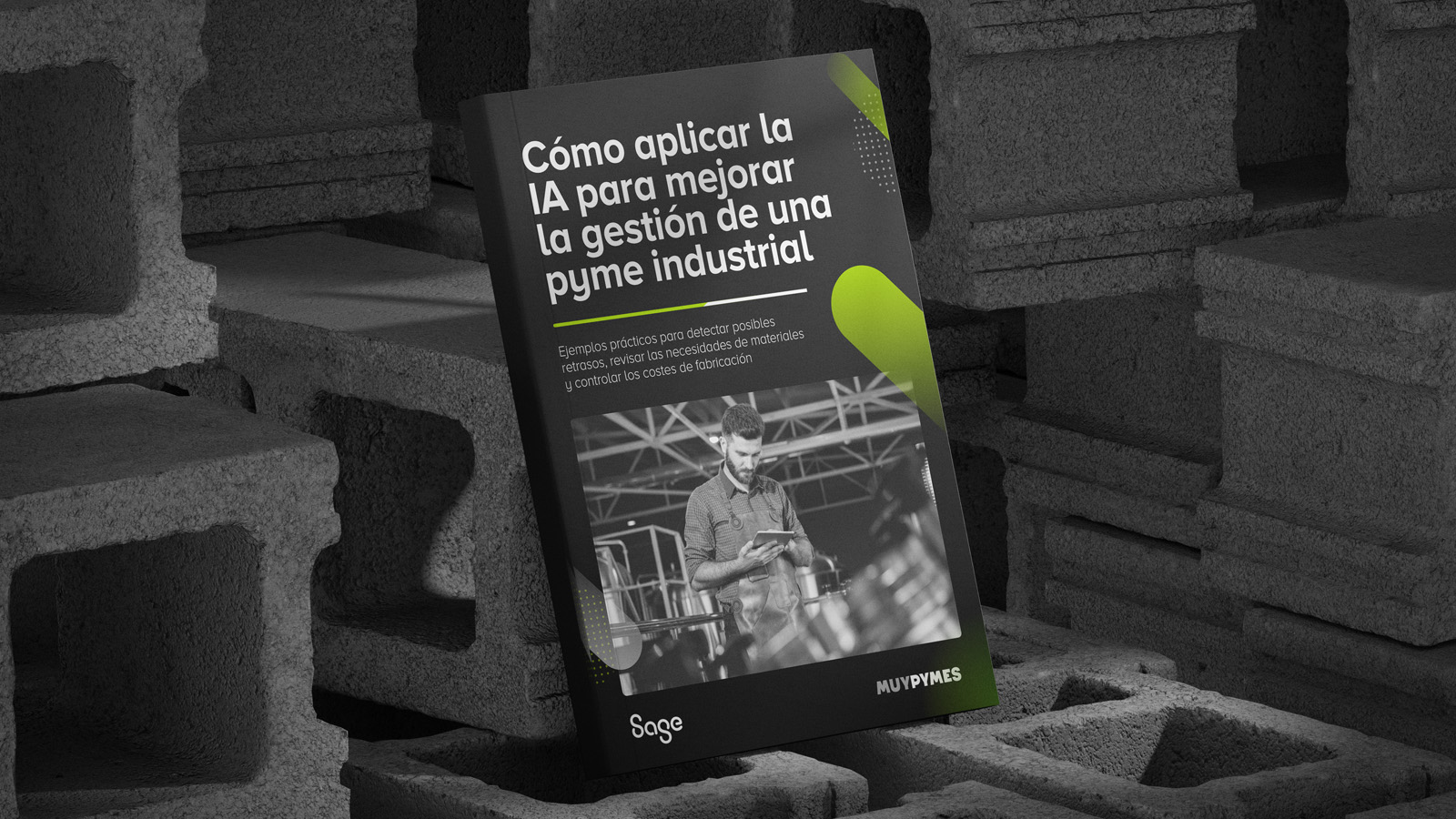
To answer these questions, we present the guide “How to Apply AI to Improve the Management of an Industrial SME,” prepared by MuyPymes with the collaboration of Sage, which gathers practical examples and recommendations to leverage AI without having to undertake a complete tech transformation all at once.
From firefighting to anticipating problems
One of the biggest challenges for small and mid-sized manufacturers is moving from a reactive management style—where you act when a problem arises—to one that can anticipate potential incidents.
Imagine a small metal components factory with several orders pending. One of its suppliers announces a delay in delivering materials. If this information doesn’t reach the production manager in time, the consequences can translate into stoppages, missed deliveries, and cost overruns.
With the right data, AI can help identify which orders could be affected, where bottlenecks would occur, and what alternatives would be worth considering.
The same goes for warehouse management. Holding too much stock immobilizes capital, while running out of raw materials can halt production. Analyzing orders, inventories, and supplier lead times allows better forecasting and adjustment of purchasing decisions.
Producing more does not always mean earning more
Another fundamental aspect is cost control. A company can increase its revenue and, at the same time, lose profitability if it does not know precisely how much it costs to manufacture its products. AI helps analyze deviations between expected and actual costs, identify patterns, and detect situations that deserve review.
To achieve this, it’s important to have connected information across production, purchasing, warehousing, and finance. In this sense, ERP solutions enable integrating different areas of the business and creating a shared database on which to improve analysis and decision-making.
The key is not to replace professionals’ judgment with algorithms, but to provide them with more complete information to decide better.
A guide to getting started without the hassle
The good news is that applying artificial intelligence doesn’t have to begin with a complex project or a large investment. In many cases, the first step is to identify a specific problem, review the available data, and assess how the technology can help.
The guide covers different practical situations related to production, inventories, manufacturing costs, and business management. It also includes a checklist so that every SME can assess whether it has the information and resources needed to begin.
Because before investing in new tools, it’s worth asking: what problem in my company do I want to solve? Learn how to detect potential delays, control costs, and make better decisions in your factory.