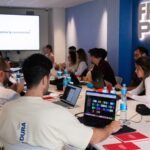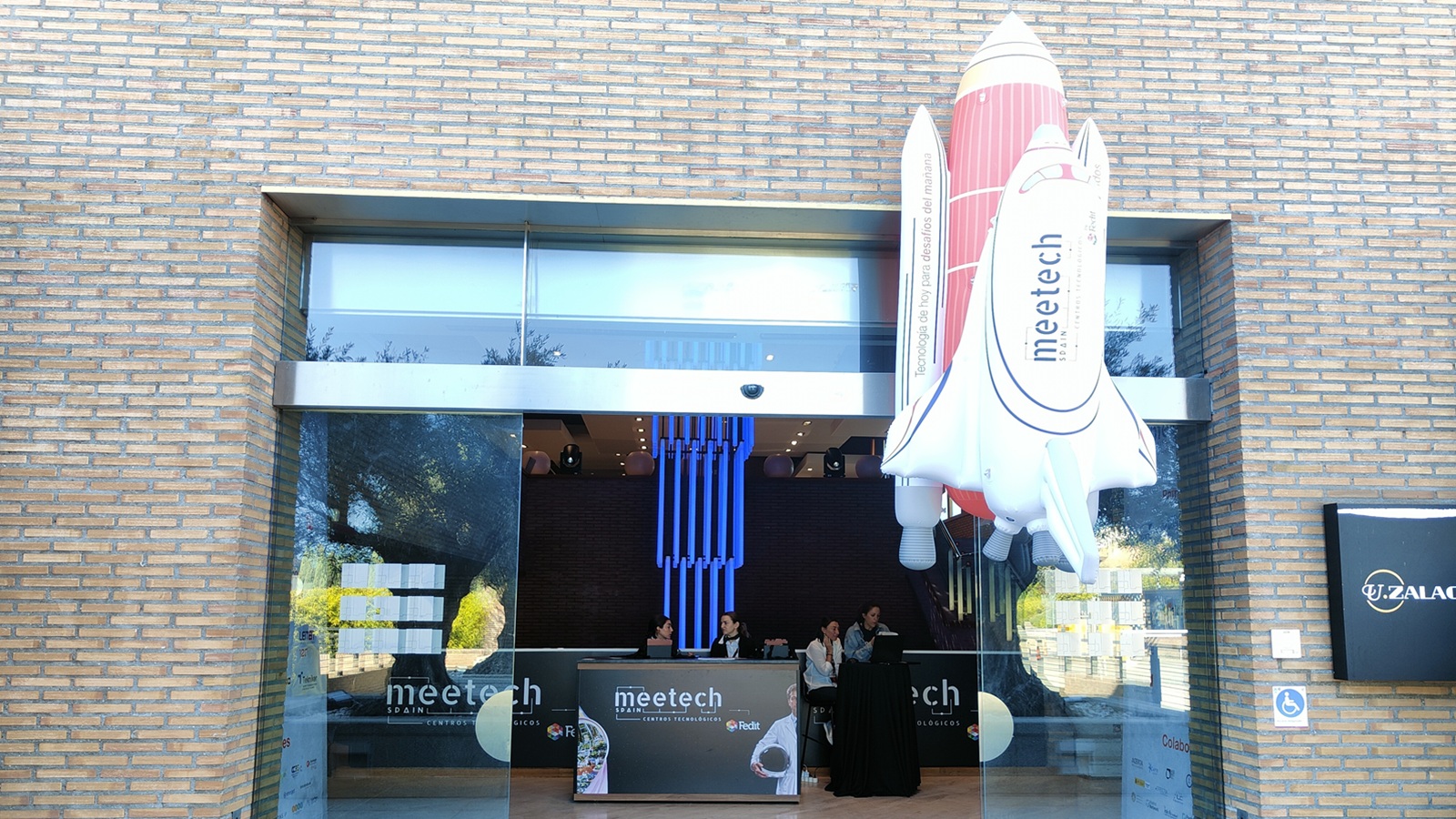
Yesterday, Madrid hosted the latest edition of meetechSpain 2026, which this year focused, at least, on a curious aspect: life outside Earth. The event was organized by the Spanish Federation of Technology Centers (Fedit), which marks its 30th anniversary this year, and carried the motto ‘Made in Spain, fit for other worlds’.
Thus, representatives from Airbus, Naturgy, GMV, LANZO Batteries, Hispansion, IENAI Space and ARQUIMEA, together with researchers from Spanish Technology Centers and public administration officials, discussed some of the major challenges facing technological innovation in our country: developing new energy sources, advancing in more resilient and lighter materials, producing with limited resources, automating complex operations, and reinforcing European technological autonomy.
The Role of Technology Centers in the Nation’s Innovation
The meeting was inaugurated by Teresa Riesgo, Secretary General for Innovation, who highlighted the role of Technology Centers in the I+D+I ecosystem and their influence on the territories. “Those who backed Technology Centers at the time are more industrialized and show higher levels of specialization. It has been one of the best bets for regions, not only in terms of job creation but also in driving innovation in companies and generating new knowledge,” she said.
She also referred to the strength of Spain’s aerospace sector. “Spanish companies, startups and skylabs have raised 700 million euros in public and private venture rounds throughout 2026,” Riesgo explained, who, to put this figure in perspective, noted that Germany raised 400 million in 2025. The Spanish Technology Centers collaborate in many of these projects.
“If we want tomorrow’s technologies that will make us more competitive, we need to invest today in those who develop them. Technology Centers have demonstrated their ability to generate wealth and employment, with a return of 11 euros of GDP for every euro invested. We need structural funding that lets us continue developing capabilities in the long term, because innovation cannot depend on political and budget cycles: it must be a national policy,” said Laura Olcina, president of Fedit, at the event’s opening.
Juan Carlos Cortés, director of the Spanish Space Agency, opened the Strategic Forum of the day, sending a message to companies and Centers: “The European Space Agency will decide in the next two years the future plans for the ones to follow. The time to position ourselves in this sector is now.”
And she agreed with Riesgo in highlighting the dynamism of Spain’s aerospace sector as a magnet for European funds. “We’re seeing more come in than we invest.”
“The interesting thing about tackling such an ambitious challenge as living off Earth is that it forces us to seek solutions we also need here. Many of the technologies being debated at meetechSpain are already being developed in our Technology Centers and have real applications in industry. Our goal is for companies to know these capabilities, discover new possibilities for their businesses, and find in the Centers partners with whom to develop innovation projects,” said Áureo Díaz-Carrasco, CEO of Fedit.
The Technology Centers integrated in Fedit collaborate each year with about 30,000 companies, develop more than 22,000 innovation projects and count on more than 11,100 professionals, of whom 8,750 are researchers. Their contribution to the Spanish economy reaches €7.702 billion in GDP and 127,000 jobs, according to a study by the Valencian Institute of Economic Research (Ivie) based on 2024 data. These figures reflect their impact on knowledge transfer and the development of solutions that improve the competitiveness of companies.
Five Debates, Five Technological Priorities
The 2026 edition of meetechSpain hosted five debates focused on strategic priorities. The first focused on energy generation and storage, the development of advanced materials, and the construction of infrastructure capable of withstanding extreme conditions. Thus, topics ranged from the possibilities of solar and nuclear energy to developing new energy storage solutions, including leveraging resources available on the lunar surface to build infrastructure and protecting facilities from radiation, temperature changes, or micrometeoroids. These challenges connect with the current needs of sectors such as energy, construction, and advanced manufacturing.
Another major challenge is ensuring self-sufficiency in isolated environments, where water, air, and food must be managed with maximum efficiency. The panel analyzed technologies that could enable closed-loop ecosystems and reduce dependence on external supplies, with potential applications in sustainable resource management, the food industry, and healthcare.
Among them are water and air recycling systems, food production through biotechnology, regenerative systems, and digital health solutions to deliver healthcare far from traditional hospital infrastructures.
Automation of operations, mobility, and logistics formed another axis of the Strategic Forum. The debate addressed the technological capabilities needed to perform complex tasks with limited human intervention. Construction and maintenance using autonomous robots, exploration vehicles, remote handling of materials, and transportation logistics were among the issues discussed. These developments also present opportunities for industrial automation, smart mobility, and operations in dangerous or hard-to-reach environments.
In addition, there is a need for reliable communications, navigation, and control systems. Artificial intelligence, cybersecurity, advanced telecommunications, as well as digital twins, centered the debate that examines the capabilities required to connect and integrate the different infrastructures of a future lunar base, from communications networks and positioning systems to mission software and AI tools capable of facilitating decision-making and the autonomous operation of complex systems.
Twelve Demonstrators to ‘Touch’ the Technology
Beyond the talks, one of the spaces we most enjoyed at meetechSpain was the opportunity to explore technology applications through the Tech&Touch zone, which gathered 12 demonstrators from the Technology Centers LEITAT, CATEC, EURECAT, TECNALIA, ITECAM, TEKNIKER, AITEX, AITIIP, CTIC, ITG, ITI and NOVEX.
This space allowed us to get up close to prototypes and solutions in fields such as energy, advanced materials, robotics, manufacturing, food, health, and autonomous systems, understand how they work, and speak directly with the researchers developing them.
The program concluded with the Innovation Club, a meeting space for companies and Technology Centers to identify collaboration opportunities, and various networking activities designed to foster new R&D and innovation projects.