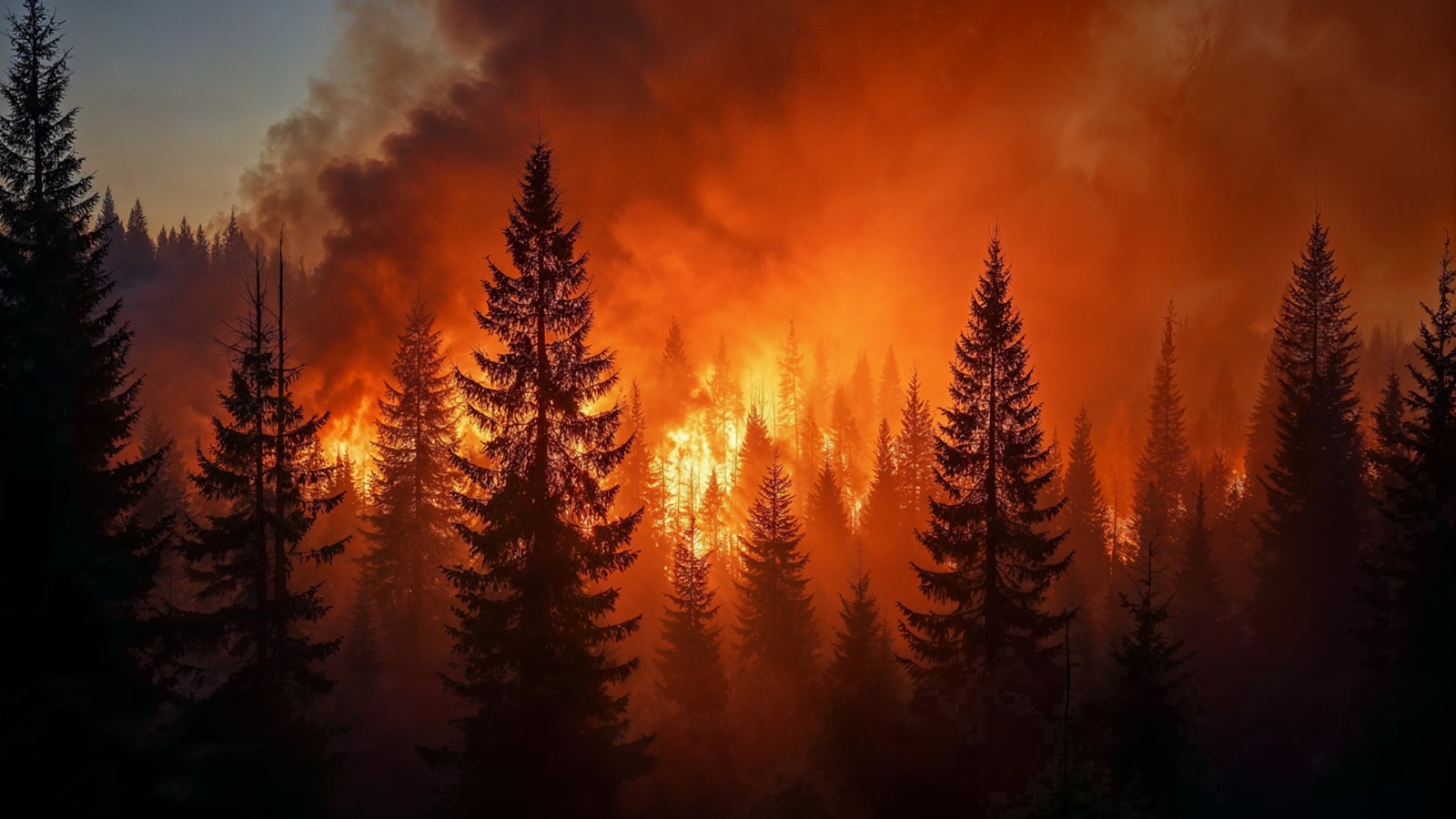
Forest fires are fought with airplanes, firefighting brigades, firebreaks and surveillance, but increasingly with data as well. Temperature, humidity, wind, precipitation, or the state of vegetation can become early warning signals before ignition appears. And it is precisely here where the Internet of Things (IoT) is starting to play an increasingly central role.
The idea is relatively simple: deploy small sensors in forested areas to continuously monitor what is happening on the ground. The real technological leap comes when those devices are combined with communications networks, cloud platforms, artificial intelligence, and alerting systems capable of turning thousands of measurements into actionable information for forest rangers, government agencies and emergency services.
The goal isn’t to replace the professionals who watch over and protect the woods, but to provide them with something especially valuable when fire danger rises: more information and, above all, more time to act.
From Weather Forecasts to Zone-Specific Forest Risk
Traditionally, much of prevention has depended on weather forecasts and general risk models. They are essential tools, but conditions can vary considerably even within the same territory.
An IoT network allows you to go down to a much more local level. The sensors can continuously measure variables such as temperature, ambient humidity, soil moisture, wind, or precipitation. Data sent to a platform can identify zones where vegetation is particularly dry or where several risk factors coincide.
A recent example is found in the Font Roja Natural Park, in Alcoy. In July 2026 the City Hall, in collaboration with LORIOT, unveiled a system that uses sensors and LoRaWAN infrastructure to transmit temperature, humidity, wind and precipitation. The platform processes those data and calculates an inflammability indicator that enables hyperlocal identification of the areas with the highest risk before ignition occurs.
This capability fits with a broader trend toward increasingly precise prevention systems. AEMET launched in May 2026 its new Fire Hazard Index (IPIF), which, alongside meteorological variables, incorporates information such as vegetation condition, soil moisture, and different surface types.
IoT can complement these models by providing continuous measurements directly from the field.
Early Detection to Enable Early Intervention
The other major technological contribution is in early detection. When a fire has already started, minutes can radically change the ability to contain it.
The Canary Islands, for example, announced in March the installation of 39 sensors in wooded areas of Tijarafe, La Palma, as part of a project aimed at both speeding up detection and improving fire-risk prediction.
In addition to environmental sensors, connected cameras, artificial intelligence, drones, and satellite imagery are being added. In Collserola, near Barcelona, this summer the Pantera system was tested, using cameras and AI algorithms capable of analyzing images and identifying potential smoke plumes to alert monitoring teams. According to project leaders, the analysis can be completed in less than three minutes.
The result is starting to resemble a distributed surveillance network: sensors reporting risk before a fire, cameras looking for smoke signals, satellites locating hotspots, and control centers aggregating the information.
LoRaWAN, a Technology Especially Useful in the Wild
One of the main challenges in deploying IoT in forest environments is clear: many areas lack conventional coverage, and it is impractical to continuously power thousands of devices. That is why technologies like LoRaWAN are gaining prominence, designed to transmit small amounts of information over long distances with minimal energy consumption.
There’s no need for a forest sensor to transmit HD video. In many cases, periodically sending a few numbers about humidity, temperature, or wind is enough. This feature allows devices to operate for long periods with very low power consumption.
Besides the Alcoy project, the Alicante municipality of El Poble Nou de Benitatxell announced in August 2026 the deployment of environmental sensors and meteorological stations connected through a municipal LoRaWAN network to monitor conditions related to fire risk.
More Data Also Allows Better Resource Deployment
The IoT’s benefit isn’t limited to generating alerts. It can also help decide where to place prevention resources.
If a system detects that certain zones present particularly low humidity, unfavorable winds, and very dry vegetation fuel, authorities can increase surveillance there, restrict certain access, or redeploy equipment.
In Font Roja, for example, the information obtained is used precisely to underpin preventive measures and surveillance deployments based on verifiable metrics. The system even includes a kiosk and a QR code that allow visitors to check the environment’s conditions and understand the risk alerts.
IoT thus makes prevention a more dynamic process: instead of applying the same measures to an entire territory for weeks, it becomes possible to adjust them as the risk changes.