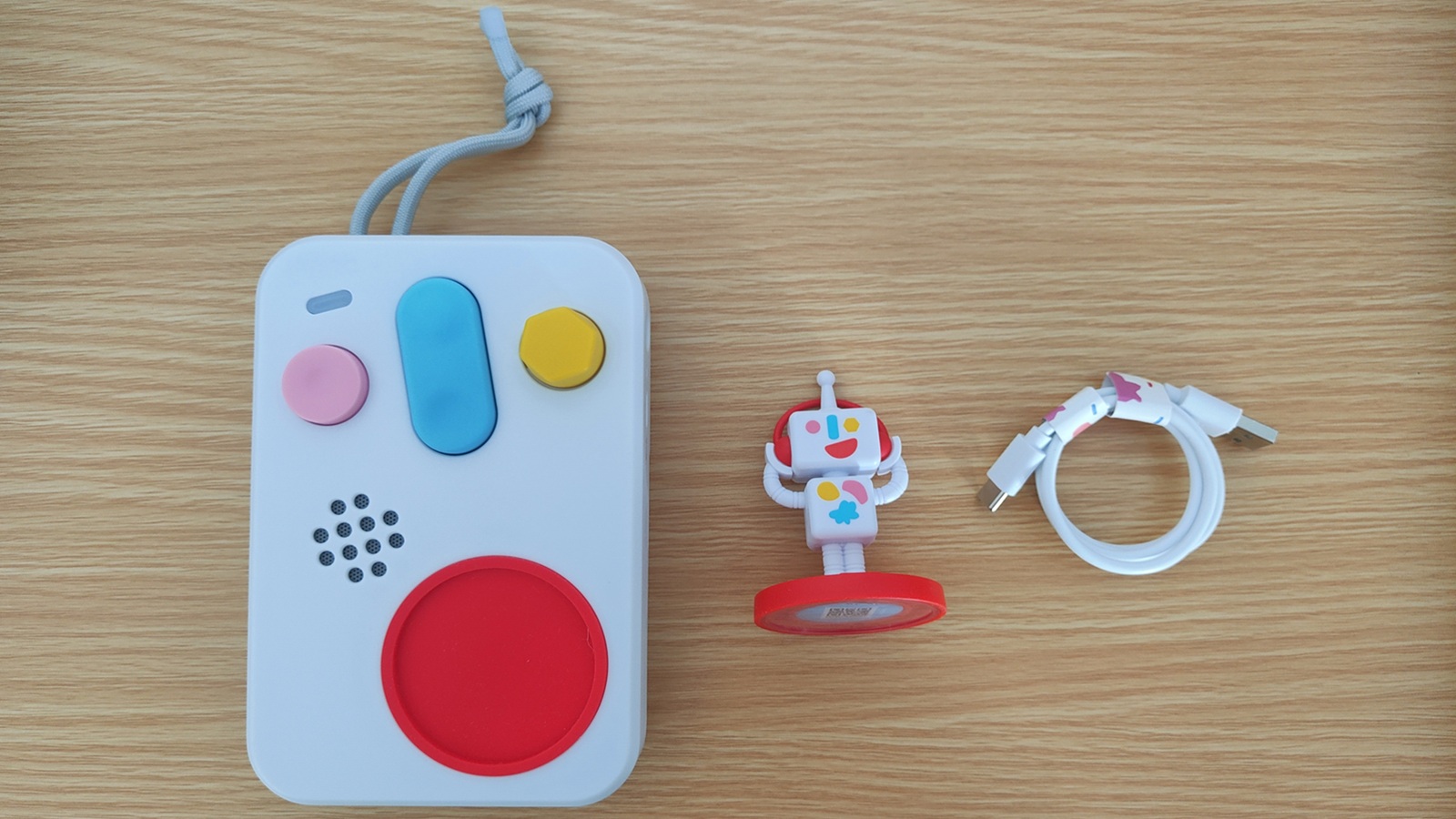
There are tech products that try to grab kids’ attention from the very first second: bright screens, animations, menus, notifications, lights, sounds, and an almost explicit promise to keep them entertained for as long as possible. FABA+ goes exactly in the opposite direction. Its proposal is calmer, almost contrarian: an interactive storyteller for children that has no screen, doesn’t rely on videos, and doesn’t turn every leisure moment into a visual experience.
After trying it, the impression is peculiar. It doesn’t feel like a device designed to compete with a tablet, but rather to fill that space many families are trying to reclaim: bedtime stories, car rides with songs, stories while they play in their room, or those moments when a child wants to do something on their own without everything passing through a screen.
FABA+ is a children’s speaker, yes. But reducing it to that would be selling it short. The startup’s proposal is to build a small audio ecosystem for kids, based on stories, songs, rhymes, sound games, physical characters, and an application that mostly stays in the adult’s hands. The child interacts with the object; parents manage the content. That separation is one of the product’s great virtues.
The technology that doesn’t want to look like technology
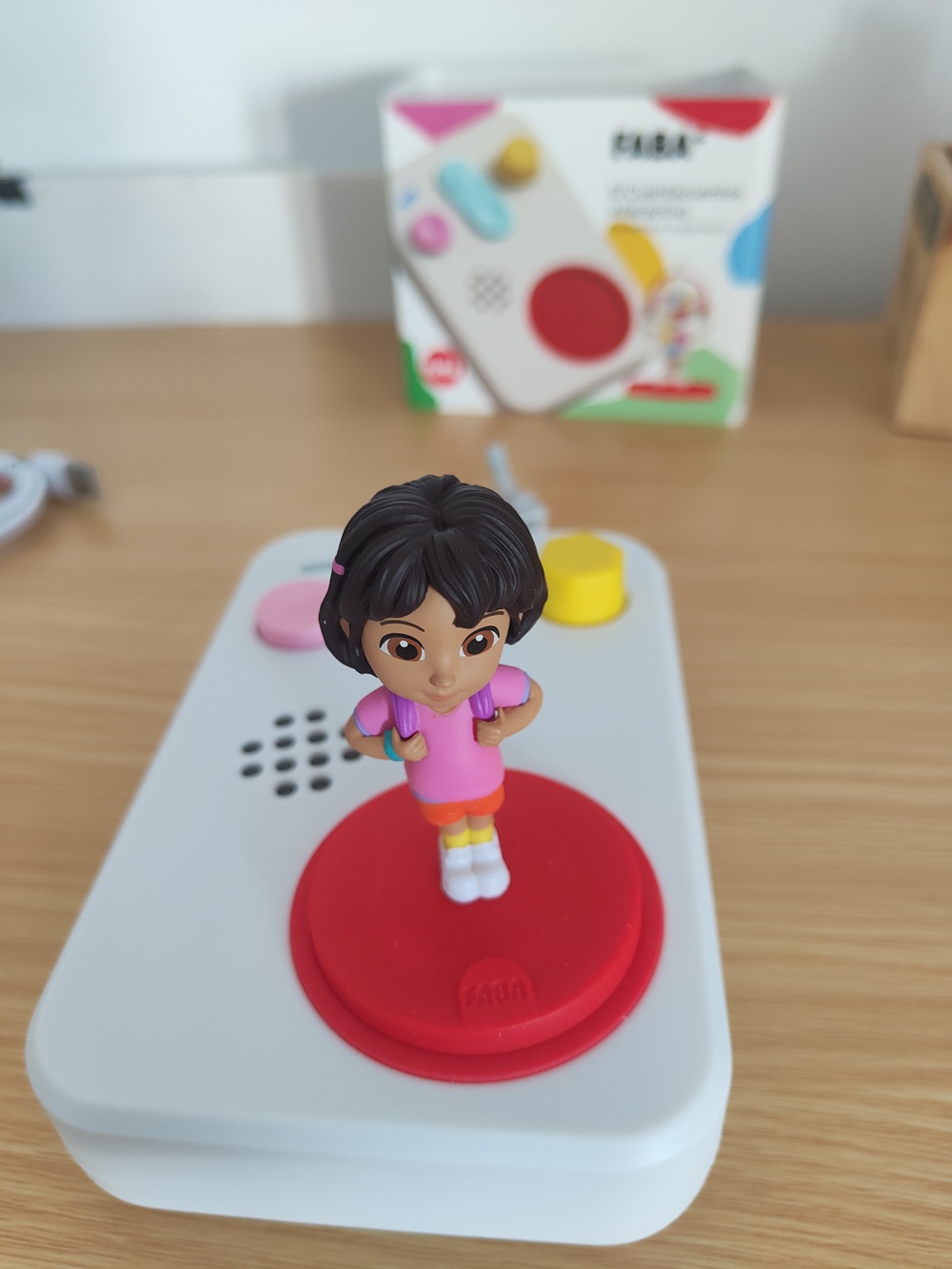
The first thing that draws attention to FABA+ is that it does not intimidate. It has large buttons, recognizable colors, and a shape designed so a child can use it without needing a lot of instruction. There’s no home screen, no tiny icons, no menus that force reading. The logic is much simpler: you choose a Sound Character, you place it on the device, and the content starts playing.
That gesture, which seems almost magical to the younger children, is the foundation of the entire experience. In the face of app abstraction, FABA+ revives something very important in childhood: the physical object. The story isn’t hidden inside a screen; it’s represented by a figure the child can pick up, swap, arrange, carry from one side to another, or choose by themselves.
In practice, this changes how you relate to the content. On a tablet, a child can jump from one video to another in seconds. With FABA+, the experience invites a slower pace. You pick a character, listen to a story, sing a song, or start a routine. There’s less visual stimulation, but there’s also less distraction.
And that makes sense in a world overloaded with digital noise.
A clear bet: playing without a screen
The big strength of FABA+ isn’t in having the most spectacular technology, but in knowing how to give up part of it. In the children’s market, the idea has taken hold that digital has to be visual and screen-based. Faba proves it doesn’t have to be that way.
Its bet is very concrete: entertainment without a screen, but not without technology. FABA+ has connectivity, an app, digital contents, updates, and customization options. But all that sits in the background. The child isn’t navigating the internet, watching videos, or exposed to endless recommendations. They’re listening.
And listening is a much more active activity than it seems. When a child listens to a story, they have to construct mentally the characters, the settings, and the situations. It isn’t delivered ready-made. They have to imagine. That is precisely the difference from many audiovisual contents: FABA+ doesn’t give them a closed image, but a doorway.
The proposal aligns well with a growing concern for many families: how to reduce screen time without making it feel like a punishment. Because that’s the real challenge. It’s not enough to say “don’t grab the tablet.” You have to offer alternatives that work, that are enjoyable, and that the child perceives as their own. In that sense, FABA+ succeeds because it’s not presented as a resignation, but as a different way to play.
First minutes: easy for the child, somewhat more guided for the adult
The initial setup requires the MyFaba app, something logical for a connected product. We adults prepare the device, manage the account, link contents, and set everything up. Once that first step is overcome, the child’s experience is fairly autonomous, though this product is also designed for babies.
This point is important. Many tech toys promise autonomy but end up needing constant adult intervention: to change content, unlock something, adjust an option, or resolve a menu. FABA+ reduces that friction considerably. The child can raise or lower the volume, switch tracks, pause, and choose what to listen to through the available characters or contents.
Wi‑Fi connectivity can also be disabled. It’s not a minor detail. In kids’ products, more and more value is placed on the idea that the connection isn’t permanent or essential for every use. Here, technology is there to aid downloading and syncing content, not to turn the device into an always-open window.
Faba•Me: the detail that makes it more personal
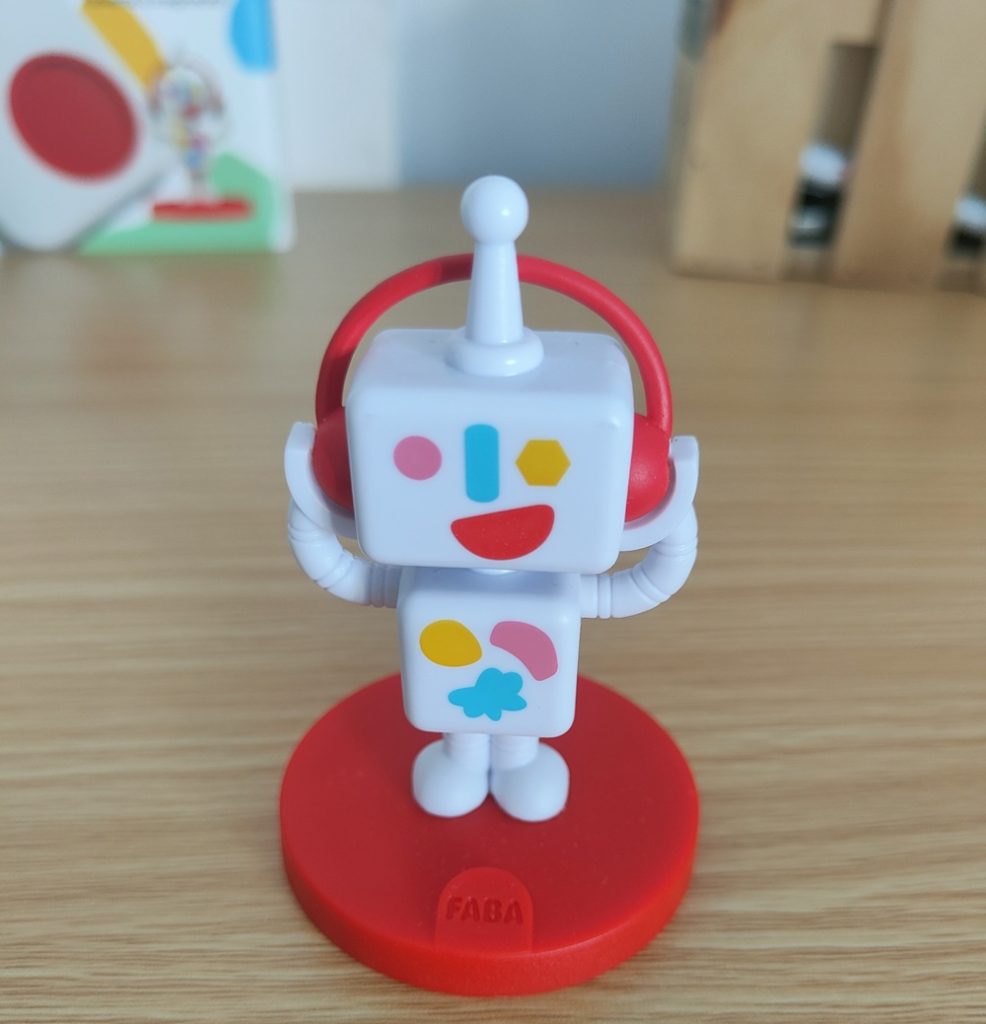
One of the most interesting elements of the FABA+ Starter Set is Faba•Me, the included character that allows content customization. In practice, it’s one of those features that seem secondary until you use it.
The possibility to record stories, songs, or messages with the voices of parents, grandparents, siblings, or even the child itself adds an emotional layer that sets FABA+ apart from other audio devices. It isn’t the same to listen to a generic story as to hear a tale imagined by the family, a lullaby recorded by Grandma, or a goodnight message when a parent is traveling.
Here the product gains warmth. It stops being just a content player and becomes a small family archive of voices. And that can hold significant value for a child. The technology recedes again into the background: the important thing isn’t the function, but the bond it enables you to create.
The bedtime ritual, one of its most natural uses
FABA+ includes a night light and a sleep routine, and probably that time of day is where its proposal is best understood. Nighttime has long been a territory claimed by screens: a short video to calm down, a song from a phone, a chapter before bed. The problem is that often what starts as help ends up prolonging the activation.
FABA+ offers a softer alternative. The colored light can accompany the room without turning it into an overstimulating environment, and the relaxation or sleep contents help build a calmer routine. It doesn’t replace the bedtime story told by an adult, of course. But it can accompany those moments when the child needs to wind down or listen to something before sleeping.
In that everyday use, the product proves especially convincing. It doesn’t seem designed to “hook” kids, but to become part of a routine. And that distinction is appreciated.
A catalog that turns the device into a platform
As is common with this type of product, the value of FABA+ isn’t limited to the device itself, but to its catalog. The company has been building an ecosystem of Sound Characters, digital content, stories, songs, games, languages, and offerings for different ages.
This has a positive reading and a more critical one. The positive is that FABA+ can grow with the child. It isn’t the same to use it with a baby who listens to lullabies or relaxing sounds as with a 5- or 6-year-old who already chooses stories, songs, or educational content. The age range is broad and the variety allows adapting usage to each stage.
The less favorable part is that, as with any content-based ecosystem, the full experience invites you to keep buying characters or expanding the library. The device makes sense from day one, but it gains a lot when the catalog is enriched. For families, this means assessing not only the initial price but also the cost of expanding the collection over time.
Still, the idea of physical characters is well executed. They aren’t perceived merely as accessories but as central parts of play. The child doesn’t choose from a list: they choose by touching.
The best: less friction, more imagination
The greatest virtue of FABA+ is that it simplifies. And in children’s technology, simplification is a form of sophistication. It doesn’t aim to do everything. It doesn’t want to be a console, a tablet, a virtual assistant, a portable television, and an educational toy all at once. It wants to be a storyteller. And that suits it well.
The use feels natural because it resembles play more than device management. Kids quickly understand that each figure opens a story or content. Adults, for their part, appreciate that the product doesn’t require delivering yet another screen.
It also stands out for the sense of control. Control of volume, content, connectivity, and the usage context. FABA+ doesn’t eliminate the need for adult supervision, but it does make it easier for the child to have a personal experience within a safer, more limited environment.
What could be improved
FABA+ isn’t perfect. From MuyPymes we’ve noticed that the initial setup can feel a bit less immediate for families not accustomed to apps and synchronization, though daily use becomes straightforward afterward. Also, you should be clear that its appeal heavily depends on the contents you select. If the catalog chosen doesn’t match the child’s age or interests, the device can lose some of its charm.
Another point to consider is that not all children react the same to an audio-only proposition. Those who are very accustomed to screens might need a transition period. FABA+ doesn’t compete with the visual impact of a video, nor does it aim to. Its pace is different. Precisely for that reason, it may require family involvement in the early uses, presenting it as a game and integrating it into specific moments: before bed, on trips, during free play, or as a calm pause.
It isn’t so much a product designed to instantly replace all digital stimuli as it is a tool to open up a real alternative.
The Italian startup that has understood the moment
Faba was born in Italy with a very powerful instinct: children’s technology does not have to push toward more screen time all the time. Its proposal comes at a moment when parents and educators are reexamining how children relate to digital devices. It isn’t about demonizing technology, but about asking what kind of technology we want around childhood.
There, FABA+ finds its place. It is technological, but not invasive. It is digital, but tangible. It is interactive, but not hyperstimulating. And, above all, it returns value to something as old as listening to a story.
The Italian startup has managed to turn that idea into a recognizable product, with its own design and an ecosystem that can grow. Its ambition doesn’t seem to be building a simple electronic toy, but to create a brand around child audio, imagination, and screen-free play.
In short, from MuyPymes we think FABA+ convinces because it understands that, in childhood, not every innovation involves adding a screen. Sometimes, innovating means removing it.
Its proposal is closely aligned, simple, and very in line with a real concern of many families: offering quality entertainment without increasing children’s digital exposure. It doesn’t replace shared reading, nor does it pretend to do so. Nor is it a miracle solution to screen excess. But it is a well-thought-out alternative, easy to integrate into daily life, and with enough charm for a child to feel it as their own toy.
After using it, what remains most strongly is not the sense of dealing with a gadget, but the sense of a tool that helps reclaim moments: a bedtime story, a song on a quiet afternoon, a family-imagined tale, a moment of play without looking at a screen.