Hiring talent comes in two very distinct models. The first involves posting a vacancy on a portal and screening applicants. This part has evolved a lot in the last decade, with tools that organize, filter, and speed up the process, many of which already use artificial intelligence.
However, 70% of qualified professionals are not actively seeking employment and rarely apply to a job posting. They are the top performers, the ones who drive the most impact in their organizations, and the hardest to reach.
To reach this passive talent (the market’s most valuable), recruiters apply a second process: direct search, what headhunters have been doing for decades. It consists of actively going out to find the best professionals in the market, most of whom are not looking for a job but would be willing to listen to the right opportunity. This process is known as “direct search” in the industry.
This process involves applying filters, manually reviewing profiles, building candidate lists, and drafting messages, with response rates rarely exceeding 10-20%. On average, a direct search process tends to take more than 20 hours for a recruiter, not counting interviews.
Nova aims to cut that time to less than 20 minutes. “The best candidates aren’t on any job board. They’re employed, not actively looking, and are almost impossible to reach with current tools. Nova Recruiter changes that,” says Ramón Rodrigáñez, CEO and cofounder of Nova.
Distinctive Value Proposition
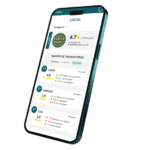
The company, known for connecting more than 25,000 high-potential professionals across more than 80 countries through its network, has just launched Nova Recruiter: an AI-powered platform designed to find, evaluate and contact the world’s best talent. It’s not just another candidate-management tool or an ATS (Applicant Tracking System); it’s the first platform built entirely to solve the industry’s most expensive recruiting challenge: direct search.
Since 2020, Nova has been selecting the world’s most promising people for its community and serving as headhunters to leading firms, strategy consultancies, and international investment funds. That process—reaching out to professionals who aren’t looking for work, evaluating hundreds of thousands of profiles, and identifying real merit beyond a CV—forced the team to build its own screening infrastructure.
Along the way, the team identified three fundamental fractures in the hiring process that no existing tool solved:
- Search engines still operate by keywords, not by real merit. An exceptional candidate who doesn’t use the exact terms of the filter simply won’t appear.
- Passive talent is increasingly hard to reach. The best professionals receive dozens of generic messages every week. Most ignore them.
- The automation that has transformed sales, marketing and customer service remains virtually nonexistent in direct search for qualified profiles.
“The job of a headhunter is to find, contact and persuade the best professionals to move to another company. With Nova Recruiter, we want to free recruiters from the manual labor of direct search so they can focus on the human connection, where they truly add value,” says Rodrigáñez.
Three Pillars That Change the Game
Nova Recruiter marks the market’s entry of Nova’s technology. It stems from hands-on experience, not theory, and runs on three differentiating pillars:
- Merit-based search, not keyword search. The platform lets recruiters search across more than 800 million public profiles worldwide, using AI to identify candidates by achievements, track record, and potential—not by the exact terms on their profile. Recruiters can run searches in natural language, upload a job description, or use a reference profile as a starting point to find fitting candidates without having to sift through hundreds of irrelevant results along the way.
- Multichannel outreach with 2.5x higher response rates. Nova Recruiter enables designing personalized outreach campaigns at scale, with automated follow-ups across multiple channels (email, the Nova app, and other professional platforms). The result: response rates 2.5 times higher than the industry average.
- AI agents that cut over 20 hours of manual work per process. The entire flow (search, outreach, follow-up and responses) happens in a single platform that uses AI agents to automate the complete process. This frees recruiters from more than 20 hours of work per cycle (over 95% of total time) so they can focus on what truly matters: the human connection with the candidate.