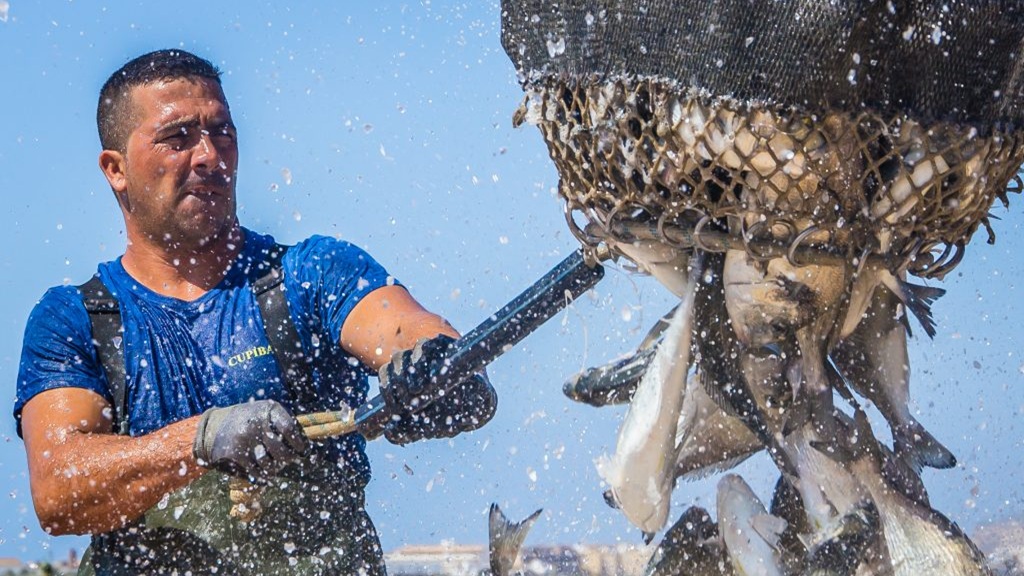
Spain is at the forefront of global responsible aquaculture, earning the world’s first certification under the new ASC Farm Standard, driven by the Aquaculture Stewardship Council (ASC), an independent, nonprofit organization dedicated to strengthening best practices in the industry.
The first farm in the world to achieve this is the Spanish Esteros Lubimar, a company located between Cádiz and Huelva and a benchmark in breeding sea bass and gilthead seabream through a semi-intensive production model in estuaries. The certification recognizes Esteros Lubimar’s commitment to a low-density, environment-integrated cultivation system where productive activity coexists with ecosystem restoration and biodiversity preservation. A model of aquaculture production that blends excellence, sustainability, transparency, and respect for the surroundings.
ASC sets the world’s most stringent standards for responsible aquaculture. The ASC Farm Standard brings together in a single framework the sustainability requirements for global aquaculture, with criteria spanning four major areas: farm management, with criteria tied to legal compliance, licenses, traceability, operational control, and management systems; human rights and the social sphere, with requirements on working conditions, safety and health at work, contractual transparency, wages, working hours, grievance mechanisms, and relationships with communities; environmental protection, with measures related to facility siting, escape prevention, waste management, habitat conservation, protection of wildlife, and control of environmental impacts; and animal health and welfare, with demands for preventive animal health management and proactive welfare plans.
ASC-certified farms must also source feed certified under the ASC Feed Standard. This way, consumers choosing a seafood product with the ASC green label can be confident that all potential negative impacts associated with its production across the entire supply chain have been proactively managed.
What the ASC Farm Standard Entails
Since its effective date in March 2025, ASC has set a two-year transitional period: the standard will be mandatory worldwide starting May 1, 2027.
The ASC Farm Standard stands as a benchmark for the industry, bringing together scientific requirements within a rigorous and transparent framework. It will drive sector-wide improvements in environmental performance, social responsibility, fish health and welfare, and farm management. This framework can be applied to different production systems and species. Esteros Lubimar’s certification confirms that the new standard is fully applicable in practice and sets a global benchmark for responsible aquaculture, says Chris Ninnes, ASC CEO.
The certification, independently audited by DNV, was awarded after a rigorous and independent auditing process. The assessment included on-site inspections, document reviews, and interviews with staff, says Stefano Crea, DNV Global Director of Markets and Industries.
Located in a protected area of Cádiz Province, Esteros Lubimar’s semi-intensive farming system is characterized by very low stocking densities, with a maximum of 3 kg of fish per cubic meter of water (which allows them to avoid antibiotics), and where only 35% of the area is devoted to fish production. The remaining space, reclaimed through aquaculture activity, is kept as a natural zone that is essential for the farm: it acts as a biological filter, provides natural food sources such as shrimp, and sustains a rich, diverse ecosystem that would not be present in the area otherwise.
Choosing a semi-intensive and low-density model reflects our long-term approach to fish welfare and environmental responsibility. It demonstrates how aquaculture can operate in close relation to sensitive environments while playing a fundamental social role by offering skilled employment in the local community. Obtaining ASC certification represents recognition of more than three decades of work, says Gontrán de Ceballos, Esteros Lubimar’s Commercial Manager.
With this milestone, Spain not only earns pioneering recognition but also proves itself an example of sustainable best practices through models that already meet the highest international standards. Esteros Lubimar’s case confirms that responsible aquaculture can blend high-quality production, respect for the environment, social commitment, and verifiable transparency.